••
CHRAJ and World Vision Ghana Call for Urgent Action as Child Labour Keeps Over 458,000 Ghanaian Children Out of School
•3 min read•5 sources
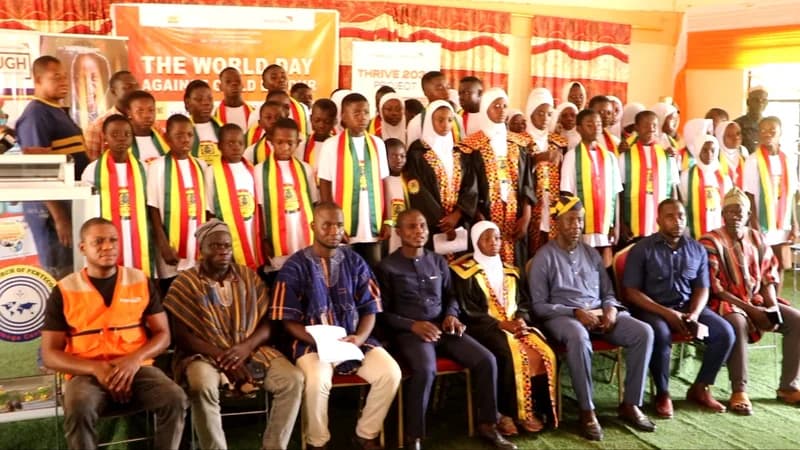
The Commission on Human Rights and Administrative Justice (CHRAJ) has issued a stark warning regarding the impact of child labour on education in Ghana, revealing that over 458,000 children are currently missing school due to economic exploitation. In a statement marking the 2026 World Day Against Child Labour, themed "Act Now: End Child Labour!", CHRAJ highlighted that while over 1.1 million children aged 5 to 17 are engaged in economic activities nationwide, the prevalence of this practice continues to serve as a massive barrier to the fundamental right to education. This national crisis is mirrored in regional reports, where local authorities are struggling to contain a surge in hazardous work involving minors.
In the Ada East District, the Directorate of Social Welfare reported a troubling rise in cases, documenting 43 incidents between January and May 2026 alone. Mr. Enoch Addy Bampoe, the District Director of Social Welfare, noted that the majority of these cases involve children aged 8 to 14 engaged in hazardous activities such as fishing, salt production, and street hawking. Supporting these concerns, Madam Faustina Blewusi from the National Commission for Civic Education (NCCE) emphasized that many children are frequently absent from the classroom to support family livelihoods, advocating for a shift in priority toward education and safety to ensure the long-term wellbeing of the youth.
While some regions report rising numbers, others are implementing innovative governance structures to empower children against exploitation. In the Wa East District, World Vision Ghana has partnered with the District Assembly to launch the district's first-ever Children’s Parliament. This initiative, funded by World Vision, features a 50-member house modeled after national democratic structures to provide a platform for youth to advocate for their rights. The project identifies rural poverty and illegal mining as primary drivers of child labour in the area and seeks to address these through interventions like the "Enough Campaign," which focuses on combating child hunger and improving community infrastructure.
Despite these local efforts, significant systemic challenges remain. Stakeholders in Wa East have pointed to poor school infrastructure and inadequate teacher motivation as additional hurdles that discourage school attendance and make child labour a more likely alternative. CHRAJ has called for a renewed, aggressive commitment from the government and community leaders to enforce constitutional protections and international commitments. The Commission stresses that without a coordinated effort to tackle the root causes of poverty and lack of access to quality schools, the cycle of exploitation will continue to hinder Ghana's equitable development and the futures of hundreds of thousands of children.
This story touches markets covered on Anansi Intelligence ↗.
More from education
Continue exploring similar stories


