••
Bank of Ghana Charts Path to Lower Interest Rates Amid Strategic Gold Reserve Shifts and Improving Inflation
•3 min read•16 sources
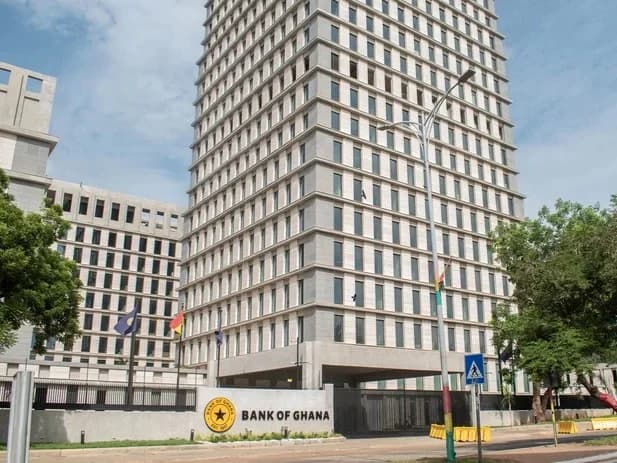
Bank of Ghana Governor Dr. Johnson Pandit Asiama has signaled a major shift in the country's monetary trajectory, expressing a firm commitment to driving lending rates below the 10% threshold by the end of his term. Speaking at the 2026 Kwahu Business Forum, Dr. Asiama lamented that current interest rates, which exceed 30%, are hurting local businesses and stifling the private sector. He underscored that Ghana’s credit allocation to businesses sits at a mere 8% of GDP, significantly trailing peer nations like Kenya at 30%. This vision for lower rates is supported by the central bank's success in curbing inflation, which plummeted from 23.8% to 5.4% by December 2025. The Governor remains optimistic that maintaining price stability throughout 2026 will be significantly less costly than the intensive interventions required in the previous year. Central to this stabilization has been a strategic rebalancing of Ghana’s international reserves. In late 2025, the Bank of Ghana executed a sale of approximately 51% of its gold holdings, reducing the stockpile from 38.04 tonnes to 18.6 tonnes. This move, which realized a profit of $1.3 billion, was designed to mitigate concentration risks after gold reached over 42% of the bank's total reserves. While the 'Gold for Reserves' program successfully cushioned the economy during the 2022 foreign exchange crisis, the bank is now transitioning to the Ghana Accelerated National Reserves Accumulation Policy (GANRAP). This new framework targets weekly gold purchases to maintain a more liquid and diversified portfolio, keeping gold holdings between 20% and 30% of total reserves. Despite these structural shifts, the Ghanaian cedi has shown relative resilience. Current market data as of April 6, 2026, shows the cedi trading at approximately GHS 10.99-11.01 on the interbank market and GHS 11.80 at forex bureaus. Fitch Solutions projects the currency will end the year at GHS 11.40 per dollar, bolstered by a stable current account and robust foreign exchange reserves totaling $14.4 billion. However, fiscal challenges persist in the domestic debt market, where the government recently faced a 32.19% undersubscription in its treasury bills auction, failing to meet its GH¢4.63 billion target for the third consecutive week. This has led to rising yields, with the 364-day bill climbing to 9.84%. Looking ahead, Ghana's external position appears insulated from global geopolitical tensions primarily due to its status as Africa's largest gold exporter. High global gold prices, recently hovering around $4,413 per ounce, are expected to drive gold export receipts to a staggering $23.7 billion in 2026. This windfall provides the Bank of Ghana with the necessary buffer to continue its pursuit of macroeconomic stability while transitioning toward a lower-interest environment. The Governor emphasized that stabilizing the banking sector and ensuring a steady flow of affordable credit remains the priority for stimulating long-term economic growth and reducing unemployment.
This story touches markets covered on Anansi Intelligence ↗.
Live rates
Ghana gold price →More from business
Continue exploring similar stories

