••

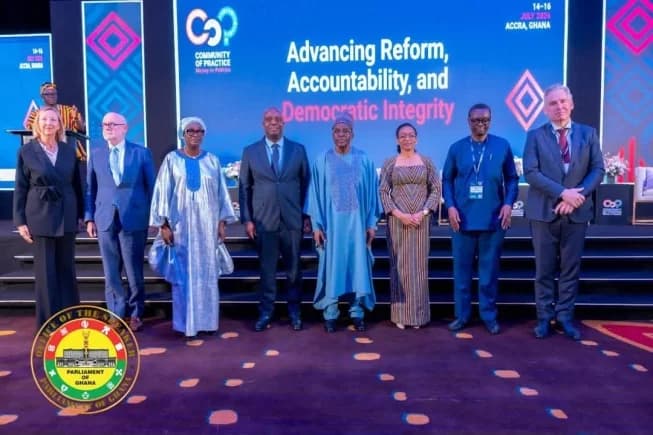
The Speaker of Ghana’s Parliament, Alban Sumana Kingsford Bagbin, has issued a stark warning that the increasing monetization of politics is undermining the foundations of democracy across Africa. Speaking at the opening of the High-Level Regional Convening on the Financialisation of Politics in Africa in Accra, Bagbin asserted that the rising costs of political participation are sidelining ordinary citizens and transforming public office into a venture driven by financial power rather than a commitment to public service. The forum, organized by the African Union Advisory Board Against Corruption in partnership with the Ghana Centre for Democratic Development (CDD-Ghana) and the Open Society Foundations, brought together governance experts and civil society actors to address what many described as a "democracy for sale" phenomenon.
Bagbin emphasized that political power is increasingly shifting away from the merit of ideas and toward the strength of one’s purse. Reflecting on his own lengthy political career, the Speaker noted that the astronomical escalation of campaign costs has created a barrier to entry for many qualified individuals. This trend, he argued, is not unique to Ghana but represents a global backslide in democracy characterized by declining public trust and growing voter disengagement. He was joined in this sentiment by figures such as Dr. Zanetor Agyeman-Rawlings and Deputy Finance Minister Thomas Nyarko Ampem, who stressed that the commercialization of the electoral process risks alienating the youth and eroding the integrity of governance.
Supporting these concerns, Binaifer Nowrojee, President of the Open Society Foundations, urged immediate and comprehensive reforms to break the grip of wealthy financiers on political processes. Participants at the conference advocated for a robust legal framework, including mandatory political funding disclosures and stricter oversight mechanisms to ensure accountability. The consensus among stakeholders was that without these interventions, political leaders would remain more beholden to their donors than to the citizens they represent. The discussions also highlighted the necessity of civic education to empower voters to resist the influence of opaque political financing and prioritize candidates based on policy rather than patronage.
Amidst the calls for local reform, Speaker Bagbin also lauded international efforts to increase transparency, specifically praising Ghana’s Ambassador to Austria, Matilda Alomatu Osei-Agyeman, for her pivotal role in the adoption of UN Resolution 11/7. This resolution, focused on the transparency of political party and election campaign financing, represents a significant step toward a global standard for political integrity. As the Accra convening concluded, the overarching message was clear: for democracy to survive in Africa, it must be reclaimed from the highest bidders and restored to the hands of the people, ensuring that electoral outcomes are determined by the will of the voters rather than the depth of a candidate’s pockets.
This story touches markets covered on Anansi Intelligence ↗.
Continue exploring similar stories


