••
Afreximbank and GIIF Back $11.5 Billion 24-Hour Economy Pipeline as Kejetia Market and Tourism Digitalization Drive Ghana's Growth
•3 min read•6 sources
Ghana’s economic landscape is undergoing a significant transformation with the formalization of major investment frameworks and the resumption of critical infrastructure projects. At the forefront is the signing of a Joint Project Preparation Facility (JPPF) Framework Agreement between Afreximbank, the Ghana Infrastructure Investment Fund (GIIF), and the 24-Hour Economy Authority. This strategic partnership aims to unlock an investment pipeline valued at approximately $11.5 billion, signaling a robust push toward President John Mahama’s 24-Hour Economy agenda. The collaboration is designed to bridge the gap between policy ambition and operational reality by creating a steady stream of bankable projects.
The JPPF initiative addresses the critical challenge of project readiness, which often hinders large-scale investment. Afreximbank and GIIF have each committed initial funding of $5 million, totaling $10 million, specifically for project preparation activities rather than immediate construction. This funding is aimed at ensuring that priority projects in sectors such as energy, logistics, manufacturing, tourism, and healthcare are well-structured and investment-ready. Beyond mere financing, the agreement emphasizes capacity building within GIIF to foster a sustainable internal ecosystem for long-term infrastructure planning and institutional expertise.
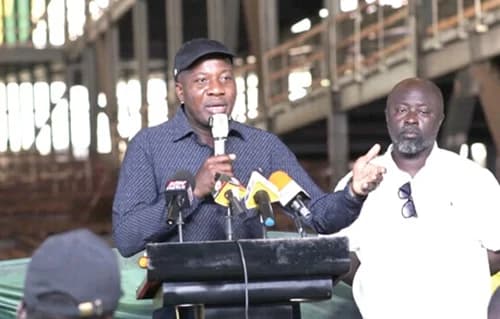
Complementing these macro-economic initiatives, Local Government Minister Mahama Ayariga has announced that construction on the Kejetia Market Redevelopment Phase II is set to resume this October. Following a memorandum of understanding with the project firm, Contracta, the facility is expected to be completed within 18 months. Currently, engineering stands at 99% completion, though overall construction remains at 68%. Despite funding challenges arising from the Domestic Debt Exchange Programme, the government is moving forward with a remaining project balance of –38 million. Once finished, the market will significantly boost local commerce with over 7,000 stalls, 120 food courts, and dedicated spaces for 3,000 traders.
Parallel to physical infrastructure, the Ghana Tourism Authority (GTA) is leading a digital reset to enhance the sector’s administrative efficiency and economic footprint. CEO Maame Efua Houadjeto recently detailed the rollout of the Ghana Tourism Information System (GTIS), which will centralize registration, licensing, and tourism levy payments. This digital overhaul is expected to improve transparency and compliance while making the tourism ecosystem more integrated. Speaking at the Greater Accra Regional Tourism Awards, officials noted that Accra’s cultural richness provides a foundation for growth that digital tools will help monetize through increased visitor spending and domestic tourism promotion.
Together, these developments represent a multifaceted approach to revitalizing Ghana’s economy through both structural policy and physical redevelopment. From the $11.5 billion pipeline for the 24-Hour Economy to the revitalization of the Kumasi business hub at Kejetia and the digitalization of the tourism sector, the government is prioritizing projects that create jobs and foster exports. The success of these initiatives will ultimately depend on the effective transition of projects from the preparation phase to operational reality, ensuring they deliver tangible value and long-term stability to the Ghanaian economy.
Related topic
John Mahama: Latest News & Updates →

