••
President Mahama Outlines National Airline Expansion as Ghana’s Digital Economy Hits Record GH¢518 Billion in Transactions
•3 min read•43 sources
Ghana’s economic landscape is undergoing a significant transformation driven by a surge in digital financial services and strategic expansions in international trade and aviation. According to the Bank of Ghana’s latest Economic and Financial Data, mobile money transactions reached a record GH¢518.8 billion in August 2026, a 46.5% increase from the previous year. While the total value of transactions for the year has climbed to GH¢3.8 trillion, the data also highlights a usage gap, with only 26.4 million active accounts out of 85.8 million registrations. This digital momentum is being complemented by high-level policy shifts, including the Bank of Ghana’s initiative to facilitate trade with China using the Ghanaian Cedi, a move intended to reduce reliance on the US dollar and strengthen bilateral commercial ties.
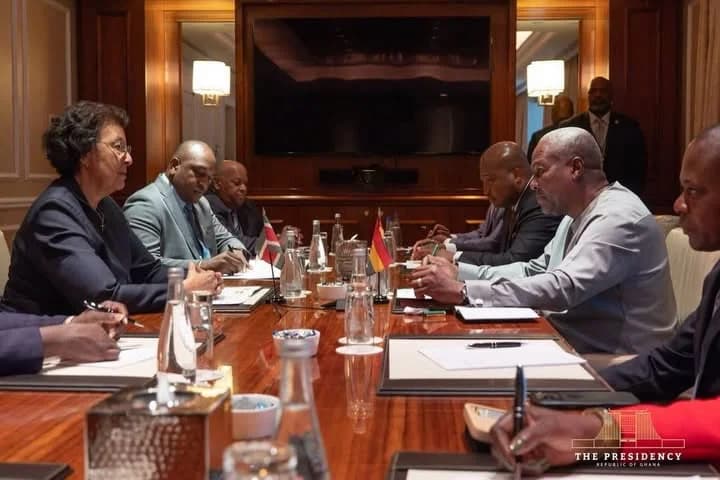
In the aviation sector, President John Mahama has announced that Ghana’s proposed national airline will explore direct routes to South America and the Caribbean. During bilateral discussions with Suriname’s President Dr. Jennifer Geerlings-Simons at the UN General Assembly, President Mahama emphasized that these routes would position Ghana as a strategic aviation hub and foster deeper trade, tourism, and cultural exchanges beyond the African continent. This vision for connectivity aligns with broader efforts to simplify cross-border commerce; Stanbic Bank Ghana and the Ghana News Agency have highlighted the adoption of the Pan-African Payment and Settlement System (PAPSS) and the Cross-Border Interbank Payment System (CIPS) to minimize transaction costs and delays for Ghanaian Small and Medium-sized Enterprises (SMEs) operating under the AfCFTA.
Domestic market dynamics are also shifting, as evidenced by StarOil overtaking GOIL as the leader in the downstream petroleum retail market. By the first quarter of 2025, StarOil’s aggressive pricing strategy saw its market share rise to 10.80%, surpassing GOIL’s 10.51%. Amidst this competition, there is a growing emphasis on corporate social responsibility and financial inclusion. Ecobank Group has committed $2.6 billion through 2030 to support women-led businesses and agricultural value chains, while philanthropist Alhaji Seidu Agongo is distributing 10,000 free sewing machines to vulnerable youth and women in partnership with the National Entrepreneurship and Innovation Programme (NEIP) to promote self-reliance and entrepreneurship.
To ensure long-term stability, industry leaders are advocating for a shift in Ghana’s corporate culture from liquidation to business rescue. Felix Addo, President of the Chartered Institute of Restructuring and Insolvency Practitioners (CIRIP), recently urged stakeholders to utilize the Corporate Insolvency and Restructuring Act of 2020 to save distressed but viable companies. As the International Finance Corporation (IFC) continues to invest in local infrastructure—such as the redevelopment of the Kwame Nkrumah Memorial Park and new hospitality projects in Accra—the focus remains on creating a resilient, system-driven economy. Experts warn that with Ghana’s growing youthful population, the success of these industrialization and scaling efforts is critical to ensuring that demographic trends result in economic dividends rather than social burdens.
Related topic
John Mahama: Latest News & Updates →Live rates
Dollar to cedi rate →

