••
Infrastructure Ambitions and Security Accountability Define Ghana's Current Political Landscape
•3 min read•61 sources
Ghana’s political landscape is currently dominated by a dual focus on aggressive infrastructure development and a heightened demand for security and human rights accountability. Leading these efforts, the Ghana Armed Forces have commenced land-clearing for the landmark 198.7-kilometer Accra–Kumasi Expressway, a project aimed at reducing travel time between the two largest cities from six hours to two. Complementing this physical connectivity, the government has signed a significant term sheet for the Offshore Cape Three Points (OCTP) gas expansion project, which is projected to boost domestic gas output to 350 million standard cubic feet per day by 2028. Meanwhile, Communications Minister Samuel Nartey George has announced a rigorous new SIM registration system designed to combat fraud by linking biometric data from Ghana Cards directly to mobile devices, warning that misuse could lead to the blacklisting of individuals from essential public services.
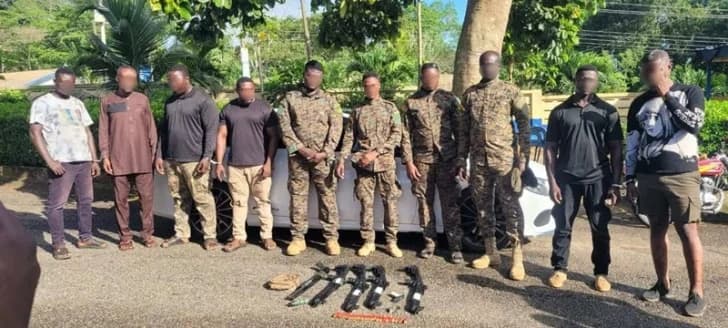
However, these developmental strides are occurring alongside significant friction between security agencies and the public. The Ghana National Association of Teachers (GNAT) has issued a stern condemnation of an alleged assault on teachers by military personnel from the 2nd Infantry Battalion during an operation in Tarkwa-Nsuaem, describing the incident as "barbaric and inhumane." Simultaneously, the Ghana Police Service has interdicted five officers for misconduct following viral videos that tarnished the service's reputation. Security tensions are further exacerbated by chieftaincy disputes, notably in Adambrobe, where eleven individuals were arrested for illegal arms possession, and in Nkwanta South, where Oti Regional Minister John Kwadwo Gyapong has vowed a crackdown following recent killings. In the Ashanti region, the Asantehene, Otumfuo Osei Tutu II, has intervened in the Agona stool succession, giving the Queen Mother a two-week deadline to name a new chief to resolve a four-year vacancy.
Political figures across the spectrum are also emphasizing regional economic transformation and local service delivery. Speaker of Parliament Alban Bagbin, recently honored with a chieftaincy title in the Upper West Region, has pledged to champion the shea industry as a vital economic driver for the North, warning against the environmental degradation that threatens this resource. Former President John Dramani Mahama has been active in the Eastern Region, cutting sod for a modern 24-hour economy market in Asesewa and commissioning the upgrade of the Odumase Krobo Police Command. Conversely, Weija-Gbawe MP Jerry Ahmed Shaib has expressed profound frustration over the continued closure of a completed 120-bed specialist children’s hospital, urging the Ministry of Health to operationalize the facility to serve residents in the Greater Accra and Central regions.
As the government navigates these domestic priorities, it faces additional pressure from economic and regional instability. Sanja Nanja, the MP for Atebubu-Amantin, has warned of a potential political backlash if the administration fails to address a worsening food glut and persistent power outages that are crippling rural farming communities. On the international front, Ghana remains watchful of regional security shifts, particularly in Mali, where junta leader Gen Assimi Goïta has consolidated power by appointing himself Defense Minister following recent insurgent attacks. These local and international developments underscore a critical juncture for Ghana, where the success of large-scale infrastructure and policy reforms must be balanced against the need for institutional integrity, food security, and the protection of human rights.
This story touches markets covered on Anansi Intelligence ↗.
More from politics
Continue exploring similar stories


