••
Beyond 'Santa Claus Democracy': Yaw Nsarkoh Calls for a Reset in Ghana’s Political and Legal Discourse
•3 min read•8 sources
Yaw Nsarkoh, a former Unilever Executive Vice President, has issued a comprehensive critique of Ghana’s political and social landscape, calling for a fundamental "reset" in how the nation approaches governance, justice, and the historical debate over reparations. Speaking in several interviews on Joy News, Nsarkoh argued that Ghana’s democratic journey has drifted away from its core purpose of improving the lives of ordinary citizens. He cautioned that without a shift toward substantive development, the country risks maintaining what he describes as a "Santa Claus democracy," where political freedoms are celebrated but fail to translate into tangible economic progress or social equity.
Central to Nsarkoh’s critique is the behavior of the nation's dominant political entities, the New Patriotic Party (NPP) and the National Democratic Congress (NDC). He labeled both as "parties of the elites," suggesting they function as factions of the same class rather than distinct ideological choices for the populace. Nsarkoh expressed particular frustration with the premature focus on the 2028 elections, noting that political actors are already engaged in succession maneuvering as early as 2026. This obsession with internal rivalry and future election cycles detracts from urgent developmental challenges, effectively disconnecting political ambitions from the genuine needs and welfare of the Ghanaian people.
Turning to the legal system, the former executive challenged the prevailing "legal obsession" in Ghana, asserting that justice is too important to be left to lawyers alone. He criticized the media’s reliance on complex legal jargon, which he believes alienates the public and reduces justice to a series of technical procedures. According to Nsarkoh, true justice should be measured by social outcomes—such as the eradication of poverty and the advancement of development—rather than mere adherence to the rule of law. He advocated for a multidisciplinary national conversation that includes sociologists, philosophers, and ordinary citizens to ensure that justice reflects real improvements in people’s daily lives.
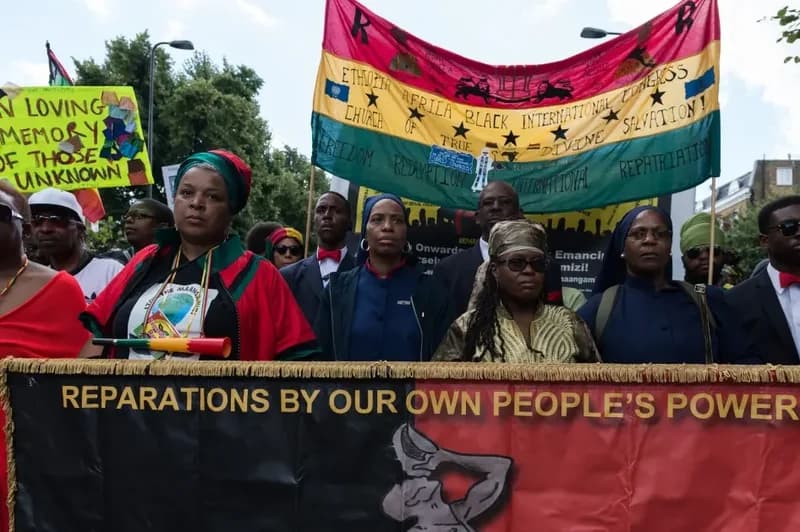
Finally, Nsarkoh addressed the global reparations movement, urging African leaders to adopt a more pragmatic and identity-focused approach. While acknowledging the moral foundation for reparative justice, he warned against viewing reparations as a form of "escapism" or a simple expectation of financial windfalls. He questioned the feasibility of demanding massive cash payouts from economically challenged Western nations and instead proposed a focus on cultural identity, knowledge sharing, and solidarity among Africans and the diaspora. By shifting the narrative away from guilt and toward shared history, Nsarkoh believes the continent can define a more sustainable path forward that avoids oversimplifying historical trauma into monetary transactions.
Related topic
NDC (National Democratic Congress): Latest News →

