••
WHO Warns of Escalating Ebola Outbreak in DRC and Uganda as Violence and Mistrust Hamper Response
•3 min read•16 sources
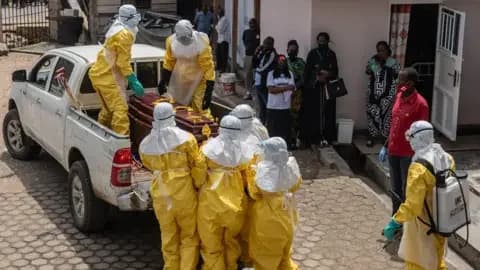
The World Health Organization (WHO) has issued a dire warning that a fast-moving Ebola outbreak in the Democratic Republic of Congo (DRC) and Uganda is currently outpacing international response efforts. WHO Director-General Tedros Adhanom Ghebreyesus has declared the situation a public health emergency of international concern, citing more than 900 suspected cases and at least 220 suspected deaths since the outbreak was identified in mid-May. The epidemic, primarily driven by the rare Bundibugyo strain for which there are currently no approved vaccines or targeted treatments, has centered on the Ituri province in northeastern DRC but has now crossed the border into Uganda, where multiple cases have been confirmed.
Containment efforts are being severely undermined by a volatile mix of regional insecurity, community mistrust, and direct violence against healthcare workers. In the town of Mongbwalu, the epicentre of the crisis, angry crowds have attacked health facilities, including the Mongbwalu General Referral Hospital, to forcibly reclaim the bodies of deceased relatives for traditional burials. These unsafe burial practices pose a significant transmission risk, yet deep-seated disbelief in the virus and suspicion of authorities have led to the destruction of isolation tents and prompted some patients to flee treatment centers. Frontline medical organizations, including Médecins Sans Frontières and the Red Cross, report that three volunteers have already succumbed to the virus while operating in these high-risk conditions.
In response to the growing threat, international partners are mobilizing significant financial and technical resources. The United Kingdom has announced an allocation of up to £20 million to bolster WHO operations, improve disease surveillance, and provide essential protective equipment for health workers in the Ituri region. UK Foreign Secretary Yvette Cooper emphasized that timely international cooperation is vital to prevent the virus from becoming a global health threat. Additionally, health officials from the DRC, Uganda, and South Sudan have coordinated a regional response strategy with a proposed budget of $319 million to harmonize case management and border screening protocols.
As the risk to neighboring countries remains high, West African nations are also ramping up their internal defenses. In Ghana, Health Service Director-General Dr. Samuel Kaba Akoriyea has commenced an assessment tour of key facilities, including the Ghana Infectious Disease Centre and Kotoka International Airport, to ensure rapid detection and containment capabilities. While the WHO maintains that the situation may worsen before it improves, the focus remains on bridging the gap between medical intervention and community acceptance to halt the spread of one of the world’s most lethal pathogens.
This story touches markets covered on Anansi Intelligence ↗.
More from africa
Continue exploring similar stories


