••

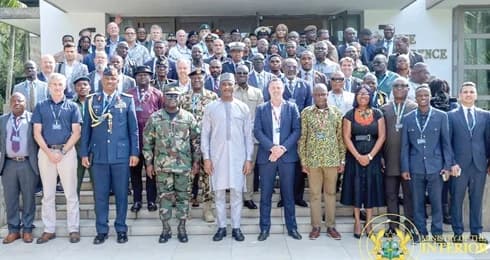
The United Nations and Ghana’s Ministry of the Interior have issued a stern warning regarding the escalating security crisis across West Africa and the Sahel, noting a dangerous expansion of extremist activity toward coastal nations. Speaking at the 13th Africa Security Symposium (ASEC 2026) held in Accra, Interior Minister Alhaji Muntaka Mohammed-Mubarak emphasized that the continent’s security challenges have become too complex for any single nation to handle in isolation. This call for collective action comes as the UN Security Council receives reports of a rapid rise in militant influence, threatening the stability of once-secure regions along the Gulf of Guinea.
Special Representative of the Secretary-General, Leonardo Santos Simão, briefed the UN Security Council on the evolving tactics of these armed groups, which are increasingly operating in the central Sahel and northern Nigeria. According to the UN, these groups are now utilizing sophisticated technologies, including drones and cryptocurrencies, to facilitate their operations and bypass traditional financial monitoring. The merging of extremist ideologies with organized crime has created a volatile environment that complicates humanitarian efforts and disproportionately affects vulnerable populations, particularly women and children.
The humanitarian fallout is already visible in coastal nations such as Ghana and Côte d'Ivoire, which are currently contending with an influx of approximately 220,000 refugees fleeing the violence in the north. At the ASEC 2026 symposium, security experts and officials, including Major General Emmanuel Wekem Kotia (retd), highlighted that the event has fostered actionable commitments to improve regional security frameworks. Furthermore, Mohammed Ahmed stressed the critical need for gender inclusion, arguing that incorporating women into security roles is essential for a comprehensive and sustainable response to modern threats.
Beyond military and technological interventions, experts are urging African governments and the international community to address the underlying drivers of radicalization. This includes tackling deep-seated issues of poverty, governance failures, and climate-driven insecurity that provide fertile ground for extremist recruitment. As regional forces enhance their collaboration, the consensus remains that a balanced approach—one that respects national sovereignty while leveraging international support—is the only viable path toward long-term peace and stability in West Africa.
This story touches markets covered on Anansi Intelligence ↗.
Continue exploring similar stories


