••
UN Declares Slave Trade a 'Grave Crime' as Ghana's Reparations Motion Sparks Global Debate
•3 min read•37 sources
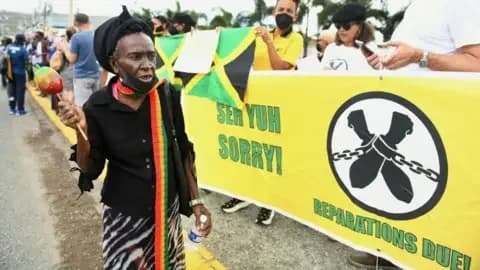
On March 25, 2026, the United Nations General Assembly reached a historic milestone by adopting a resolution that recognizes the Trans-Atlantic Slave Trade as the "gravest crime against humanity." Spearheaded by Ghana under the leadership of President John Dramani Mahama, the motion received overwhelming support with 123 member states voting in favor. UN Secretary-General Antonio Guterres lauded the move, emphasizing the urgent need for global recognition of historical exploitation and its lingering impacts on the descendants of enslaved people. While symbolic and non-binding, the resolution marks a transformative shift in international discourse, providing a formal framework for future discussions on reparatory justice and systemic inequality.
Despite the broad consensus, the resolution faced significant pushback from key global powers. The United States, Israel, and Argentina voted against the motion, primarily citing concerns over the legal and financial implications of reparations. Meanwhile, 52 nations, including the United Kingdom and the Netherlands, abstained. Ghana’s Foreign Affairs Minister, Samuel Okudzeto Ablakwa, expressed deep disappointment in the U.S. position, labeling the 'no' vote a setback for reconciliation and historical accountability. European nations defended their abstentions by arguing that the slave trade was not illegal under the laws of that era and warned against creating a "hierarchy of atrocities" that might undermine other historical tragedies.
The international resolution has ignited a fierce ideological debate within Ghana’s own Parliament. Minority Leader Alexander Afenyo-Markin challenged the prevailing reparations narrative, urging a contextual understanding of history that acknowledges the complicity of local African actors and indigenous kingdoms in the trade. In sharp contrast, Majority Leader Mahama Ayariga defended the necessity of reparations, arguing that the accumulated wealth of modern Western nations is inextricably linked to the forced labor of enslaved Africans. Scholars like Dr. Callistus Mahama have added to this discourse, asserting that while African participation occurred, it should not be equated with the primary responsibility held by the European powers who designed and profited from the systemic machinery of the trade.
In the United Kingdom, the resolution sparked a political firestorm as Conservative Leader Kemi Badenoch accused Prime Minister Keir Starmer’s government of "cowardice" for abstaining. Badenoch argued the move leaves British taxpayers vulnerable to massive claims and ignores Britain’s historical role in the abolition movement. This stance was rebuked by Ghana’s Gabby Asare Otchere-Darko, who urged a more constructive dialogue regarding Britain’s relationship with Africa. To clarify the resolution's intent, Ghanaian officials have emphasized that the focus is on seeking compensation for structural development and socio-economic repairs rather than direct cash payments to governments.
The Council of State has formally congratulated President Mahama, hailing the achievement as a triumph for Pan-Africanism and a boost to Ghana’s reputation as a principled leader on the world stage. Human rights activists view the resolution as a defining moment for global peace, signaling a new era of accountability. As the international community begins to navigate the complex legal and moral pathways of reparative justice, the resolution serves as a critical first step toward healing the deep-seated wounds of colonialism and restoring dignity to affected communities worldwide.
This story touches markets covered on Anansi Intelligence ↗.
Related topic
John Mahama: Latest News & Updates →More from politics
Continue exploring similar stories


