••
UN Passes Landmark Ghana-Led Resolution Recognizing Transatlantic Slave Trade as Crime Against Humanity
•3 min read•44 sources
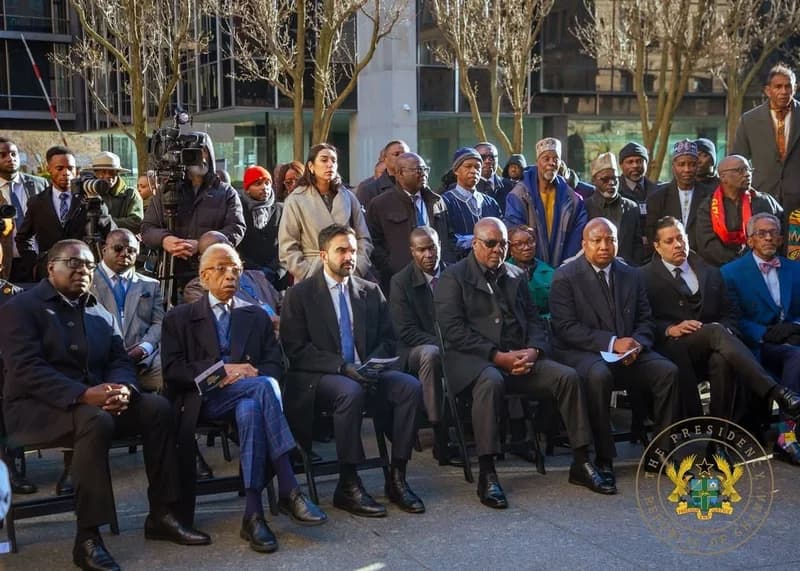
The United Nations General Assembly has achieved a historic milestone by passing a resolution that officially designates the transatlantic slave trade as the "gravest crime against humanity." Tabled by Ghana’s President John Dramani Mahama, the resolution received overwhelming support with 123 member states voting in favor. The motion represents a significant diplomatic victory for Africa and the Caribbean, formalizing a global acknowledgment of the enduring suffering of approximately 13 million enslaved Africans and the systemic inequalities that persist today. Despite the broad consensus, the vote saw opposition from the United States, Israel, and Argentina, while 53 nations abstained.
In a series of powerful addresses leading up to the vote, President Mahama urged the international community to “stand on the right side of history” and reject what he described as the “normalization of the erasure of Black history.” He specifically criticized trends in the United States, such as the removal of Black history curricula and the dismantling of slavery exhibits, warning that such actions risk a reversal of social progress. During his visit to New York, the President also led a somber wreath-laying ceremony at the African Burial Ground National Monument alongside NYC Mayor Zohran Mamdani. Mahama emphasized that the resolution is not merely a symbolic gesture but a necessary step to restore dignity and humanity to the descendants of those trafficked during the Middle Passage.
The resolution encourages former slave-trading nations to engage in “meaningful dialogue” with African states and the African Union regarding reparative justice. Key components of the proposal include the potential establishment of a reparations fund, formal apologies from involved nations, and the return of cultural artifacts looted during the colonial era. Ghana’s Foreign Minister, Samuel Okudzeto Ablakwa, hailed the adoption as an “emphatic victory for justice,” clarifying that the call for reparations is aimed at healing, education, and structural reform rather than personal gain. The resolution was also endorsed by Amnesty International, which praised it as a momentous step for legal recognition and global equity.
While the passage of the motion marks a turning point, it has also highlighted international divisions. In the United Kingdom, the government’s stance drew criticism in Parliament from Labour MP Bell Ribeiro-Addy, who called for a debate on Britain's historical responsibility. The United States expressed concerns over the clarity of the resolution’s beneficiaries and its impact on international legal frameworks. Nevertheless, the resolution provides a formal platform for future discussions on systemic racism and underdevelopment. UN Secretary-General Ant3nio Guterres echoed the sentiment for change, urging member states to take stronger actions against racial inequality to ensure that the scars of the past inform a more just and inclusive global order.
This story touches markets covered on Anansi Intelligence ↗.
Related topic
John Mahama: Latest News & Updates →More from politics
Continue exploring similar stories


