••
UN Allocates $60 Million to Combat Escalating Ebola Crisis in DR Congo Amid Rising Regional Health Concerns
•3 min read•26 sources
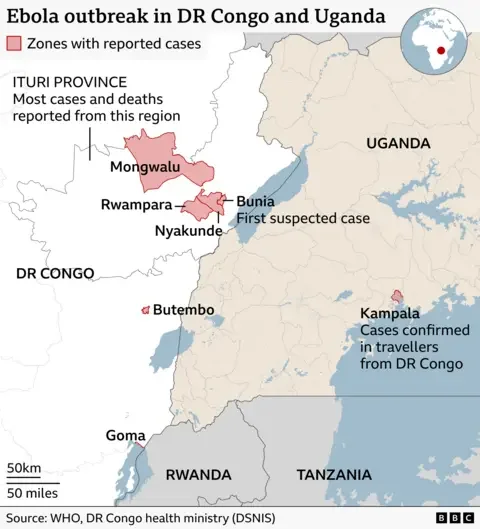
The United Nations has authorized the immediate release of $60 million from its emergency response fund to combat a lethal Ebola outbreak in the Democratic Republic of the Congo (DRC) and neighboring regions. This funding surge follows a decision by the World Health Organization (WHO) to elevate the public health risk in the DRC to “very high.” The outbreak, primarily involving the Bundibugyo strain for which there is currently no proven vaccine, has resulted in nearly 180 suspected deaths and over 750 suspected cases. The UN funds are earmarked for direct medical interventions, including contact tracing, the establishment of specialized treatment centers, and community engagement initiatives designed to bridge the trust gap between health workers and local populations.
The urgency of the situation is underscored by a surge in violence and civil unrest in eastern Congo. In Rwampara, an angry mob set fire to sections of a general hospital and isolation tents after being prevented from retrieving the body of a deceased relative for traditional burial. Such incidents highlight a dangerous intersection of local customs, misinformation, and the stringent health protocols required to contain the highly contagious virus. Authorities have reported that healthcare workers now require military protection in some zones, while neighboring Uganda has suspended cross-border transport to prevent the strain from spreading. Complicating matters further is the detection of Ebola cases in regions controlled by the M23 militia, where the lack of established health infrastructure poses a significant barrier to containment.
While Central Africa battles this viral threat, West Africa faces internal challenges regarding healthcare ethics and professional standards. In Ghana, the Medical and Dental Council (MDC) has raised alarms over a significant rise in complaints regarding medical negligence, malpractice, and professional misconduct. Professor Agyeman Badu Akosa, Chairman of the MDC, noted a troubling backlog of disciplinary cases, suggesting a decline in professional accountability. This has sparked a national debate, with the Ghana National Ambulance Service recently defending its Emergency Medical Technician (EMT) training standards against criticisms of inadequacy. These developments reflect a growing awareness among African patients who are increasingly demanding higher standards of care and transparency from their medical institutions.
In addition to professional ethics, systemic infrastructure gaps remain a primary concern for regional health advocates. Organizations like WaterAid Ghana and the Behasun Integrated Development Organisation (BIDO) have launched the “Time to Deliver” campaign, targeting the critical lack of water, sanitation, and hygiene (WASH) services in health facilities. This infrastructure deficit contributes significantly to the over one million mothers and newborns who die annually from preventable infections. As the DRC continues its fight against Ebola and Ghana works to reform its medical standards, the overarching theme remains the need for sustained investment in diagnostic equipment, community trust, and the fundamental dignity of patients across the African continent.
This story touches markets covered on Anansi Intelligence ↗.
More from africa
Continue exploring similar stories


