••
UCC Secures $500m Housing Agreement as Infrastructure Expansion Reaches Rural Ashanti and Upper West Districts
•3 min read•8 sources
The University of Cape Coast (UCC) has reached a landmark agreement for a $500 million student accommodation project, highlighting a broader national effort to address educational infrastructure deficits. The university signed a Memorandum of Understanding (MoU) with GSC Property Investment Limited to construct 28 dormitory blocks capable of housing 28,000 students. Operating under a build-operate-transfer model, the project will be managed by the private firm for 30 years before reverting to the university. This public-private partnership is designed to alleviate chronic housing shortages on campus, with the first phase of construction scheduled to begin in January 2027 following the completion of necessary assessments.
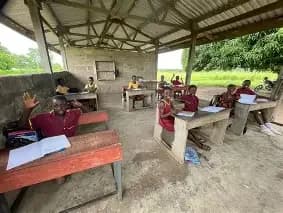
In the Ashanti Region, the government has focused on expanding primary education access in underserved communities. Mr. Mba Zechariah Alenbilla, District Chief Executive (DCE) for Atwima Nwabiagya North, recently commissioned the first-ever kindergarten and primary school blocks for the Nketia and Akwaboa communities. Funded by the District Assemblies Common Fund (DACF), these facilities eliminate the need for young children to travel long distances to neighboring towns for schooling. Similarly, in the Wa East District, a six-unit classroom block in Jeyiri that had been abandoned since 2016 has finally been completed and handed over to the community. DCE Adamu Sayibu noted that the revival of this project, originally started with GETFund resources, reflects the current administration's commitment to completing stalled infrastructure to serve local educational needs.
Addressing concerns over existing structures, Ashanti Regional Minister Dr. Frank Amoakohene has clarified the status of a 12-unit classroom block in Mankranso. Contrary to reports suggesting the building would be demolished to make way for a 24-Hour Economy Market, Dr. Amoakohene stated the facility will be re-engineered. This innovative redesign aims to accommodate both educational functions for lower primary pupils and commercial market needs, ensuring that parents working at the market remain close to their children while preserving the integrity of the local educational environment.
Despite these physical advancements, non-governmental organizations and community leaders have highlighted critical gaps in staffing and maintenance. The NGO "School for Life" has called for increased investment in rural infrastructure, noting that poverty and gender barriers continue to keep children out of school in remote areas. This is exemplified in Jeyiri, where the newly commissioned block faces a severe teacher shortage, currently operating with only three teachers for all classes. Programs Manager Zulyaden Amadu emphasized that new buildings must be accompanied by adequate learning materials, teacher accommodation, and robust community governance to ensure quality education.
As these projects move forward, officials have urged local cooperation to maintain the new facilities. In Atwima Nwabiagya North, the District Director of Education, Frank Duah Boateng, has promised the prompt posting of teachers to the newly opened schools, while local chiefs have appealed for additional Junior High School blocks and improved sanitation services. These developments signal a multi-pronged approach to Ghanaian education, combining large-scale private investment at the tertiary level with the completion of essential primary infrastructure through the District Assemblies Common Fund to bridge the gap between urban and rural learning environments.

