••
Legal Legend Tsatsu Tsikata Honored: Reflections on 51 Years of Law, Judicial Integrity, and the SALL Injustice
•3 min read•21 sources
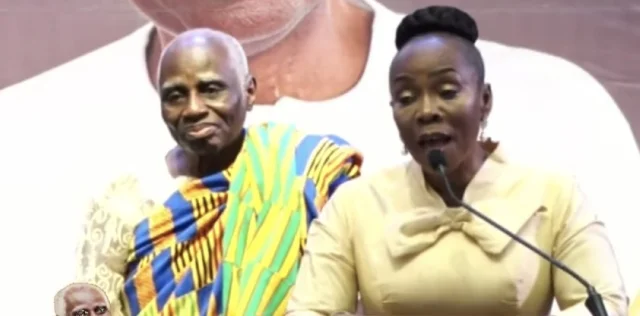
The University of Professional Studies, Accra (UPSA) Law School recently hosted a high-profile honorific lecture and awards ceremony to celebrate the 51-year legal career of Mr. Tsatsu Tsikata. The event, attended by prominent dignitaries including Vice President Professor Jane Naana Opoku-Agyemang and Chief Justice Paul Baffoe-Bonnie, served as a platform to reflect on Tsikata’s profound influence on Ghana’s legal and democratic development. Vice President Opoku-Agyemang praised Tsikata for his scholarship and independent judgment, noting how his work has consistently deepened public discourse on legal matters in the country. The ceremony featured tributes from figures like Justice Srem Sai, who highlighted Tsikata's mentorship and his impact on sales law through landmark cases such as ‘Mok Beer Bar v. Gada.’
During his address, Tsikata reflected on his controversial 2008 conviction for causing financial loss to the state, a period marked by his arrest at a church and subsequent imprisonment under the Kufuor administration. Despite serving time before being pardoned in 2009 and fully exonerated by the Supreme Court in 2010 due to a ‘miscarriage of justice,’ Tsikata emphasized that he holds no personal bitterness or grudges against those involved. He credited his wife, Esther Cobbah, for her unwavering support during his incarceration and urged the legal community to ensure that judicial processes are never again manipulated for political vendettas. He stressed that the law must serve justice above all else, advocating for a transparent and independent judiciary that remains insulated from the locations of power.
Tsikata also used the lecture to address contemporary legal and political grievances, most notably calling for reparations for the residents of Santrokofi, Akpafu, Likpe, and Lolobi (SALL). He argued that their exclusion from the 2020 parliamentary elections following the creation of the Oti Region remains a ‘historic injustice’ that has not been remedied by the subsequent establishment of the Guan District. Furthermore, he criticized the Supreme Court's handling of the 2020 presidential election petition, referring to the bench as ‘unanimous FC’ for its decision not to permit Electoral Commission Chair Jean Mensa to testify. Tsikata contended that this lack of transparency left Ghanaians without a definitive understanding of the election outcomes and undermined institutional accountability.
Against the backdrop of these legal reflections, the government has moved to address immediate economic concerns through a temporary fuel price intervention. Energy Ministry spokesperson Richmond Rockson announced that, effective April 16, 2026, the government will absorb GH"2 per litre on diesel and GH"0.36 on petrol for one month. While the government maintains this is a strategic intervention rather than a subsidy, it highlights the ongoing efforts to protect consumers from international market volatility. Together, these developments underscore a pivotal moment in Ghana’s socio-political landscape, where the celebration of legal legacy meets the urgent demands for judicial reform and economic stability.
This story touches markets covered on Anansi Intelligence ↗.
More from politics
Continue exploring similar stories


