••
President Trump and Global Leaders Announce Landmark US-Iran Peace Accord Amid Escalating Maritime Tensions and Regional Political Shifts
•3 min read•26 sources
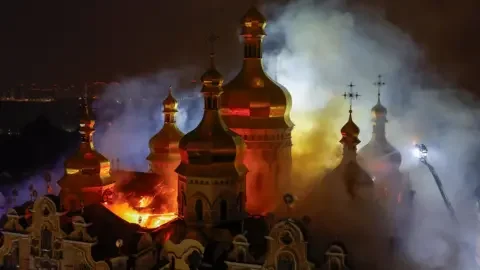
A dramatic shift in global geopolitics occurred this week as President Donald Trump announced a preliminary peace agreement between the United States and Iran, coinciding with a high-stakes maritime operation by UK Royal Marine Commandos against Russia’s shadow fleet. The US-Iran accord, set to be formally signed in Geneva, aims to halt military hostilities, lift the long-standing American naval blockade of Iranian ports, and reopen the strategic Strait of Hormuz. While this diplomatic breakthrough sent global oil prices tumbling to three-month lows, the UK’s seizure of the oil tanker Smyrtos in the English Channel signaled continued Western resolve in enforcing sanctions against Moscow. The preliminary memorandum of understanding between Washington and Tehran has drawn mixed reactions worldwide. Supported by Pakistani Prime Minister Shehbaz Sharif and various G7 leaders, the deal is framed by President Trump as a barrier against Iran’s nuclear ambitions, contrasting it with previous diplomatic efforts. However, the agreement has sparked significant backlash in Israel, where officials claim it undermines their security interests. As Brent crude prices fall in response to the anticipated resumption of shipments, diplomats warn that significant issues—including long-term implementation details and Iran’s missile threats—remain unresolved. Simultaneously, the National Crime Agency and UK armed forces conducted their first operation of its kind, fast-roping onto the Smyrtos to arrest an Indian national on suspicion of sanctions violations. The Cameroon-flagged vessel, part of a 500-ship shadow fleet supporting Russia’s war efforts, was detained south of Weymouth. While Moscow has condemned the move as 21st-century piracy, UK Prime Minister Sir Keir Starmer emphasized that the operation underscores Britain’s commitment to curbing Russian aggression. This maritime tension comes as President Zelensky condemned a new wave of Russian strikes that killed 11 people in Ukraine and damaged the historic 11th-century Dormition Cathedral. Within the African continent, political transitions and human rights concerns continue to dominate the landscape. In Senegal, Ousmane Sonko has solidified his influence, being elected Speaker of the National Assembly following his dismissal as Prime Minister. Meanwhile, in Uganda, tensions remain high as the army chief, Muhoozi Kainerugaba, faced criticism for the detention of opposition politician Erias Lukwago. Cameroon’s political crisis has also reached European courts, with opposition leader Tchiroma filing complaints in France against President Paul Biya over a violent crackdown on protesters. In Ghana, President John Dramani Mahama reaffirmed the nation’s commitment to international stability by receiving new ambassadors from eight nations, including Russia and Poland, at the Jubilee House. Simultaneously, Foreign Minister Sam Ablakwa signaled Ghana’s readiness to negotiate reciprocal e-visa fee reductions with the European Union, highlighting a billion-dollar trade partnership. These developments, alongside EU-supported security dialogues in Accra, emphasize a growing focus on collaborative governance and maritime security in West Africa as the global community navigates a volatile diplomatic era.
This story touches markets covered on Anansi Intelligence ↗.
Live rates
Dollar to cedi rate →More from politics
Continue exploring similar stories


