••
Global Political Shifts: US-Iran Ceasefire Reached Amid Constitutional Upheavals and Leadership Contests Across Africa
•3 min read•36 sources
In a major geopolitical development, U.S. President Donald Trump has announced a two-week ceasefire with Iran, a temporary truce mediated by Pakistani officials just as military tensions threatened to escalate into a full-scale conflict. The agreement, contingent on the reopening of the strategic Strait of Hormuz for commercial shipping, has already caused global oil prices to slide below $100 per barrel. While President Trump described the pause as a "total victory" toward a definitive peace agreement, Iranian officials clarified that they would only maintain the suspension of hostilities if attacks against them ceased. Despite the respite for civilians, significant skepticism remains regarding the durability of the truce, particularly as ongoing Israeli operations in Lebanon and reported missile activity continue to complicate the regional security landscape.
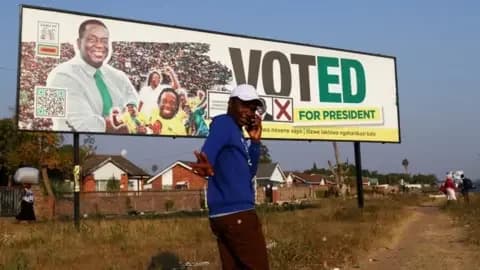
On the African continent, political tensions are mounting as several nations grapple with controversial constitutional changes and leadership transitions. In Zimbabwe, the ruling Zanu-PF party is pushing amendments that would allow parliament to elect the president and extend presidential terms from five to seven years, a move opposition leader Tendai Biti has labeled a "slow coup." Similarly, in Cameroon, the reintroduction of the vice presidency after a 52-year hiatus has sparked fears of a burgeoning monarchy, though officials were quick to dismiss rumors that the 93-year-old President Paul Biya had appointed his son, Franck Biya, to the role. These developments come as both Biya and Djibouti’s Ismail Omar Guelleh, who is seeking a sixth term after removing age limits, face increasing scrutiny over the suppression of dissent and the entrenchment of long-term rule.
Beyond constitutional maneuvers, the pursuit of justice for past and present crimes remains a central theme across the region. The Gambia has appointed British lawyer Martin Hackett as a special prosecutor to address human rights violations committed during the 22-year regime of Yahya Jammeh, aiming to prosecute 70 identified individuals. In Nigeria, the government has launched a mass trial of over 500 suspects linked to Boko Haram, signaling a commitment to addressing long-standing grievances over regional terrorism. Meanwhile, the international dimension of African conflicts was highlighted by the confirmation that 16 Cameroonian "military contractors" were killed while fighting for Russia in Ukraine, and a French court's decision to postpone a ruling on genocide allegations against Agathe Habyarimana, the widow of the former Rwandan president.
These shifts in governance and justice are occurring against a backdrop of economic instability and evolving diplomatic relations. In Guinea-Bissau, a national transport strike erupted following fuel price hikes triggered by the conflict in the Middle East, while Ethiopia has extended the mandate of Tigray’s interim administration, delaying scheduled elections. Diplomatic ties are also being recalibrated in South Africa, where President Cyril Ramaphosa accepted the credentials of a new U.S. ambassador amidst reports that nearly 5,000 Afrikaners have resettled in the U.S. under a specific refugee program. Collectively, these events illustrate a volatile global political climate where fragile truces in the Middle East contrast with deep-seated struggles for democratic integrity and legal reckoning across Africa.
This story touches markets covered on Anansi Intelligence ↗.
More from politics
Continue exploring similar stories


