••
Tema Oil Refinery shares refining expertise with Ugandan delegation
•2 min read•1 source
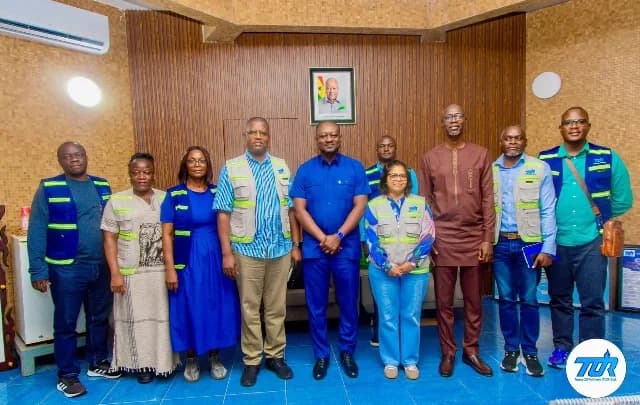
Tema Oil Refinery (TOR) management hosted a delegation from the Uganda Revenue Authority (URA) on October 21, 2026, to provide technical insights into crude oil refining processes. This engagement forms part of a strategic information exchange program designed to support Uganda’s goal of establishing its own domestic refinery. By sharing Ghana’s long-standing experience in the sector, the two institutions aim to bolster regional cooperation and technical self-reliance across the African continent.
The delegation was welcomed by the Managing Director and Deputy Managing Director of TOR, along with the refinery’s technical team. Throughout the visit, officials from the Ugandan delegation were briefed on the intricacies of TOR's operations, covering the entire spectrum of the refining process from crude intake to final product distribution. The leadership at TOR underscored the necessity of African institutions collaborating to build indigenous refining capacity and professional expertise within the global petroleum industry.
Arthur Musinguci, who led the Ugandan delegation, expressed appreciation for the knowledge-sharing opportunity, noting that the insights gained are vital for Uganda’s burgeoning oil and gas sector. He emphasized that establishing a domestic refinery requires more than just infrastructure; it demands a deep understanding of operational management and technical workflows, which Ghana’s premier refinery is uniquely positioned to offer. Musinguci highlighted that such engagements are essential for African nations to effectively manage their own resources and reduce dependence on external expertise.
This bilateral engagement occurs at a time when several African nations are looking to increase value-added activities within their borders to maximize economic returns from natural resources. For TOR, the visit serves as an opportunity to showcase its technical resilience and its role as a mentor in the sub-region. The successful exchange not only strengthens ties between Ghana and Uganda but also signals a collective shift towards a more integrated and self-sufficient African energy market, where shared knowledge drives industrial growth.
