••
Enhancing Digital Education: Telecel Foundation and Ketu North MP Drive ICT Upgrades in Local Schools
•2 min read•2 sources
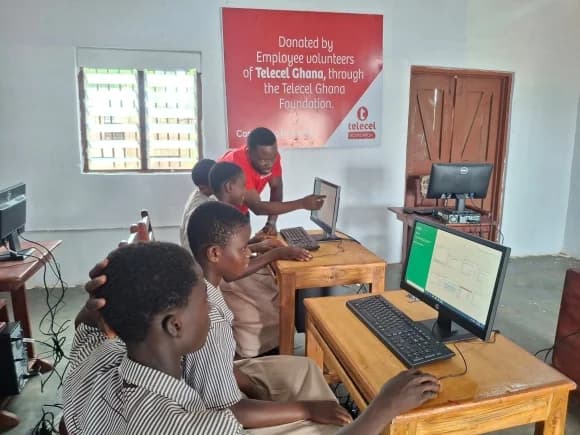
Ghana’s push for digital inclusion in the education sector is gaining significant momentum as private foundations and political leaders roll out modern ICT infrastructure in underserved communities. From the refurbishment of computer laboratories in the Savannah Region to the deployment of high-speed satellite internet in the Volta Region, these initiatives are directly addressing the long-standing digital divide that has historically hampered the learning experience for many Ghanaian students. These efforts emphasize a collaborative approach to education, ensuring that rural students are not left behind in the global digital economy.
In the Savannah Region, the Telecel Ghana Foundation has successfully refurbished the ICT laboratory at the Bamboi D/A Junior High School. This intervention, conducted as part of the Foundation’s Employee Volunteering Programme, transformed what was previously an inadequate facility into a modern learning hub. The comprehensive upgrade included the installation of new computers and the provision of high-speed internet connectivity. Rita Agyeiwaa Rockson, representing the Telecel Ghana Foundation, emphasized that the initiative is rooted in a commitment to digital inclusion, ensuring students in underserved areas have the same tools as those in urban centers to improve their digital literacy.
Complementing these infrastructure upgrades, the Ketu North constituency is leveraging cutting-edge satellite technology to bridge the connectivity gap. Member of Parliament Edem Agbana recently received five additional Starlink internet devices donated by the organization "Friends of Adaklu." This latest donation, the third in a series of planned distributions, provides schools with high-capacity internet capable of supporting up to 254 simultaneous connections per device. Each unit includes a 12-month free subscription, significantly reducing the financial burden on local schools while providing the bandwidth necessary for modern research and interactive learning.
These combined efforts reflect a growing consensus on the importance of stakeholder participation in national development. By integrating robust hardware and reliable internet into the curriculum of basic and junior high schools, these projects are laying the foundation for improved educational outcomes and broader socio-economic empowerment. As these digital resources become more widely available, the focus for local communities and educational authorities will likely shift toward sustainable maintenance and the continuous training of educators to fully harness the potential of these new technologies.
This story touches markets covered on Anansi Intelligence ↗.
More from technology
Continue exploring similar stories


