••
Escalating Violence in Sudan and Nigeria: Deadly Hospital Strikes and Rising Terrorism Deaths Spark International Alarm
•3 min read•9 sources
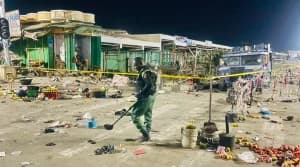
The humanitarian crisis in Africa has intensified following a devastating strike on the El-Daein Teaching Hospital in East Darfur, Sudan, which claimed the lives of at least 64 people, including 13 children. The World Health Organization (WHO) confirmed the casualties, noting that 89 others were injured in the blast. WHO Director-General Dr. Tedros Adhanom Ghebreyesus condemned the attack, emphasizing the critical interruption of medical services in a region already ravaged by a three-year civil war. While the Sudanese army has denied responsibility, attributing the strike to a drone from the rival Rapid Support Forces (RSF), the RSF reported extensive damage to the facility. This incident underscores the severe impact of the conflict, which has seen over 150,000 deaths and millions displaced, prompting local rights organizations to call for an urgent independent investigation into potential war crimes.
In West Africa, Nigeria is grappling with a significant surge in extremist violence, as highlighted by the 2026 Global Terrorism Index. The report identifies two Nigerian attacks among the world’s deadliest incidents: a September 2025 assault on Darajamal village that killed 58 villagers and five soldiers, and a May 2025 attack by Boko Haram in the Kukawa Local Government Area that left 57 dead and 70 missing. These statistics reflect a staggering 237% increase in terrorism-related fatalities in Nigeria over the past year. This trend contrasts sharply with neighboring Burkina Faso, which saw a decline in such deaths, placing Nigeria at the center of a worsening security vacuum in the Sahel and Lake Chad regions.
Beyond organized terrorism, local insecurity and human rights violations continue to plague Nigerian communities. In Kwara State, bandits recently invaded the ECWA Church in Omugo during a Sunday service, abducting at least seven worshippers. While joint security operatives successfully rescued three victims, several remain missing, prompting the state government to intensify forest search operations and call for increased community vigilance. Simultaneously, UN Special Envoy Amb. Zino Lexili Ogazi has issued a scathing condemnation of the so-called "Ozoro Rape Festival" in Nigeria. Labeling the practice as barbaric, she demanded the immediate arrest of perpetrators and the total abolition of festivals that institutionalize violence against women, regardless of cultural claims.
These developments across Sudan and Nigeria highlight a broader pattern of civilian victimization and the breakdown of institutional protections. International bodies and local governments are facing mounting pressure to shift from reactive measures to proactive stabilization efforts. UNICEF and other humanitarian agencies have warned that the continued targeting of hospitals, schools, and places of worship is creating a generation defined by trauma and malnutrition. As global leaders call for de-escalation in Sudan and better counter-terrorism strategies in Nigeria, the protection of civilian life remains the most pressing challenge for the African continent in 2026.
This story touches markets covered on Anansi Intelligence ↗.
More from africa
Continue exploring similar stories


