••
Stanbic Bank Launches Direct Yuan Payments as Experts Warn of Rising Debt and Fraud Risks in Ghana’s Financial Sector
•3 min read•12 sources
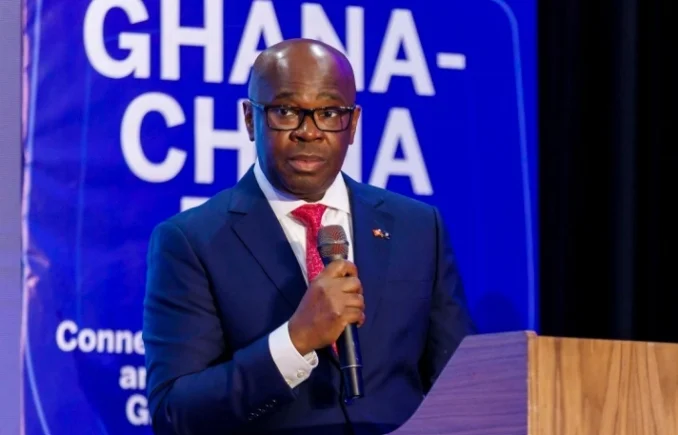
Ghana's financial landscape is undergoing a significant transformation driven by technological innovation and shifting trade dynamics, even as experts warn of emerging risks in household debt and digital fraud. At the recent Graphic Business/Stanbic Bank Breakfast Meeting in Accra, industry leaders highlighted the need for efficient cross-border payment systems to bolster the economy. A major development in this space is the launch of the Cross-Border Interbank Payment System (CIPS) by Stanbic Bank Ghana, in partnership with the Industrial and Commercial Bank of China (ICBC). This system allows Ghanaian businesses to make direct payments in Chinese yuan (RMB), bypassing traditional US intermediary banks to reduce costs and transaction times—a critical move given that China accounted for over 22% of Ghana’s imports in 2024.
Beyond trade, the financial sector is seeing deeper integration between traditional banks and fintechs. Chipper Cash’s collaboration with Universal Merchant Bank (UMB) to launch bank-backed virtual accounts exemplifies this trend, aiming to provide secure digital solutions under the oversight of the Bank of Ghana and the Securities and Exchange Commission. Kwamina Asomaning, CEO of Stanbic Bank Ghana, emphasized that while Artificial Intelligence and digital assets like stablecoins are reshaping the ecosystem, businesses must navigate these innovations responsibly to ensure long-term stability. This shift is mirrored by the behavior of younger Ghanaians, particularly Gen Z and Millennials, who are increasingly diversifying income streams and investing in equities to counter inflation.
However, this rapid digital expansion has a darker side, characterized by a "hidden balance sheet" of household debt and rising criminal activity. The "Buy-Now-Pay-Later" (BNPL) boom, while marketed as a consumer convenience, is reportedly leading to unmanageable debt for many families. Financial experts argue that the lack of centralized visibility among lenders allows households to accumulate multiple overlapping loans, threatening overall solvency. While the Bank of Ghana has introduced new licensing and transaction caps for digital credit providers, critics suggest that mandatory debt checks and standardized cost disclosures are necessary to protect vulnerable populations, particularly informal traders and women.
Complementing these debt concerns is a sharp rise in digital fraud. Reports from the Bank of Ghana indicate that fraud cases among payment service providers nearly doubled between 2022 and 2025, even as traditional bank fraud decreased. In the Central Region, police have recently intensified efforts to dismantle syndicates targeting mobile money (MoMo) vendors and traders in Mankesim, following several high-value fraud cases. Stakeholders are now calling for a new responsibility structure that shifts the cost of fraud losses onto service providers, incentivizing them to strengthen their defenses and protect Ghanaian consumers in an increasingly digital economy.


