••
Stablecoin Adoption Surges in Nigeria and South Africa Amid Calls for Creative Sector Investment in Ghana
•2 min read•3 sources
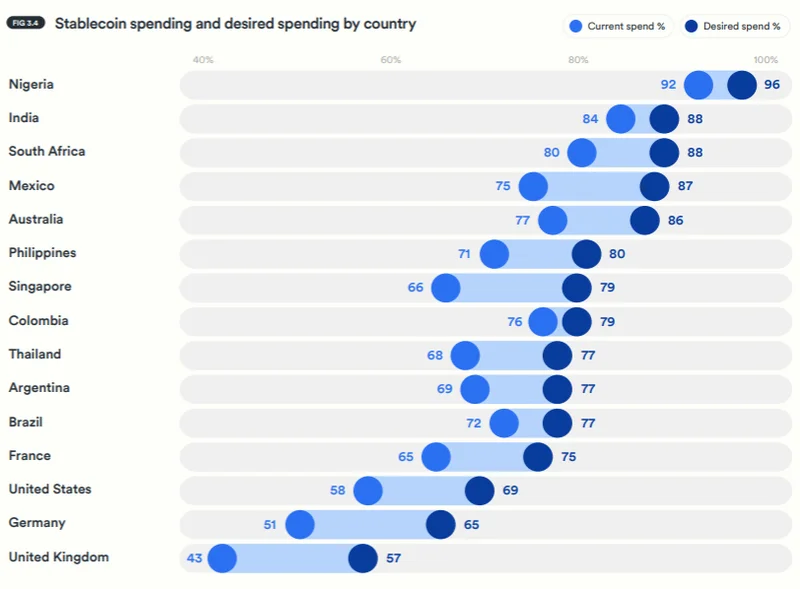
Nigeria and South Africa are emerging as global leaders in stablecoin adoption, with a recent survey by YouGov and crypto firms revealing that nearly 80% of respondents in these nations now hold digital assets. This significant demand, highlighted in the Stablecoin Utility Report, reflects a broader shift toward financial tools that offer greater speed and lower costs than traditional payment systems. In Nigeria, the preference is particularly pronounced, with 95% of users favoring stablecoins over the local currency to safeguard against economic volatility and unreliable infrastructure.
Despite the stablecoin market's valuation exceeding $310 billion, its expansion into mainstream retail remains limited, posing a challenge for wider adoption. Central bankers have also raised concerns regarding the potential for economic dollarisation and capital flight, which has prompted a cautious regulatory stance. However, users continue to advocate for increased acceptance and integration of these assets into existing financial frameworks to improve transaction efficiency across the continent.
In a parallel development within the West African creative economy, the Ghanaian music industry is facing its own set of structural hurdles. Industry voices, such as former Lynx Entertainment signee Kasar, are urging record labels and private investors to shift their focus toward nurturing emerging talent rather than only supporting established stars. The Graphic Showbiz echoes this sentiment, arguing that structured support and management for young artists are essential for the long-term health and innovation of the industry, which currently suffers from limited funding.
Together, these trends highlight a continent in the midst of a significant economic and cultural transformation. Whether through the adoption of decentralized financial assets like stablecoins or the professionalization of the creative arts in Ghana, there is a clear demand for investment and modernization. For Africa to sustain this growth, stakeholders must address the existing barriers—ranging from retail integration for digital assets to management structures for the creative arts—to ensure that these burgeoning sectors can provide long-term economic stability and opportunity.
This story touches markets covered on Anansi Intelligence ↗.
More from africa
Continue exploring similar stories


