••
Nobel Laureate Wole Soyinka and Musician Gramps Morgan Urge Action on Reparatory Justice at Accra Summit
•2 min read•5 sources
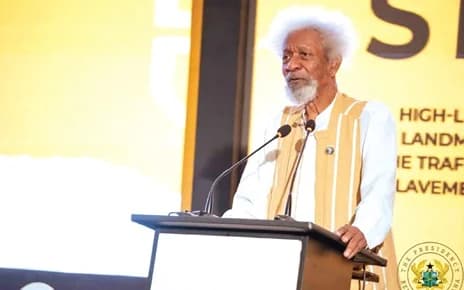
Professor Wole Soyinka, the renowned Nobel Laureate, has issued a powerful call to action for African leaders, urging them to transition from "performative diplomacy" to the implementation of concrete strategies for reparatory justice. Speaking at the "Next Steps" High-Level Consultative Conference on Reparatory Justice held in Accra, Ghana, Soyinka joined representatives from over 80 countries and notable figures such as Jamaican musician Gramps Morgan. The conference aims to address the enduring legacies of the transatlantic slave trade and colonial exploitation, seeking a unified path forward for restitution and the restoration of dignity to affected nations and the global African diaspora.
During his address, Soyinka emphasized that the quest for reparations must extend beyond financial calculations and economic negotiations. He argued that true reparatory justice requires a profound psychological liberation for both continental Africans and those in the diaspora. The Nobel Laureate warned that without a fundamental shift in mindset and a commitment to "rehumanizing African memory," the movement risks becoming a series of empty gestures. He stressed that the historical trauma inflicted by centuries of exploitation requires a comprehensive approach that prioritizes the recovery of identity and the restoration of human value over mere diplomatic rhetoric.
Soyinka also used the platform to criticize the modern political landscape, highlighting how historical injustices continue to manifest in contemporary governance failures and human trafficking across the continent. He specifically condemned a recent retaliatory visa policy implemented by a foreign nation against countries that supported a United Nations resolution recognizing the trafficking of enslaved Africans as a crime against humanity. By linking the atrocities of the past to modern forms of slavery, Soyinka urged leaders to protect the youth from current exploitation while simultaneously seeking justice for ancestral wrongs, stating that reparatory justice remains a distant goal if modern atrocities are ignored.
The inclusion of Gramps Morgan at the Accra summit further underscored the transcontinental nature of the reparations movement, highlighting the shared history and common goals of Africans and their descendants in the Caribbean. As the "Next Steps" conference concludes, the focus shifts to how these high-level discussions will translate into tangible policy and international advocacy. The consensus emerging from the Accra gathering is clear: the road to reparatory justice is not merely about financial settlement, but about a sustained global effort to dismantle the structural and psychological remnants of colonialism and the slave trade once and for all.
This story touches markets covered on Anansi Intelligence ↗.
More from politics
Continue exploring similar stories


