••
Triumph and Turmoil: Sharon Dede Padi’s Guinness World Record and the Miss Intercontinental Ghana Controversy
•3 min read•2 sources
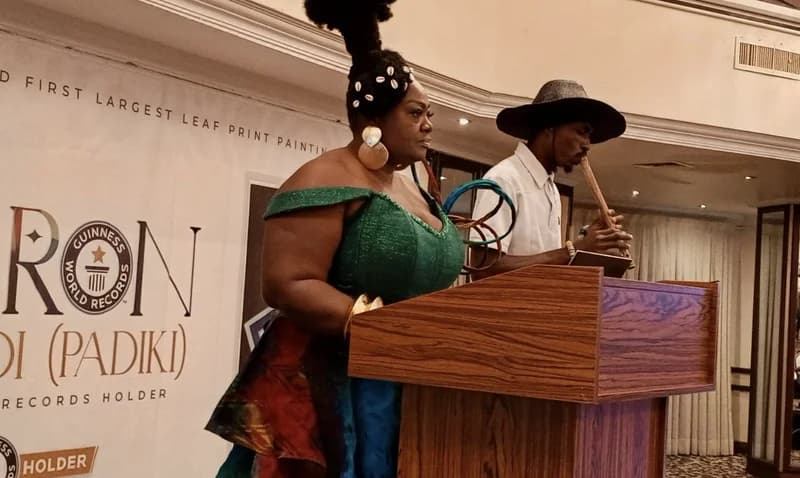
The Ghanaian entertainment and arts landscape has recently witnessed a stark contrast of fortunes, marked by a historic global achievement in the visual arts and a burgeoning legal scandal within the beauty pageant industry. Visual artist Sharon Dede Padi has brought international acclaim to the nation by securing a Guinness World Record for the largest leaf print painting, a feat that celebrates Ghana’s cultural heritage and environmental consciousness. Conversely, the pageantry world is embroiled in a heated dispute following the controversial dethronement of Chiaky Otuteye, the 2025 Miss Intercontinental Ghana winner, raising concerns about the treatment of beauty queens and the internal management of such competitions.
Sharon Dede Padi’s record-breaking artwork, which measures an impressive 54.33 square meters, was completed on July 3, 2025, at the National Theatre of Ghana. The painting utilizes various leaf prints to symbolize diverse locations and identities across the country, serving as a visual narrative of Ghana’s history. Beyond its artistic merit, the project was designed with a philanthropic and environmental mission, specifically aiming to raise awareness about the devastating effects of deforestation. Padi has announced plans to collaborate with the Ministry of Tourism to display the record-breaking piece publicly and intends to dedicate her future efforts to nurturing the artistic talents of young children, ensuring the sustainable growth of Ghana’s creative sector.
In sharp contrast to this celebration of talent, the story of Chiaky Otuteye highlights the darker side of the entertainment industry. Since being crowned Miss Intercontinental Ghana in November 2025, Otuteye reportedly faced significant online abuse and ill-treatment from the pageant’s organizers, Cloudz Entertainment. The backlash was allegedly exacerbated by a misleading video caption from an official blogger, which triggered widespread trolling regarding her appearance and poise. Despite Otuteye’s assertions that she met all competition criteria—including being a natural-born female—she was called to an emergency meeting and subsequently disqualified based on what have been described as subjective standards. The communication breakdown led to her official dethronement and the immediate elevation of the 4th runner-up to her position.
As these two narratives unfold, they reflect the broader complexities of the Ghanaian creative economy. While Padi’s success demonstrates the potential for Ghanaian artists to influence global environmental and cultural dialogues, the situation surrounding Otuteye points to a need for greater transparency and professional standards within the pageant circuit. Cloudz Entertainment has stated that the matter regarding Otuteye’s disqualification is currently under legal proceedings, leaving the future of her title in the hands of the courts. Together, these events underscore the dual reality of the industry: a space capable of achieving world-class excellence, yet one that still struggles with internal governance and the protection of its participants.
This story touches markets covered on Anansi Intelligence ↗.
More from entertainment
Continue exploring similar stories


