••
Senegal Political Crisis: President Faye Appoints New PM as Parliament Speaker Resigns Amid IMF Debt Freeze
•2 min read•14 sources
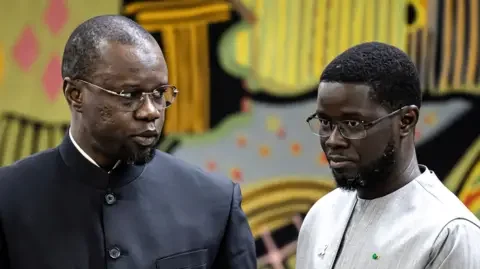
Senegal’s political landscape has been thrust into uncertainty following President Bassirou Diomaye Faye’s decision to appoint seasoned economist Ahmadou Al Aminou Lo as the nation’s new Prime Minister. The appointment comes just days after the dismissal of Ousmane Sonko, Faye’s former close ally and a central figure in the populist movement that brought the current administration to power. This leadership shake-up is primarily driven by an acute financial crisis, highlighted by a debt-to-GDP ratio that has surged to 132% and the subsequent freezing of a $1.8 billion International Monetary Fund (IMF) lending program due to misreported financial data.
Ahmadou Al Aminou Lo, a former head of the Central Bank of West African States (BCEAO) in Senegal, takes office with a clear mandate to restore fiscal credibility and reassure international investors. While Lo has expressed his commitment to the "systemic transformation" promised by Faye’s administration, his background suggests a pivot toward pragmatic economic management over the more radical, anti-establishment rhetoric championed by his predecessor. Lo acknowledged the contributions of the previous government but emphasized that urgent reforms are necessary to navigate the country’s challenging debt restructuring process and stabilize the economy.
The executive reorganization has triggered immediate repercussions in the legislative branch, where the Speaker of the National Assembly, El Malick Ndiaye, has resigned in a show of solidarity with the ousted Sonko. Ndiaye’s departure has intensified the political turmoil, as it opens the door for Sonko—whose Pastef party holds a majority in parliament—to potentially seek the speakership himself. Such a move would create a significant power struggle between the presidency and the legislature, potentially allowing Sonko to challenge Faye’s authority and legislative agenda from a position of parliamentary strength.
As the National Assembly prepares to vote on a new Speaker, the opposition has raised alarms, with some labeling the potential return of Sonko to a high-ranking state position as an "institutional coup." The rift between Faye and Sonko, once inseparable allies, now poses a severe threat to governance and regional stability in West Africa. The coming months will be critical as the government attempts to renegotiate terms with the IMF and establish a functional relationship between a weakened executive and a defiant, Sonko-led legislature.
This story touches markets covered on Anansi Intelligence ↗.
More from politics
Continue exploring similar stories


