••
Sam George Advocates for Local Engineering Excellence as UMaT Debuts Smart Sanitary Pad Vending Machine
•2 min read•1 source
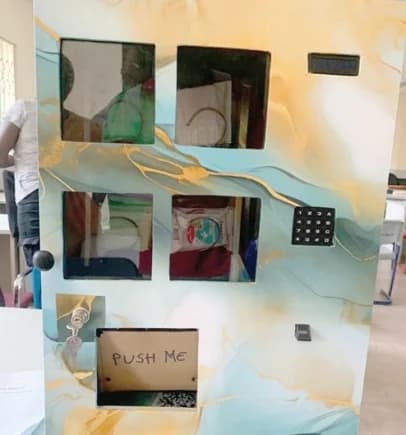
The University of Mines and Technology (UMaT), Tarkwa, has taken a significant step toward bridging the gender gap in education with the launch of an innovative Smart Sanitary Pad Vending Machine (SSPVM). Unveiled during the inauguration of the Robotech Lab project, the initiative aims to provide female students with reliable, subsidized access to menstrual hygiene products, ensuring that biological needs do not disrupt their academic pursuits. Member of Parliament for Ningo-Prampram, Samuel Nartey George, who headlined the event, underscored that this technological solution is a testament to the potential of Ghanaian-trained engineers to solve local problems.
The SSPVM is not a simple dispensing unit; it leverages sophisticated Internet of Things (IoT) technology to streamline operations. The system incorporates real-time inventory management and secure user authentication, allowing for a seamless experience for students while enabling the university to monitor stock levels efficiently. By adopting a university-subsidized model, the initiative directly addresses the financial burden of menstrual health, which often serves as a silent barrier to consistent attendance and academic performance among female students in tertiary institutions.
Beyond the immediate benefit of hygiene access, the project aligns with several United Nations Sustainable Development Goals (SDGs), specifically those focusing on Good Health and Well-being (Goal 3), Quality Education (Goal 4), and Gender Equality (Goal 5). MP Sam George emphasized that the next generation of Ghana’s engineers should be developed domestically rather than imported, pointing to the Robotech Lab as a breeding ground for such talent. He noted that the integration of technology into social interventions is crucial for the nation’s industrial and educational advancement.
This initiative complements existing national programs and addresses a critical gap in menstrual health services that frequently overlooks students at the tertiary level. By embedding technological innovation within the campus infrastructure, UMaT is setting a precedent for other higher education institutions in Ghana. The successful implementation of the SSPVM highlights how localized engineering solutions can tackle systemic challenges, ultimately fostering a more inclusive and supportive environment for future female leaders in STEM and other disciplines.
This story touches markets covered on Anansi Intelligence ↗.
More from education
Continue exploring similar stories


