••

Ghana’s business landscape is witnessing a significant shift as local entrepreneurs and corporate entities increasingly align their profit-making objectives with national development and youth empowerment. At the forefront of this trend is Ambassador Alhaji Salamu Amadu, founder of the Afro-Arab Group of Companies, whose 'Enterprise Model' focuses on job creation through diverse sectors including real estate and microfinance. A major component of this vision includes a 200,000-unit affordable housing initiative and a 'Work and Pay' Electric Vehicle program aimed at promoting eco-friendly transport. Similarly, the Coalition for Positive Impact (CPI) recently emphasized at the Igniting Dreams Summit 2026 that tailored financing for young entrepreneurs in Northern Ghana is essential to reversing historical regional inequalities and reducing poverty.
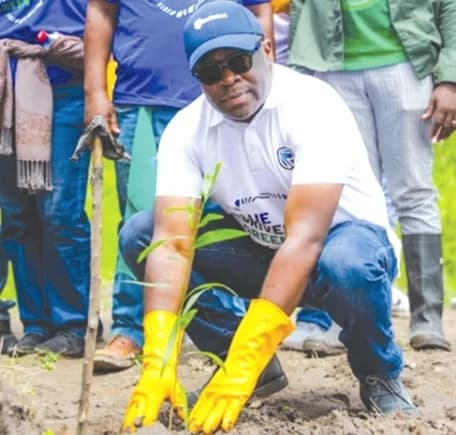
In addition to human capital development, major infrastructure and sustainability projects are gaining momentum. A high-level delegation led by Togbe Afede XIV and Strategic Initiatives Limited recently assessed the Kpeve Water Treatment Plant in the Volta Region to explore expansion possibilities, aiming to meet the growing demand for safe drinking water. In the corporate sector, Stanbic Bank Ghana has intensified its climate action by launching a program to plant 50,000 trees this year, part of a long-term goal of one million trees to support global net-zero targets. This environmental focus is echoed by the Commissioner-General of the Ghana Revenue Authority, Anthony Kwasi Sarpong, who has urged businesses to provide tools and resources for youth-led sanitation initiatives, particularly in flood-prone areas of Accra.
The creative and retail sectors are also evolving to meet modern demands while navigating emerging threats. Harribel Yeboah’s Haizel’s Atelier in Accra is redefining branding through bespoke design and AI-enhanced research, while simultaneously launching a summer program to train the next generation of creative entrepreneurs. However, this growth is tempered by rising financial risks; Ghanaian traders are reporting significant losses due to a surge in counterfeit cedi notes and fraudulent mobile money (MoMo) alerts. Traders are calling for stronger law enforcement to prevent these scams from undermining confidence in the nation’s digital and cash payment systems.
On the international front, broader market shifts are impacting the continent, as seen with mining giant De Beers suspending production at South Africa’s flagship diamond mine for two years due to declining profits and competition from lab-grown gems. Meanwhile, US chain Chipotle is making its first foray into Mexico, signaling continued global expansion in the fast-food sector. These developments, ranging from local entrepreneurial resilience to international market fluctuations, underscore a complex economic environment where Ghanaian businesses must balance innovation and sustainability with the need for heightened security against financial fraud.
This story touches markets covered on Anansi Intelligence ↗.
Related topic
Ghana Customs Recruitment: Latest News & Updates →Live rates
Dollar to cedi rate →Continue exploring similar stories


