••
Rotary Club of Kumasi-East Ends Water Crisis in Nintin as Local Development and Youth Leadership Reshape Ghanaian Communities
•3 min read•7 sources
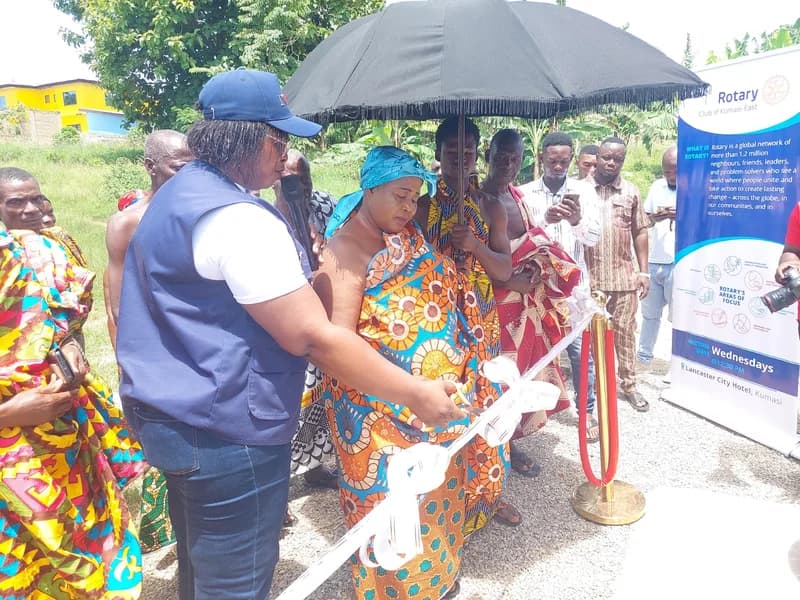
The Rotary Club of Kumasi-East has reached a significant humanitarian milestone by providing a mechanized borehole to the Nintin community in the Mampong Municipality of the Ashanti Region. This initiative, coinciding with the club’s 36th anniversary, addresses a perennial water crisis that forced residents to rely on unsafe streams and springs. For years, the community suffered from waterborne diseases such as cholera and typhoid, exacerbated by climate change and agricultural activities that polluted traditional water sources. During the commissioning, local leaders, including retired Deputy Director of Education Nana Adu Asare, expressed profound gratitude for the project, which cost several thousand Ghana Cedis. Beyond the borehole, the Rotary Club donated educational materials to local schools, though community leaders continue to appeal for further assistance regarding sanitation facilities to prevent health risks in educational settings.
While Nintin celebrates improved health infrastructure, agricultural stakeholders in the Chereponi District of the North East Region are focusing on economic accountability. The Peasant Farmers Association of Ghana (PFAG), with support from the Star Ghana Foundation, recently conducted a capacity-building program to empower smallholder farmers and local assembly representatives. A critical analysis of the 2026 Chereponi District Assembly budget revealed a stark disparity: despite agriculture employing 81% of the local population, the sector received a mere 1.81% of the total budget allocation. Participants were trained in budget tracking and advocacy methods to ensure that future financial planning prioritizes investment in agricultural initiatives over administrative salaries, which currently consume the bulk of the district's resources.
In the Western Region, the drive for local development has taken a historic turn with the installation of 29-year-old Bob Lawson Yankey as the new Chief of Salman. Now known by the stool name Nana Agyaneaka III, he becomes the youngest chief within the Eastern Nzema Traditional Council following the destoolment of his predecessor, Nana Kwamena Bentum II. The peaceful installation ceremony was viewed as a symbol of unity, with the new traditional leader pledging to focus his reign on addressing critical infrastructure deficits. Specifically, Nana Agyaneaka III has committed to improving road conditions and upgrading the community’s health facilities, signaling a shift toward youthful, proactive leadership in traditional governance.
These collective efforts across the Ashanti, North East, and Western regions highlight a broader national movement toward community-led development and enhanced accountability. Whether through the humanitarian interventions of the Rotary Club, the budgetary advocacy of the PFAG, or the installation of forward-thinking traditional leaders, there is a clear focus on addressing the fundamental needs of residents. As these projects move from implementation to maintenance, the emphasis remains on sustainable management and the continued collaboration between civil society, traditional authorities, and local government to improve the standard of living for all Ghanaians.
This story touches markets covered on Anansi Intelligence ↗.
More from africa
Continue exploring similar stories


