••
Professor Ron Tuninga Urges Ghana’s Technical Universities to Overhaul Curricula for AI Revolution
•2 min read•1 source
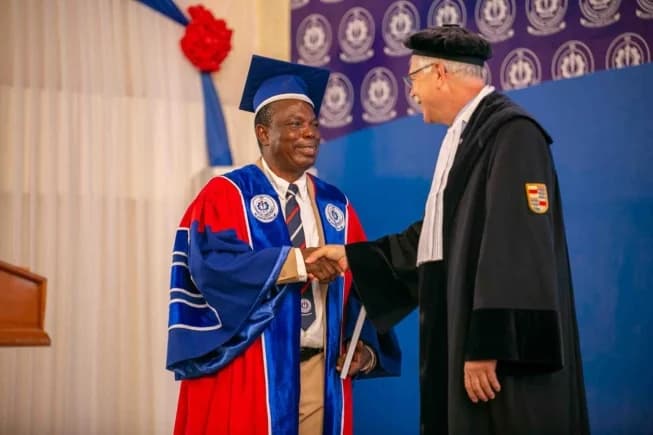
Professor Dr. Ron S.J. Tuninga of Wittenborg University has issued a clarion call for Ghana’s technical universities to radically reform their educational frameworks to remain relevant in the rapidly evolving age of Artificial Intelligence (AI). Speaking at the Seventh Vice-Chancellor’s Distinguished Lecture at Ho Technical University, Professor Tuninga emphasized that the global shift toward AI and emerging technologies demands an immediate transition from traditional teaching methods to more dynamic models focused on innovation and digital adaptability. He stressed that for Ghana to maintain a competitive edge, its higher education institutions must align their research and industry engagement strategies with the current technological landscape. During the lecture, Professor Tuninga highlighted that the current educational paradigm, which often relies on memorization and rote learning, is becoming obsolete in the face of automated intelligence. Instead, he advocated for a curriculum that prioritizes critical thinking, complex problem-solving, and the direct integration of machine learning into academic programs. However, he also identified significant hurdles facing the African continent, notably the persistent deficit in digital infrastructure and a shortage of highly skilled professionals capable of driving a tech-centered economy. To bridge this gap, he urged institutions to prioritize digital literacy and invest in the technical capacity building required to support a modern workforce. Beyond classroom changes, the lecture called for a deeper synergy between academia and the private sector. Professor Tuninga encouraged technical universities to foster robust industry partnerships and promote a culture of continuous learning, ensuring that graduates are not only job-ready but globally competitive. This perspective was warmly received by the Vice-Chancellor of Ho Technical University, Professor Ben Q. Honyenuga, who acknowledged the timeliness of the discussion. Professor Honyenuga noted that as AI's influence grows across all sectors, Ghanaian institutions must be proactive in their reform efforts to ensure students are equipped for the future of work.
This story touches markets covered on Anansi Intelligence ↗.
More from education
Continue exploring similar stories


