••
Paul Afoko and IEAG Call for Strategic Infrastructure and Financial Discipline to Transform Ghana’s Agribusiness
•3 min read•9 sources
Stakeholders in Ghana’s agricultural and economic sectors are pushing for a radical shift toward infrastructure-led growth and data-driven management to unlock the nation’s export potential. At the inaugural Upper East Regional Development and Business Forum in Bolgatanga, prominent businessman Awentami Paul Afoko and the Importers and Exporters Association of Ghana (IEAG) advocated for the 'PEARL' agenda, a framework designed to establish the region as a significant hub for investment and trade. A cornerstone of this proposal is the construction of an international airport in the Upper East Region, which Afoko argues is essential for the timely export of perishable goods and to allow local farmers to compete effectively in global markets. Supporting this vision, IEAG Executive Secretary Samson Asaki Awingobit emphasized that strategic investments in agro-processing and industrial development are the keys to sustainable job creation in northern Ghana.
Beyond physical infrastructure, experts are warning that the 'motivation-only' narrative prevalent in Ghana’s agribusiness sector must be replaced with rigorous financial literacy. Agribusiness consultant Kelvin Essuman Quansah argues that many farmers fall into a 'motivation trap,' relying on passion rather than concrete financial analysis. Using the example of greenhouse tomato operations, Quansah highlights the necessity of understanding cost structures, budgeting, and market pricing dynamics. He asserts that for farming to be a sustainable business, operators must prioritize financial metrics over inspirational rhetoric, ensuring that every seedling planted is backed by a viable business plan and a clear understanding of the bottom line.
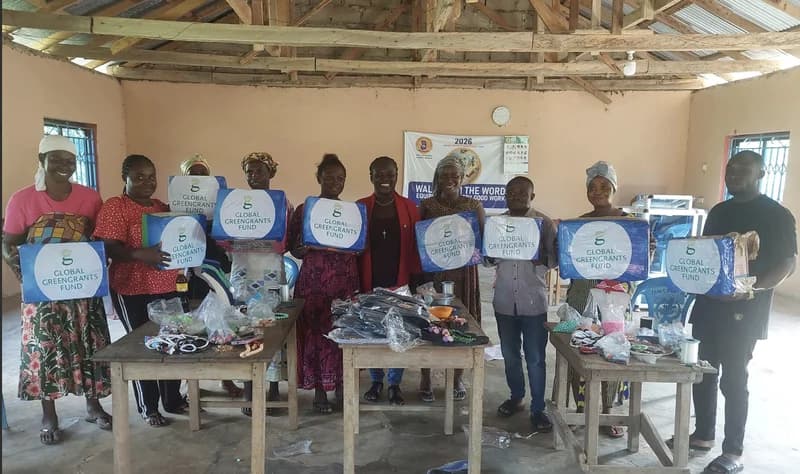
While high-level infrastructure and financial planning are critical, grassroots adaptation remains vital for survival amid environmental shifts. In the Ahafo Region, the Climate Change Awareness and Livelihood Empowerment Project is already implementing localized solutions for farmers facing declining crop yields. Nine farmers in Bogyampa recently received start-up materials and training in vocational skills, such as soap making and bead production, to diversify their income streams. Project Lead Peter Kwame noted that as climate uncertainty worsens, providing farmers with alternative trades is necessary to maintain household economic stability when traditional harvests fail.
These collective efforts—ranging from Afoko’s call for an international airport and cold-chain facilities to Quansah’s demand for financial discipline and the Ahafo region's focus on diversification—represent a multi-layered approach to Ghana’s economic development. The synthesis of these initiatives suggests that the future of Ghanaian agriculture depends on a combination of government-backed infrastructure, private sector investment, and a fundamental shift in how individual farmers manage their operations. Moving forward, the formation of technical committees to implement the PEARL agenda and continued support from partners like the Global Greengrant Fund will be crucial in transforming these strategic visions into a resilient agricultural reality.
This story touches markets covered on Anansi Intelligence ↗.
More from business
Continue exploring similar stories


