••
Parliament Approves Three Supreme Court Justices Following Minority Boycott Over Expedited Vetting
•3 min read•39 sources
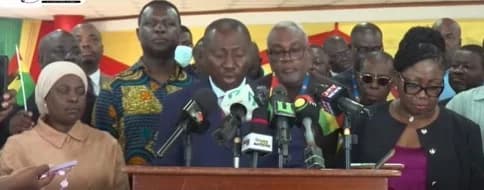
Ghana’s Parliament has officially approved three nominees for the Supreme Court—Justice Sophia Rosetta Bernasko Essah, Justice Edward Amoako Asante, and private legal practitioner Anthony Forson Jr.—following a contentious vetting process. Nominated by President John Dramani Mahama in consultation with the Judicial Council, the new justices are expected to address the court's heavy workload, expanding the bench from 18 to 21 members. However, the approval was preceded by a walkout from the NPP Minority Caucus, who protested the expedited vetting schedule and questioned the urgency of the appointments while no vacancies currently exist on the apex court bench.
Minority Leader Alexander Afenyo-Markin led the objection, arguing that the three-day timetable for public input was insufficient and violated parliamentary Standing Orders that typically require a 14-day notice period. He emphasized that the protest was procedural rather than personal, asserting that rushing the process during an emergency recall of Parliament undermined public participation and constitutional safeguards. Minority Chief Whip Frank Annoh-Dompreh added that the ongoing legal holiday provided ample time for traditional scrutiny, accusing the Majority of inconsistent standards. Appointments Committee Chairman Bernard Ahiafor dismissed these concerns as "baseless" and "flimsy," insisting the committee was obligated to fulfill the House's directive to proceed.
During the vetting, the nominees offered insights into their judicial philosophies and proposed reforms. Justice Edward Amoako Asante, former President of the ECOWAS Court of Justice, emphasized that judges must remain insulated from the influence of appointing authorities and urged suspects held in police custody beyond the constitutional 48-hour limit to sue for redress. Justice Sophia Bernasko-Essah affirmed the Supreme Court’s authority to depart from its own precedents under Article 129(3) to prevent injustice. Meanwhile, Anthony Forson Jr., a former Ghana Bar Association President, voiced strong opposition to capping the number of justices at 19, arguing that the court’s broad jurisdiction requires a larger membership and the integration of ICT solutions to clear case backlogs.
The final approval of the nominees marks a significant expansion of the judiciary under the Mahama administration, though it leaves a trail of partisan friction regarding parliamentary oversight. While the Majority defends the appointments as a necessary step for judicial efficiency, the Minority remains critical of what they describe as a departure from established parliamentary norms. As the new justices prepare to take their oaths of office, the debate over judicial reforms, including potential caps on the number of justices and the use of technology in the courtroom, is expected to continue within the legislature.
Related topic
NPP (New Patriotic Party): Latest News →
