••
Security Experts and Officials Clash Over Effectiveness of Ghana's Vigilantism Act Amid Resurgence Concerns
•3 min read•5 sources
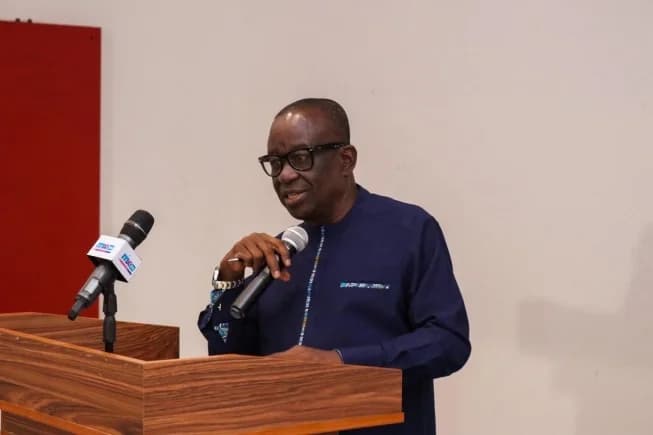
The National Security Coordinator, COP Razak Abdul-Osman, has issued a stern warning regarding the resurgence of political vigilante groups in Ghana, noting that these organizations are increasingly operating in disguised forms. Speaking at a National Policy Dialogue on the Vigilantism and Related Offences Act, 2019 (Act 999), Abdul-Osman revealed that intelligence suggests disbanded groups are regrouping through social media and secretive operations under the guise of internal party security. This trend persists despite the legal framework designed to dismantle such groups, prompting calls for collective vigilance and more robust enforcement to protect Ghana's democratic stability and national security.
Former Minister for National Security Albert Kan-Dapaah provided a different perspective during the dialogue, arguing that legislation alone cannot eliminate political violence. He emphasized that the true solution lies in dismantling the 'appetite' for vigilante services among the political elite. Kan-Dapaah urged political parties to address the internal dynamics that fuel the demand for informal security groups and called for accountability among top-level sponsors. He linked the issue to broader regional threats, suggesting that internal political instability could leave the country vulnerable to the rising tide of extremism and destabilization currently affecting West Africa.
However, the efficacy of Act 999 itself has come under heavy fire from other security veterans. Former National Security Minister Francis Poku and security analyst Col. Festus B. Aboagye have called for the repeal of the Act, labeling it 'unenforceable' and 'irrelevant.' Poku argued that the state has failed to adequately enforce existing laws and that Act 999 was largely a formality that did not address the root causes of political violence. Instead of focusing on the Act, Poku proposed expanding private security regulations to better manage community security challenges. This sentiment was echoed by those who observed a lack of significant prosecutions or enforcement actions since the law was enacted several years ago.
In tandem with these security discussions, the Ministry for the Interior is pivoting toward community-based solutions to counter emerging threats. During a workshop in Bolgatanga, Commissioner of Police Maame Yaa Tiwaa Addo-Danquah urged security agencies to prioritize transparency and build deeper trust with civilians. This initiative, supported by the European Union, aims to foster collaboration between law enforcement and local communities to better identify and dismantle criminal syndicates, such as the armed robbery networks recently targeted in the Upper East Region.
While security dominated the national discourse, Parliament also moved forward with executive appointments, unanimously approving the nomination of Dr. Zanetor Agyeman-Rawlings as Minister-designate for Local Government, Chieftaincy, and Religious Affairs. Nominations for the Ministry of Environment, Science, and Technology were also approved. Speaker Alban Bagbin congratulated the new appointees but reminded them of the significant challenge of balancing their legislative duties with their new ministerial responsibilities. These developments underscore a busy period in Ghanaian politics, as the administration seeks to stabilize internal security while advancing its governance agenda.
