••
Ghanaian Education Leaders Call for Curriculum Reform, AI Readiness, and Ethical Leadership
•3 min read•6 sources
Ghana’s education and professional landscape is undergoing a significant shift toward practical development and technological integration, as emphasized by government officials and academic leaders during a series of recent graduation and induction ceremonies. Vice-President Professor Naana Jane Opoku-Agyemang and the Minister of Education, Haruna Iddrisu, have both urged tertiary institutions to align their training with national developmental needs. Speaking at the opening of the third summer school at the Kwame Nkrumah University of Science and Technology, the Vice-President highlighted technology as a strategic tool for quality education, while the Education Minister, during a hostel inauguration at Wisconsin International University College, called on vice-chancellors to prioritize their core missions and foster better relationships between management and governing councils.
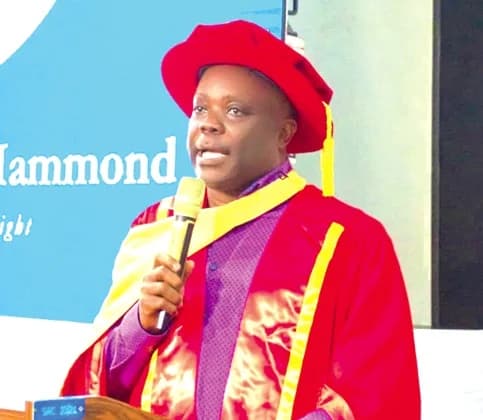
The demand for a fundamental reform in African education was further echoed at the 10th Congregation of Southshore University College. Professor Felix N. Hammond, Chairman of the Governing Council, warned that the traditional certificate-driven model is no longer sufficient in a rapidly evolving Artificial Intelligence (AI) economy. He urged universities to focus on curricula that foster innovation, critical thinking, and problem-solving, noting that modern employers prioritize practical capabilities over mere academic qualifications. This sentiment was supported by Professor Bill Buenar Puplampu, who cautioned that Africa risks missing out on industrial advancements without significant investment in AI and innovation.
Beyond technical skills, the importance of character and ethical leadership remained a central theme across various institutions. At the 15th graduation ceremony of the Kofi Annan International Peacekeeping Training Centre (KAIPTC), Commandant Air Vice Marshal David Akrong emphasized that integrity is the cornerstone of effective leadership, linking many of Africa's current challenges to ethical failures. Similarly, during the 10th anniversary of British Columbia College, guest speakers called for a focus on character development and inclusivity alongside academic excellence. These events celebrated the achievements of hundreds of graduates, including 162 from KAIPTC and 82 from Southshore, all tasked with leading with integrity in their respective fields.
Professional sectors are also aligning with this developmental drive, as seen in the induction of 194 new members into the Chartered Institute of Supply Chain Management (CISCM). Patience Baffoe-Bonnie, Director-General of the Ghana Prisons Service, urged supply chain professionals to see their roles as central to institutional growth and national stability. As Ghana prepares to host the IFPSM World Summit, the collective message from these various ceremonies is clear: the future of the nation depends on a workforce that is not only technologically proficient and practically skilled but also deeply committed to ethical standards and national service.
Related topic
Ghana Prisons Service Recruitment: Latest News →
