••
Ghana and Oxford Leaders Call for Localized Innovation and Applied Research to Transform African Higher Education
•2 min read•6 sources
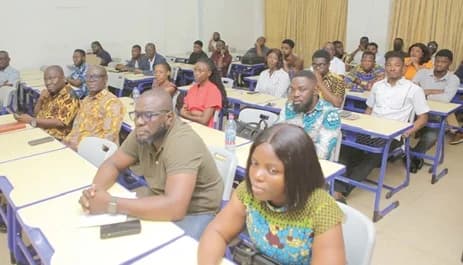
Chief of Staff Dr. Julius Debrah and the Vice-Chancellor of the University of Oxford, Professor Irene Tracey, have called for a fundamental shift in how higher education and research are approached in Africa. Speaking at separate events in Accra, both leaders emphasized the urgent need to move away from purely academic pursuits toward localized, practical solutions. Dr. Debrah, representing the Office of the President, advocated for stronger tripartite links between universities, government, and industry to ensure that innovative ideas are translated into real-world applications. Concurrently, Prof. Tracey urged African institutions to abandon Western educational blueprints and develop indigenous models, including creating local English proficiency assessments to remove financial barriers for students.
This push for scientific self-reliance is gaining momentum through specialized initiatives at major Ghanaian institutions. At the Kwame Nkrumah University of Science and Technology (KNUST), the NYANSAPƆ Photonics Training School was recently inaugurated alongside the launch of the Ghana Photonics and Optics Laboratory (GPOL). Hosting 38 emerging scientists from across the continent, this initiative aims to transition Ghana from a consumer of foreign technology to a producer of light-based scientific solutions. Similarly, the Digispace Africa Fellowship 2026 concluded with a symposium focused on Africa’s digital future, addressing critical themes such as digital governance and the impact of AI-driven disinformation.
Strengthening institutional leadership and financial sustainability remains a core focus as universities adapt to these changing needs. The newly appointed Vice Chancellor of the University of Cape Coast (UCC), Professor Denis Worlanyo Aheto, recently met with the management of Prudential Bank LTD to reinforce a long-standing partnership. Their discussions centered on student financial services and sustainability initiatives aligned with United Nations Sustainable Development Goal 4. Meanwhile, the Ghana Institute of Management and Public Administration (GIMPA) has expanded its academic reach, admitting 80 new students into its School of Technology and Social Sciences (STSS), including candidates for the Master of Science in Financial Economics.
As these institutions evolve, the integration of technology and responsible research remains paramount. Leaders at the Accra Technical University and GIMPA alike have highlighted the dual-edged nature of Artificial Intelligence, urging students and researchers to embrace AI while maintaining ethical standards and avoiding plagiarism. These collective efforts—from high-level policy calls to specialized scientific training—reflect a broader movement to ensure that Ghanaian education not only meets global standards but also addresses the specific socioeconomic and technological challenges of the continent.


