••

Global oil prices have surged by nearly 2% following U.S. military airstrikes against Iran and the reimposition of crude sales sanctions, heightening fears of significant supply disruptions in the Middle East. Brent crude futures rose to approximately $75.54 per barrel, while U.S. West Texas Intermediate (WTI) climbed to $71.81, with some market reports indicating prices reaching as high as $78 and $74 respectively by July 8, 2026. These escalations followed Iranian attacks on commercial vessels in the critical Strait of Hormuz, a vital waterway for global oil transport. The renewed volatility has reversed previous market expectations of oversupply, raising alarms for nations like Ghana, where rising crude costs threaten to erode recent fuel price relief and increase operational expenses for manufacturing and agriculture sectors.
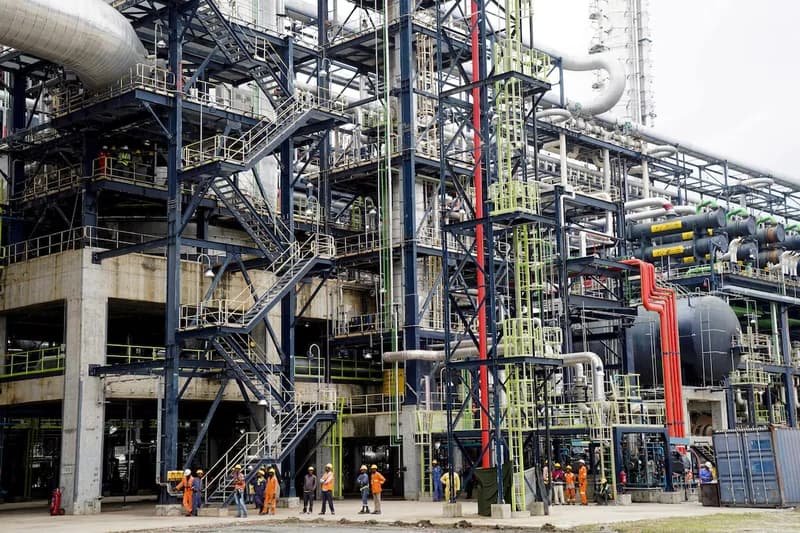
Amidst this global uncertainty, Aliko Dangote’s Dangote Group is making a strategic move to bolster regional energy security by announcing plans for a 700,000-barrel-per-day oil refinery in Kenya. Located on Lamu Island, the facility is set to be the largest in East Africa, aimed at drastically reducing the region's heavy reliance on imported refined fuels. The project is expected to take three years to complete and will be financed through a combination of internal cash flow, bonds, and an initial public offering (IPO). While exact costs remain undisclosed, the financial model and scale mirror Dangote’s landmark Lagos refinery, which exceeded $20 billion in development costs and began operations in 2024. Kenya was selected for the site over alternative locations like Tanzania due to its superior logistics and infrastructure capabilities.
Simultaneously, Nigeria is advancing its efforts to monetize its vast natural gas reserves through UTM Offshore’s $3 billion floating liquefied natural gas (FLNG) project. The company recently secured a pivotal 15-year gas supply agreement with a joint venture comprising the state-owned NNPC Ltd and Seplat Energy. This deal ensures the delivery of 200 million standard cubic feet of gas daily from the Yoho field, clearing a major hurdle for a final investment decision now anticipated by the fourth quarter of 2026. The project, which received Nigeria’s first license for a floating LNG export facility, aims to produce 1.8 million tonnes of LNG annually, providing a critical boost to the country’s export capacity despite ongoing regulatory and funding challenges.
These developments highlight a dual-track reality in the energy sector: while geopolitical conflicts in the Middle East continue to cause immediate price shocks for consumers and businesses, major African industrial players are doubling down on long-term infrastructure. The shift toward domestic refining in Kenya and gas monetization in Nigeria represents a broader continental push to insulate African economies from the vagaries of the global crude market. For countries like Ghana, the success of such regional projects could eventually provide a more stable energy landscape, though the immediate focus remains on managing the inflationary pressures triggered by the current spike in global oil prices.
This story touches markets covered on Anansi Intelligence ↗.
Continue exploring similar stories


