••
Ntiamoah Foundation and Karpowership Launch Educational Initiatives to Enhance Learning Outcomes and Literacy
•2 min read•3 sources
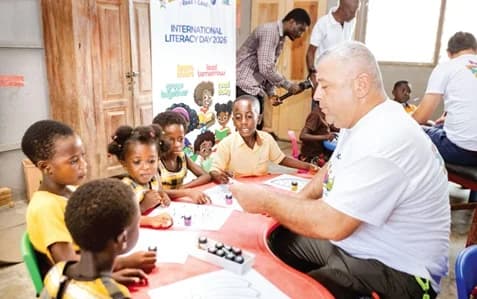
Education stakeholders in the Eastern and Western regions have benefited from targeted interventions aimed at revolutionizing teaching techniques and fostering a robust reading culture among basic school students. The initiatives, led by the Ntiamoah Foundation and Karpowership, focus on empowering both educators and learners with modern tools to improve academic performance and personal development as the new academic year commences. These programs highlight a shift toward learner-centred methodologies and community-supported educational frameworks.
In the Eastern Region, the Ntiamoah Foundation organized a comprehensive four-day workshop in Akyem Adausena for 64 participants, including headteachers, coordinators, and learners from 18 basic schools. The training centered on enhancing Behavioural, Expressive, Attitudinal, and Mental (BEAM) intelligence. Facilitator Dinah Asante utilized immersive educational games and learner-centred strategies to demonstrate how critical thinking and community involvement can reshape child development. Williams Badu Sarpong, the foundation's Programme Manager, emphasized that the initiative's core objective is to strengthen the support systems around learners through a collaborative approach.
Concurrently, in Sekondi-Takoradi, Karpowership celebrated International Literacy Day by hosting a reading and storytelling clinic at the Essipong STMA Basic School. The event was designed to encourage students to embrace a culture of reading as a foundational step toward leadership and confidence. To support this goal, Karpowership donated essential educational materials, including storybooks and school bags. Officials at the event highlighted that such interventions are vital for equipping young learners with the knowledge necessary for a brighter future, using interactive sessions to make learning more engaging.
These combined efforts reflect a growing emphasis on holistic education in Ghana, moving beyond traditional rote learning to incorporate emotional intelligence and literacy-driven empowerment. By engaging school managers, community leaders, and corporate partners, these programs aim to create an environment where learners can thrive academically and socially. Such initiatives align with the broader national goal of improving the quality of basic education and ensuring that every child has the support system required to succeed in an increasingly competitive environment.


