••
Corporate Philanthropy and Community Interventions Address Infrastructure and Financial Gaps in Ghana’s Education Sector
•3 min read•8 sources
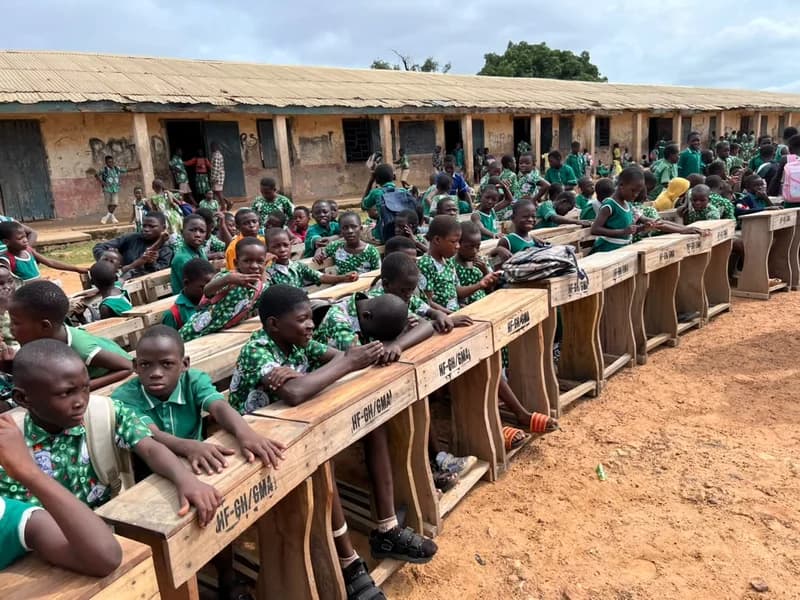
Ghana’s education sector is witnessing a surge in collaborative interventions from corporate entities, non-governmental organizations, and local leaders aimed at addressing chronic resource shortages and financial barriers. From the expansion of multi-million cedi scholarship programs to the donation of essential classroom furniture and maintenance equipment, these initiatives are bridging the gap between underserved communities and quality education. While these private and individual efforts provide critical relief, they also highlight the ongoing challenges of staffing and infrastructure that persist in rural districts across the country.
Leading these systemic interventions, the IDP Foundation and Opportunity International have launched a strategic partnership to expand the Rising Schools Program into Northern Ghana. By establishing a revolving fund, the partnership provides affordable school improvement loans and management training for non-state schools serving low-income communities. This initiative targets the high interest rates and financial constraints that often prevent private, low-cost schools from improving their facilities or capacity. Initially targeting 30 schools, the program aims to create a pipeline of investment-ready institutions, influencing the broader landscape of education financing in the region.
On the grassroots level, local leaders and government officials are stepping in to provide immediate resource relief. Dr. Ali Kamaldeen Don, CEO of the Ghana Maritime Authority, recently donated 80 mono desks to five schools in the Wa Municipality, including Wa Catholic Primary and Jujiedayiri Primary A, as part of a larger commitment to supply 400 desks. Similarly, in the Birim North District, Member of Parliament Charles Asuako Owiredu distributed 43 motorized lawn mowers to basic and senior high schools. This unique donation aims to eliminate the time students spend on manual weeding, allowing them to remain in classrooms for instruction and reducing safety hazards from overgrown vegetation.
The human impact of these support systems is exemplified by the success of Theobald Kambonga, a recent Doctor of Pharmacy graduate from the University for Development Studies. Facing severe financial hardship, Kambonga was supported by the MTN Ghana Foundation’s Bright Scholarship program, which covered his tuition and accommodation. Since its inception in 2017, the MTN scholarship has assisted over 1,220 students, demonstrating how corporate social responsibility can transform individual lives and contribute to the national pool of skilled professionals.
Despite these successes, some communities continue to struggle with basic needs. In the Central Region, Nana Kojo Koomson II, Chief of Twifo Nfantefom, has issued an urgent appeal for teachers and furniture at the Nfantefom D/A Basic School. Despite the recent construction of a new classroom block, the school remains understaffed, with the local community currently funding the salaries of some teachers. These contrasting narratives of corporate-led progress and rural scarcity underscore the need for a more integrated approach to educational development, ensuring that infrastructure, staffing, and financial support are distributed equitably across the nation.
Live rates
Dollar to cedi rate →

