••

Ghana’s business and economic landscape is facing a series of significant regulatory adjustments aimed at curbing financial leakage and enhancing operational transparency across the energy and transport sectors. Most notably, the National Petroleum Authority (NPA) has announced a major shift in petroleum pricing, while financial experts and government officials are calling for a more robust framework to address the GH¢10 billion annual loss caused by Ghana’s inefficient urban transport system. These developments signal a broader push toward data-driven governance and stricter enforcement of industry standards to stabilize the national economy.
In the petroleum sector, the NPA has issued a directive effective March 16, 2026, which prohibits Oil Marketing Companies (OMCs) and LPG Marketing Companies (LPGMCs) from offering discounted fuel prices at retail outlets. Under the new Petroleum Pricing Guidelines, all retail prices must be uniform and strictly align with the ex-pump prices submitted to the regulator. This move is designed to eliminate selective discounting and ensure a level playing field across the industry. While some market leaders have expressed concerns over the impact on competitive strategies, others, such as Star Oil, have welcomed the change as a necessary step toward industry standardization. The NPA has scheduled a meeting with stakeholders on March 11, 2026, to address implementation challenges and has warned that violators will face stiff sanctions under a bi-monthly pricing formula.
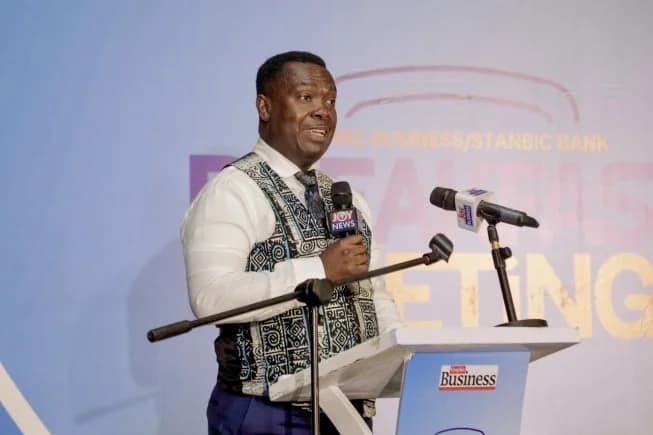
Simultaneously, at a Graphic Business-Stanbic Bank breakfast meeting in Accra, Mawuko Afadzinu, Executive Head of Brands and Marketing at Stanbic Bank Ghana, emphasized the urgent need to "reset" the nation's transport architecture. Afadzinu highlighted that the sector’s inefficiency is not merely a matter of capital but a lack of responsible fund utilization and enforcement. He cited the collapse of a previous $50 million transport financing scheme as a cautionary tale of how broken trust and poor financial discipline can derail modernization efforts. With congestion and health-related expenses from poor transport costing the economy an estimated GH¢10 billion every year, the forum called for innovative funding models and integrated, data-driven planning to replace the current fragmented policy approach.
Together, these reforms reflect an evolving economic strategy focused on closing loopholes and maximizing productivity. Whether through the NPA’s enforcement of uniform fuel pricing or the proposed structural overhaul of urban transit, the emphasis is shifting toward institutional accountability. As the NPA prepares to publish all ex-pump prices for better oversight and transport stakeholders push for a stronger regulatory framework, the coming months will be critical in determining how these policy shifts translate into tangible economic stability and growth for the Ghanaian business community.
This story touches markets covered on Anansi Intelligence ↗.
Continue exploring similar stories


