Ghana News AI
HomeBriefsAsk GhanaTopicsTools
•
•

Stay Informed

Get AI-curated news briefs from Ghana delivered to your inbox every morning. Free forever, no spam.

Explore

  • Home
  • Briefs
  • About

Categories

  • Politics
  • Business
  • Sports
  • Entertainment
  • Africa

Features

  • Analysis
  • Cedi Rates
  • Dollar to Cedi
  • Ghana Gold Price
  • BoG Policy Rate

Topics

  • Armed Forces Recruitment
  • WAEC Results & News
  • Nana Ama McBrown
  • NDC News
  • All Topics

Legal

  • Privacy Policy
  • Terms of Service
Ghana News AI© 2026. All rights reserved.
Made withfor Ghana
politics

Nigeria Rescues 300 Abductees as Regional Tensions in Somalia and Security Threats in Germany Escalate

Yesterday•3 min read•15 sources
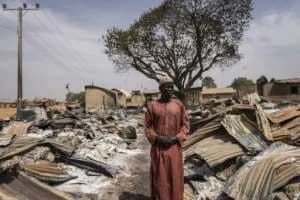
Little was left of Woro after suspected jihadists attacked in February.  By Light Oriye Tamunotonye (AFP)
  1. Home
  2. /Politics
  3. /Nigeria Rescues 300 Abductees as Regional Tensions in Somalia and Security Threats in Germany Escalate

Nigeria's security forces have completed one of the largest single-day rescue operations in the country's history, successfully liberating over 300 abducted citizens from the Kainji Lake National Park. The joint operation, which involved the armed forces and police, rescued 163 individuals from the Woro community in Kwara State and 145 from Niger State. President Bola Ahmed Tinubu hailed the mission as a significant breakthrough in the fight against mass kidnappings and the insurgency led by groups like Boko Haram. This victory comes amid a backdrop of high ransom demands, with reports indicating that kidnapping for ransom in Nigeria generated approximately $1.66 million between mid-2024 and mid-2025. Meanwhile, in East Africa, tensions have reached a breaking point as armed forces from Somalia’s semi-autonomous Puntland state launched a "planned security operation" against federal government troops in Galkayo. Puntland President Said Abdullahi Deni described the assault as a necessary message to those opposing his regional administration, marking a sharp escalation in the ongoing power struggle between regional leaders and the federal government.

In Europe, German Interior Minister Alexander Dobrindt has sounded the alarm over what he describes as a "hybrid attack scenario" at Leipzig airport. Flights were suspended after a drone carrying an explosive device was discovered near a Ukrainian Antonov AN-124 transport aircraft. While police successfully neutralized the threat, investigations are intensifying into the origin of the device and the parties responsible. This incident coincides with heightened scrutiny of German domestic security following the burial of Abdul B, a 21-year-old Islamist attacker who killed one person and injured 31 during a Berlin Pride event. Authorities are facing difficult questions regarding why the assailant was at liberty despite a prior conviction for attempting to join ISIS and a video found on his phone pledging allegiance to the militant group.

Simultaneously, Spain is grappling with the aftermath of a massive border crisis in the enclave of Ceuta, where between 3,000 and 5,000 migrants remain following a surge of nearly 78,000 arrivals from Morocco. The crisis, which resulted in at least 78 confirmed deaths by drowning, was reportedly fueled by a coordinated social media disinformation campaign that generated 11 million views by falsely claiming the borders were open. Ceuta’s leader, Juan Jesús Vivas, has expressed deep dissatisfaction with the Spanish government’s response, while European Union officials have criticized the slow national reaction to the humanitarian emergency. In southern Africa, the South African government is moving to tighten oversight on political figures as Foreign Minister Ronald Lamola proposed new regulations for former heads of state. The move follows a controversial visit to India by ex-President Jacob Zuma, where he met with businessman Ajay Gupta, a figure central to the corruption scandals that defined Zuma's previous presidency.

These interconnected events underscore a global landscape increasingly defined by complex security threats, ranging from traditional armed insurgencies and regional secessions to the modern challenges of hybrid warfare and digital disinformation. While the successful rescue in Nigeria provides a momentary reprieve for hundreds of families, the broader regional instability in Somalia and the evolving nature of extremist threats in Germany suggest that state security apparatuses remain under significant pressure. Moving forward, governments in both Africa and Europe are emphasizing the need for improved intelligence-sharing and stronger early-warning systems to mitigate the risks posed by non-state actors and cross-border political interference.

Our Take

From the Team

Coming Soon

Our team will add key insights, trends, and actionable takeaways to help you stay informed faster.

This story touches markets covered on Anansi Intelligence ↗.

More from politics

Continue exploring similar stories

Kojo Oppong Nkrumah — Chairman, NPP Policy Coordination Committee
politics|Yesterday

President Mahama Administration Defends Diesel Relief as NPP Demands Transparency Amid Wider Economic and Environmental Reforms

President John Mahama’s administration has come under scrutiny from the opposition New Patriotic Party (NPP) over the sustainability of recent fuel price interventions and agricultural reforms. Kojo Oppong Nkrumah, Chairman of the NPP Policy Coordination Committee, has challenged the government’s GH¢2.00 per litre reduction in diesel prices, labeling it a "temporary measure" that fails to address long-term costs. In response, the Minister of State in charge of Government Communications, Felix Kwakye Ofosu, clarified that the relief is funded by reducing regulatory margins from the National Petroleum Authority (NPA) rather than using tax revenue, ensuring no negative impact on the national treasury. Despite this, the NPP remains vocal, urging greater transparency regarding the long-term fiscal impact on the energy sector and transport fares. Beyond fuel costs, the government is navigating significant tension within the cocoa and financial sectors. Abena Osei-Asare, MP for Atiwa East, has urged President Mahama to review the Cocoa Board Amendment Bill, arguing that provisions requiring ministerial approval for land use changes infringe on farmers' property rights. This comes as Finance Minister Dr. Cassiel Ato Forson announced a new framework to utilize unclaimed balances in dormant bank accounts for national development, pledging to protect ownership rights while enhancing fiscal discipline. To ensure institutional accountability, the Right to Information (RTI) Commission has recently imposed GH¢20,000 fines on 254 public institutions, including various MDAs and the 37 Military Hospital, for failing to submit their 2025 annual reports. The fight against illegal mining, or galamsey, remains a central flashpoint for the administration. While the Bono Regional Security Council (REGSEC) recently seized 11 excavators and 32 motorbikes in a targeted crackdown, the Berekum Environmental Protection and Anti-Galamsey Coalition has announced plans for a major demonstration on August 11, 2026, to protest ongoing land degradation and community intimidation. Meanwhile, in the Northern Region, security remains a concern as the Sagnarigu Municipal Security Council (MUSEC) imposed a dusk-to-dawn curfew on the Damankungyili and Nyeshie communities following violent clashes that resulted in one death and several injuries. In a solemn moment for the nation, President Mahama recently unveiled a cenotaph at the Ministry of Defence to honor the late Defence Minister, Dr. Edward Kofi Omane Boamah, who died in a helicopter crash in August 2025. This act of national remembrance occurs alongside efforts to stabilize international relations; the Ministry of Foreign Affairs recently refuted rumors that Saudi Arabia has blacklisted Ghana from its tourist e-visa program. As the Busia Institute for Rural and Democratic Development (BIRDD) prepares for its annual lecture in London, new Afrobarometer data highlights a significant decline in partisan attachment among Ghanaians. This shift suggests a growing demand for political alternatives and more accountable governance as the nation moves forward under the Mahama administration.

Chief Directors urged to embrace digital tools, innovation for effective service delivery
politics|Yesterday

Acting Defence Minister Cassiel Ato Forson Commissions Modernized Military Facilities at Burma Camp to Boost GAF Readiness

The Acting Minister for Defence, Dr. Cassiel Ato Forson, has commissioned several new facilities at Burma Camp in Accra, reaffirming the government’s commitment to modernising military infrastructure for the Ghana Armed Forces (GAF). The commissioning of the Butler Barracks accommodation and office complex on August 5, 2026, marks a significant step in the administration's strategy to enhance national security through improved welfare and operational readiness. During the ceremony, Dr. Forson emphasized that military effectiveness begins with the living and working conditions of personnel, linking their well-being directly to the broader goals of national development. The newly opened infrastructure includes modern accommodation blocks, training areas, classrooms, and a specialized music hall for the Ghana Armed Forces Central Band. Air Vice Marshal Joshua Mensah-Larkai, the Chief of Staff, highlighted these developments as essential investments in the morale and readiness of the GAF. Meanwhile, Brigadier General Jonas Wiafe provided technical specifications for the project and issued a stern warning against the misuse of the facilities, stressing that strict maintenance protocols would be enforced to ensure the longevity of the state’s investment. In a parallel effort to enhance public sector efficiency, the Head of the Local Government Service, Professor Lord Mensah, has urged Chief Directors of Regional Coordinating Councils to embrace digital tools and artificial intelligence. Speaking at a three-day orientation programme in Kumasi, Professor Mensah noted that innovation and technology are critical for improving transparency and service delivery across the country. The Ashanti Regional Minister also addressed the gathering, calling for a new era of competent, ethical, and results-oriented public service that moves beyond mere compliance to deliver actionable outcomes for citizens. Together, these initiatives reflect a dual-track strategy by the government to strengthen both the security and administrative foundations of the state. While the military upgrades at Burma Camp focus on physical modernization and personnel welfare, the push for digital transformation in local government seeks to streamline bureaucracy and combat corruption. Leaders from both sectors have been tasked with upholding the values of professionalism, integrity, and accountability to ensure that these modern resources translate into tangible benefits for the Ghanaian people.

Police MTTD tops bribe chart as GSS data shows corruption pressures rising
politics|Yesterday

Ghana Statistical Service Reports Governance Gains Amid Rising Bribery Pressures and Police Integrity Concerns

The Government Statistician, Dr. Alhassan Iddrisu, has announced that Ghana is witnessing measurable progress in governance, though he cautioned that these gains remain fragile. Speaking at the launch of the Governance Series Wave 3 Report in Accra, Dr. Iddrisu revealed that the overall annual bribery rate in the country fell from 18.4% to 16.8%. This improvement is mirrored by a significant rise in citizen engagement, with the proportion of Ghanaians who feel their voices are unheard in decision-making processes decreasing from 42% to 30%. Additionally, the report noted that interactions between the public and state officials have increased, with 72% of citizens now engaging with public service providers. Despite the positive annual trend, the report highlights a worrying surge in corruption pressures during the latter half of 2025. Data indicates that nearly 70% of Ghanaians encountered requests for unofficial payments while accessing public services by the end of the year. Within the second half of 2025 specifically, the proportion of citizens who actually paid bribes rose from 14.3% to 18%. The Ghana Police Service, particularly the Motor Traffic and Transport Department (MTTD), was identified as the primary institution where citizens face the highest frequency of bribery demands. This dichotomy suggests that while systemic reforms are beginning to take root, the day-to-day experience of many Ghanaians remains fraught with corruption. To combat these persistent challenges, the Ghana Statistical Service is advocating for a more aggressive shift toward digitized service delivery. By reducing direct human interface in administrative processes, the GSS believes the opportunities for officials to solicit unofficial fees will be significantly curtailed. There is also a growing trend of citizen resistance, with more individuals reportedly refusing to pay bribes when asked. Dr. Iddrisu emphasized that the sustainability of Ghana’s governance reforms depends on strengthening reporting mechanisms and ensuring that public services are transparent, inclusive, and protected from the influence of petty corruption as the country moves forward under the current administration.

Chief Justice Baffoe-Bonnie Faces Petitions Over Decision to Conduct High-Profile Criminal Trials During Judicial Vacation
politics|Yesterday

Chief Justice Baffoe-Bonnie Faces Petitions Over Decision to Conduct High-Profile Criminal Trials During Judicial Vacation

Chief Justice Paul Baffoe-Bonnie has sparked a significant legal debate following his decision to permit specific high-profile criminal trials to proceed during the traditional judicial vacation. This directive led Justice Francis Achibonga to schedule hearings for Hanan Abdul-Wahab and Kwabena Adu-Boahene for mid-August, after obtaining clearance from the Chief Justice. While the move appears intended to expedite the delivery of justice in corruption-related matters, it has met with stiff resistance from defense teams who argue that the arrangement deviates from established judicial norms and constitutional protections. Lawyers representing Abdul-Wahab and Adu-Boahene, including prominent legal figures Samuel Atta Akyea and Godfred Yeboah Dame, have formally petitioned the Chief Justice to reverse the ruling. Their petitions contend that vacation courts are traditionally reserved for motions and interlocutory matters rather than full criminal trials. The legal teams further argue that the sudden scheduling violates their clients' right to legal representation, as many of their lawyers have prior commitments during the break. They cautioned that selectively continuing specific cases could create a perception of unequal treatment within the Ghanaian justice system, urging a withdrawal of the warrants authorizing these sittings. In contrast, the Chief Justice’s decision has found support among anti-corruption advocates and legal scholars who prioritize judicial efficiency. Investigative journalist Manasseh Azure Awuni expressed strong approval of the move, suggesting that corruption trials should ideally continue even through holidays like Christmas to prevent systemic delays. Similarly, Professor Stephen Kwaku Asare dismissed allegations of selective case assignment as "simply false," clarifying that the designation of vacation judges is a customary practice. Prof. Asare emphasized that judges maintain discretionary powers in managing their calendars and advocated for a transition to year-round court sittings. The controversy has reignited a broader discussion regarding the relevance of the annual long judicial vacation in Ghana. Anti-corruption campaigner Vitus Azeem criticized the practice as outdated, noting that it exacerbates the significant backlog of cases in the superior courts. Azeem argued that the historical justifications for the break are no longer valid and proposed a rotational leave system for judges to ensure the court remains operational throughout the year. As the judiciary balances the need for speed against the procedural rights of the accused, this standoff underscores a growing demand for structural reforms within the country's legal administration.

All
africa
business
education
entertainment
health
news
politics
sports
technology