••
National Investment Bank Reports Historic Growth as MD Dr. Zakaria Chronicles Turnaround; Bank of Ghana to Divest Remaining Stakes
•2 min read•9 sources
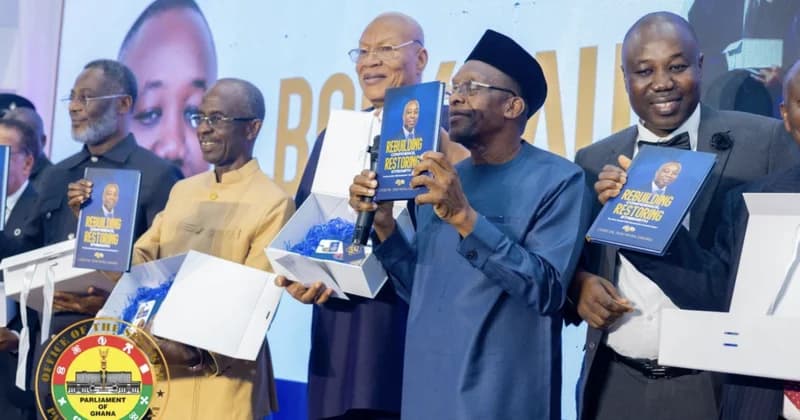
The National Investment Bank (NIB) has recorded a significant financial turnaround, with customer deposits nearly doubling from GH¢6.4 billion to GH¢12.9 billion over an 18-month period. This milestone was announced by the bank’s Managing Director, Chief Dr. Doli-wura Awushi Abdul-Malik Zakaria, during the launch of his new book, "Building Confidence, Restoring Strength: The Story Behind NIB’s Remarkable Transformation." The bank’s recovery is further highlighted by a dramatic rise in annual profits, which surged from GH¢3.1 million in 2024 to GH¢344 million by 2026, supported by a 40% increase in half-year profits during the recovery phase.
Central to this recovery has been a series of aggressive restructuring measures and a focus on restoring public trust. Under Dr. Zakaria’s leadership, NIB successfully reduced its non-performing loans (NPLs) from a staggering 76% to 52.21%. The institution also became the first bank to be recapitalized in just four months, receiving GH¢1.97 billion from the Bank of Ghana (BoG), which helped it achieve a positive capital position of GH¢1.64 billion by June 2026. Beyond the balance sheet, the transformation has extended to staff welfare, with employees receiving a cumulative salary increase of 141.5%, reflecting a commitment to internal stability and morale.
The Speaker of Parliament, Alban Sumana Kingsford Bagbin, who attended the book launch in Accra, emphasized that NIB's success proves that "broken governance," rather than a lack of funds, is the primary threat to state institutions. Mr. Bagbin lauded Dr. Zakaria’s disciplined approach, noting that true institutional recovery stems from strong leadership and accountability rather than mere financial injections. Dr. Zakaria echoed these sentiments, describing the transformation as an ongoing journey and urging other institutional leaders to prioritize stewardship and transparency to ensure long-term sustainability.
In a related development, the Bank of Ghana has announced plans to sell its remaining stakes in both NIB and the Agricultural Development Bank (ADB). Governor Dr. Johnson Pandit Asiama confirmed that the central bank will divest its 1% residual stake in NIB and its 13% share in ADB to reinforce its role as an independent financial regulator and eliminate potential conflicts of interest between ownership and regulation. While noting a slight dip in consumer confidence due to global economic shifts, Dr. Asiama maintained that domestic financial stability remains firm as the central bank pivots toward a strictly regulatory focus, allowing NIB to continue its growth trajectory as a revitalized commercial entity.
This story touches markets covered on Anansi Intelligence ↗.
More from business
Continue exploring similar stories


