Ghana News AI
HomeBriefsAsk GhanaTopicsTools
•
•

Stay Informed

Get AI-curated news briefs from Ghana delivered to your inbox every morning. Free forever, no spam.

Explore

  • Home
  • Briefs
  • About

Categories

  • Politics
  • Business
  • Sports
  • Entertainment
  • Africa

Features

  • Analysis
  • Cedi Rates
  • Dollar to Cedi
  • Ghana Gold Price
  • BoG Policy Rate

Topics

  • Armed Forces Recruitment
  • WAEC Results & News
  • Nana Ama McBrown
  • NDC News
  • All Topics

Legal

  • Privacy Policy
  • Terms of Service
Ghana News AI© 2026. All rights reserved.
Made withfor Ghana
business

Ghana Market Update: Cedi Strengthens Ahead of CanCham Summit as Bezos Consortium Secures Major Stake in Liverpool

2 days ago•3 min read•4 sources
Ghana Market Update: Cedi Strengthens Ahead of CanCham Summit as Bezos Consortium Secures Major Stake in Liverpool
  1. Home
  2. /Business
  3. /Ghana Market Update: Cedi Strengthens Ahead of CanCham Summit as Bezos Consortium Secures Major Stake in Liverpool

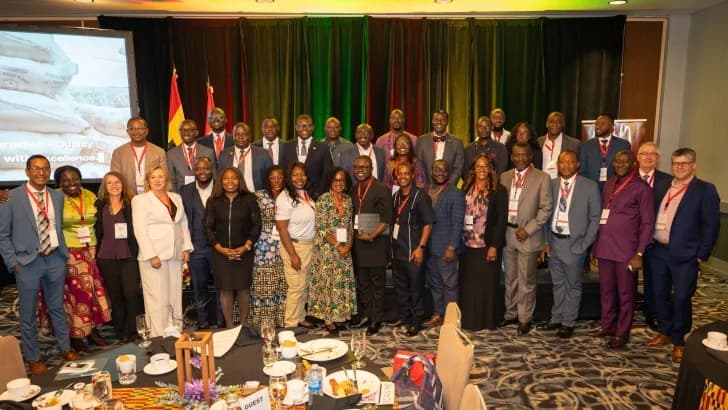
Ghana's business landscape is witnessing a period of strategic shifts as the Cedi shows signs of resilience and industry leaders prepare for high-level investment dialogues. As of August 15, 2026, the Ghanaian Cedi has recorded a notable appreciation against the US dollar, with the Bank of Ghana reporting an interbank selling rate of GHS 10.96 and a buying rate of GHS 10.94. At private forex bureaus, the currency is trading at an average selling rate of GHS 12.30. This currency stability comes at a crucial time as the National Petroleum Authority and energy analysts project a mixed outlook for fuel prices beginning August 16. While diesel consumers face a projected 1.39% increase due to rising international crude prices—currently averaging $90.41 per barrel amid geopolitical tensions—motorists using petrol and households relying on LPG are expected to see price reductions of 2.90% and 0.93%, respectively. Amidst these fluctuating market conditions, the Canada Ghana Chamber of Commerce (CanCham) is set to host its landmark CEOs’ Connect 2026 on August 20. Celebrating its 10th anniversary, the event will gather top capital market and trade leaders to discuss structured financing and investment opportunities in Ghana. The summit aims to address the critical need for capital strategies that support cross-border expansion, providing a platform for local businesses to connect with international investors. This focus on structured growth is seen as a vital step in driving economic development under the administration of President John Mahama, as businesses seek to leverage a more stable exchange rate for long-term planning. On the international front, the landscape of global sports business has been reshaped by a significant investment deal involving one of the world’s most prominent football clubs. A consortium led by British-Indian businessman Amit Bhatia and Amazon founder Jeff Bezos has acquired a 30% minority stake in Liverpool FC from Fenway Sports Group (FSG). The deal, valued between £5 billion and £6 billion, marks a massive return on investment for FSG, which originally purchased the club for £300 million in 2010. While the acquisition aims to bolster Liverpool’s long-term financial growth and infrastructure without altering its core transfer strategy, it has also sparked discussions among supporters regarding corporate workplace practices and the evolving nature of multi-billion-dollar sports franchises. These domestic and international developments highlight a broader trend of capital movement and market adjustment. For Ghanaian businesses, the combination of a stabilizing Cedi and the upcoming CanCham summit offers a window of opportunity to secure the financing necessary for expansion. As global icons like Bezos continue to diversify their portfolios into sports, the local focus remains on how these massive infusions of capital and shifting energy costs will influence broader market dynamics. For the average Ghanaian consumer, the immediate impact will likely be felt at the fuel pumps, where the interplay of global crude costs and local currency strength continues to dictate the cost of living.

Our Take

From the Team

Coming Soon

Our team will add key insights, trends, and actionable takeaways to help you stay informed faster.

This story touches markets covered on Anansi Intelligence ↗.

Related topic

John Mahama: Latest News & Updates →

Live rates

Dollar to cedi rate →

More from business

Continue exploring similar stories

Kwesi Afreh Biney (in smock) Director-General of SSNIT, cutting a ribbon at the unveiling of new haulage fleet for the Trust Logistics Limited at Tema. With him is Maxwell Ziyerley Agbambilla (3rd from right), Managing Director, Trust Logistics Limited, and Felix Nyarko-Pong ( right), Board Chairman, Trust Logistics Limited
business|2 days ago

President Mahama Drives Industrial Expansion as Ghana’s Retail Market Surges by 15.6% in 2026

Ghana’s economy is demonstrating robust resilience in the first half of 2026, characterized by a booming retail sector and aggressive new industrialization policies. According to a retail audit by Maverick Research, Ghana's retail market saw a significant 15.6% increase in value and an 8.9% rise in volume during the first six months of the year, significantly outperforming regional peers like Côte d’Ivoire and Cameroon. This growth is being driven by a consumer-led recovery facilitated by easing inflation, a stabilizing cedi, and improved purchasing power. Notably, average prices for essential items such as edible oil and pasta have declined, further enhancing affordability for the average Ghanaian household. To sustain this economic momentum, President John Mahama has announced a comprehensive five-year initiative to expand the nation’s pharmaceutical manufacturing capacity. This strategic plan is designed to reduce Ghana's heavy reliance on imported medicines and transform the country into a self-sufficient producer and exporter for the West African sub-region. Supporting this vision, a high-level delegation of German and Swiss companies—including Kyoobe Tech GmbH, Pruess GmbH, Groninger & Co. GmbH, and SKAN AG—recently visited Ghana. Under the €33 million PharmaVax Ghana Programme, co-financed by the European Union and Germany’s BMZ, these firms are working to facilitate technical partnerships and provide local manufacturers with advanced European technology and equipment. The drive toward economic self-reliance is also extending to state-related operations and local governance through improved logistics and fiscal discipline. The Social Security and National Insurance Trust (SSNIT) has signaled a new era of corporate accountability, with Director-General Kwesi Afreh Biney calling on subsidiaries to embrace innovation and become financially self-sustaining. Speaking at the unveiling of a new vehicle fleet for Trust Logistics Limited (TLL), Biney emphasized that SSNIT will no longer provide routine bailouts to underperforming subsidiaries, stressing the need to protect the interests of over 2.1 million members. Similarly, the Ho Municipal Assembly has utilized its Internally Generated Funds to procure new Mitsubishi L200 pickups to enhance revenue mobilization and administrative efficiency. As Ghana moves through the latter half of 2026, the focus remains on scaling these successes and maintaining the recovery. Market analysts suggest that the primary growth opportunities lie in distribution expansion rather than price hikes, urging brands to capitalize on the increasing purchasing power in both urban and cocoa-producing regions. By combining macro-level retail strength with targeted industrial partnerships in the pharmaceutical sector and a renewed focus on operational efficiency in state-owned enterprises, the government aims to cement a sustainable path for long-term economic growth.

Ekua Zara Ghartey-Tsagli (2nd from right), Head of Marketing, Labadi Beach Hotel, and Lt Mohammed Bisbao Said (3rd from right), Assistant Director of Religious Affairs at the Ghana Navy Headquarters, with staff of the hotel and some worshippers at the Al Aziz Central Mosque
business|2 days ago

KFC, Mövenpick, and Labadi Beach Hotel Mark Major Anniversaries with Nationwide Promotions and Community Outreach

Several major businesses in Ghana, including KFC, Mövenpick Ambassador Hotel, and Labadi Beach Hotel, are marking significant milestones this week with a mix of aggressive price promotions and corporate social responsibility (CSR) initiatives. These celebrations have highlighted the high demand for affordable dining and premium hospitality in the current economic landscape under President John Mahama’s administration. While some events focused on community engagement, others sparked nationwide frenzies, illustrating the diverse strategies brands use to connect with the Ghanaian public. KFC Ghana’s 15th-anniversary promotion on August 15, 2025, became a focal point of public attention as a GH¢15 meal deal triggered massive crowds at branches across the country. Customers began queuing as early as 7:00 AM, leading to chaotic scenes that required security intervention at several locations. In Ashaiman, the surge of patrons resulted in physical damage to a glass door, while viral videos showed security personnel attempting to manage long lines. The overwhelming response underscores the significant impact of deep-discount marketing in the fast-food sector and the public's eagerness for value-driven offers. Simultaneously, the Mövenpick Ambassador Hotel Accra is celebrating its own 15-year milestone with a more community-centric approach. General Manager Isaac Okpoti Adjei announced a renewed commitment to tailoring hospitality experiences to local needs while maintaining international standards. The hotel’s celebrations include special promotions for groups of 15 and a focus on employee empowerment. Mr. Adjei emphasized that this anniversary serves as a vision for the future, aiming to integrate Ghanaian culture more deeply into their luxury service model while strengthening connections with the local community. In the same vein of corporate gratitude, the Labadi Beach Hotel is marking 35 years of operation with a community feast at the Al Aziz Central Mosque in Burma Camp. Led by Ekua Zara Ghartey-Tsagli, the initiative serves as a gesture of appreciation toward the Ghana Armed Forces and local residents. Other scheduled activities include clean-up exercises and courtesy visits to traditional councils, demonstrating a commitment to social bonds alongside commercial success. Lieutenant Mohammed Bisbao Said of the Ghana Navy commended the hotel for these efforts, noting the importance of such partnerships. These anniversary activities reflect a broader trend in Ghana’s business sector where established brands are navigating the balance between market penetration and social relevance. Whether through the mass-market appeal of KFC’s price cuts or the community-focused CSR of the hospitality giants, these milestones highlight the enduring presence of these institutions in the national economy. As these companies look toward their next decades of operation, their ability to adapt to local consumer behavior and community expectations remains a critical factor for sustained growth.

Alhaji Ali Ibrahim, Founder and CEO of Rabotec Group
business|2 days ago

Ghana Government Secures 30% Gold Purchase Agreement with Chamber of Mines to Bolster National Reserves

In a strategic move to stabilize the national economy, the Government of Ghana has signed a Memorandum of Understanding (MoU) with the Ghana Chamber of Mines to purchase 30% of gold output from large-scale mining companies. The agreement, executed on August 13, 2026, falls under the Ghana Accelerated National Reserve Accumulation Programme (GANRAP). Finance Minister Dr. Cassiel Ato Forson emphasized that this Parliamentary-approved deal enables the Bank of Ghana (BoG) and the Ghana Gold Board (GoldBod) to procure and process gold locally, fostering economic resilience and currency stability. The Ghana Chamber of Mines expressed its support for the initiative while advocating for future incentives to further enhance local refining capabilities. Addressing recent financial concerns, Professor Ebo Turkson of the University of Ghana clarified that GoldBod has not incurred a rumored GH‑1.7 billion loss. He explained that the reported figure actually pertains to costs associated with the Bank of Ghana's Domestic Gold Purchase Programme as noted by the IMF, rather than operational failures at GoldBod. Prof. Turkson highlighted that the gold accumulation strategy has significantly contributed to reducing the debt-to-GDP ratio and curbing inflation. Amidst these state-led efforts, the private sector is also expanding; Rabotec Group, a prominent indigenous mining operator, has announced plans to establish its first wholly-owned gold mine within five years, leveraging a West African portfolio valued at up to $1.8 billion. Significant developments are also unfolding in the energy sector as Sai Bioenergy Ghana Private Limited, in partnership with the 24-Hour Economy and Accelerated Export Development Secretariat, prepares to launch a 1,500-megawatt solar photovoltaic project in the Savannah Region. This massive renewable energy initiative at Buipe will include a 250-megawatt-hour battery storage system and extensive agricultural plantations. The project aims to diversify Ghana's energy mix and support the industrialization agenda, with development scheduled to proceed in three distinct phases starting with the storage infrastructure. However, infrastructure challenges remain a priority for the Ministry of Energy and Green Transition. GRIDCo has scheduled an emergency power interruption for parts of the Greater Accra Region on Sunday, August 16, 2026, to replace a transmission tower on the Tema–Achimota line that was severely damaged by a fuel tanker explosion. In response to such hazards, the National Petroleum Authority (NPA) has issued a stern warning against the criminal siphoning of fuel at accident scenes. Furthermore, Energy Minister Dr. John Abdulai Jinapor has directed the immediate cessation of unauthorized activities within transmission corridors, warning that structures encroaching on these vital rights-of-way will be forcibly removed following a one-month grace period.

Ghana’s Agricultural Sector Growth Slows to 3.6% as Experts Call for Strategic Reforms and Industrialization
business|2 days ago

Ghana’s Agricultural Sector Growth Slows to 3.6% as Experts Call for Strategic Reforms and Industrialization

Ghana’s agricultural sector recorded a significant growth slowdown in May 2026, dropping to 3.6% compared to the 9.8% registered during the same period in 2025. According to the Ghana Statistical Service (GSS), this 6.2 percentage-point decline represents the largest contraction in growth momentum among the nation’s major economic sectors. Despite the deceleration, the GSS noted that overall agricultural activity remains higher than previous years, with the agricultural index rising from 114.6 to 118.7 year-on-year, driven primarily by the crops and livestock subsectors. This data, released through the Monthly Indicator of Economic Growth (MIEG), serves as a preliminary look into the nation’s economic health ahead of official quarterly GDP statistics. The GSS attributed this slowdown largely to seasonal factors and the high growth benchmarks set in 2025. However, the Service warned that if this trend of weakening growth persists, it could have serious implications for food prices, rural incomes, and the country’s export performance. In response to these figures, stakeholders are emphasizing the need for enhanced productivity through improved access to inputs, mechanization, and irrigation infrastructure to stabilize the sector. Reinforcing the call for structural change, Rev. Albert Ocran, co-founder of the Springboard Roadshow Foundation, recently emphasized that while agriculture remains Ghana’s largest employer, it has failed to rank among the top-growing industries. Speaking at the Impact Leaders Breakfast in Accra, Rev. Ocran urged the government and private sector to unlock value chain opportunities and integrate ICT and logistics into agribusiness. He argued that urgent reforms are necessary for Ghana to remain competitive across the African continent and to ensure the sector provides sustainable livelihoods for the youth. The broader conversation on economic self-sufficiency also extends to the industrial sector, where Professor Robert Ebo Hinson has called for a strategic shift in the automobile industry. Professor Hinson advocated for moving away from the importation of vehicles toward full-scale local assembly and manufacturing. Proponents of this shift argue that localized production will not only bolster the economy but also foster significant job creation. Together, these developments highlight a critical juncture for Ghana’s economy under the current administration, where balancing agricultural productivity with industrial innovation is seen as the key to long-term stability and growth.

All
africa
business
education
entertainment
health
news
politics
sports
technology