••
Death Toll Hits 626 as Massive Floods and Mudslides Devastate Nepal's Himalayan Valleys
•2 min read•6 sources
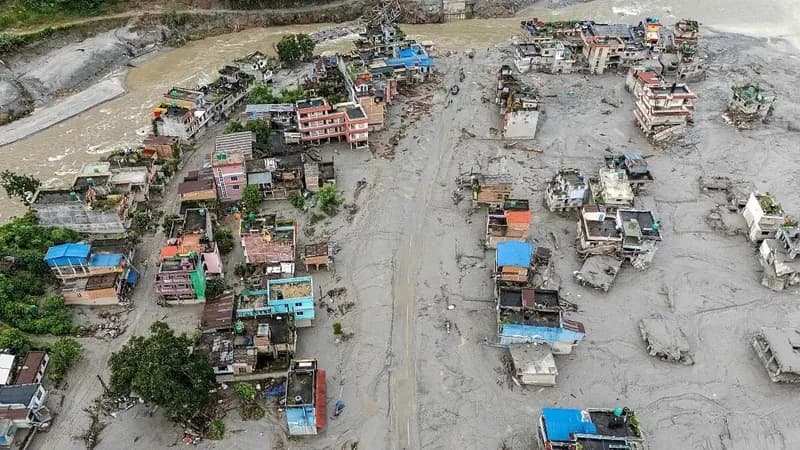
The death toll from catastrophic flash floods and mudslides in Nepal has risen to at least 626, with over 2,400 people still unaccounted for. The disaster was triggered by a massive section of ice and rock breaking off a mountaintop, sending torrents of water and debris through the Himalayan valleys, particularly along the Nepal-Tibet border. Rescue teams, including local volunteers and international experts, are working tirelessly against time, though their efforts have been significantly hampered by destroyed infrastructure, power outages, and the ongoing threat of secondary flooding caused by possible blockages in tributary valleys.
Among the thousands missing are approximately 90 Americans, leaving families in the United States and abroad in a state of desperate uncertainty. While helicopter operations have recently resumed to evacuate survivors and deliver essential aid, the humanitarian situation on the ground remains dire. The scale of the loss has overwhelmed local resources; Nepal’s Foreign Minister has issued an urgent plea for specialized assistance, specifically highlighting the need for industrial freezers to preserve decomposing remains as the recovery process struggles to keep pace with the magnitude of the tragedy.
The economic impact of the disaster is staggering, with the Nepalese government estimating that reconstruction costs could reach $5 billion. In response to the crisis, the United Nations has pledged $229 million in emergency aid to support immediate recovery and rebuilding efforts. However, experts warn that this is only a fraction of the total investment required for long-term recovery. As the country grapples with what is being described as a significant climate-driven disaster, the international community continues to mobilize resources to help Nepal rebuild its shattered communities and infrastructure.

