••
NDC Outlines New Internal Rules as Government Scales Up Economic Initiatives and Youth Employment Schemes
•3 min read•39 sources
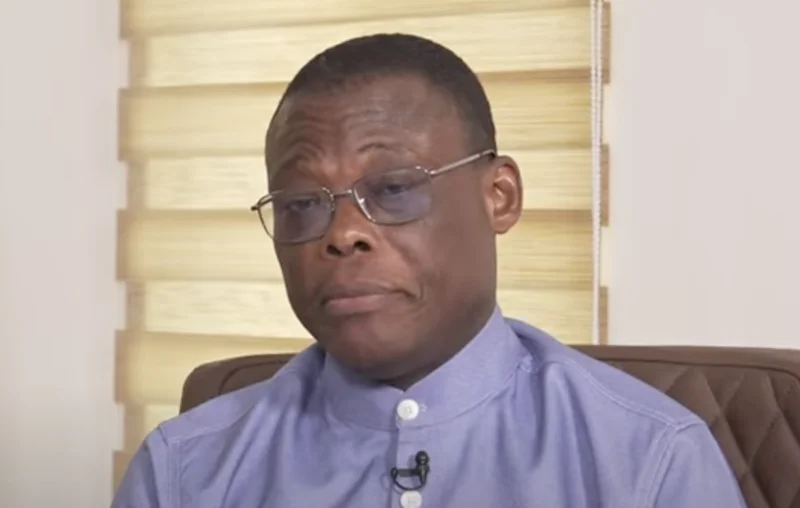
The National Democratic Congress (NDC) and the Ghanaian government have launched a series of strategic reforms and socio-economic initiatives aimed at fostering internal party discipline and driving national development. Central to these efforts is a new directive from NDC General Secretary Fifi Fiavi Kwetey, which requires government appointees to resign their positions at least six months before contesting internal party elections. This policy is designed to prevent the concentration of power and ensure a fair distribution of leadership opportunities among the party's vast membership. Simultaneously, the party has opened a nationwide membership drive to create a 'bigger tent,' specifically targeting young voters and previously inactive members ahead of upcoming branch-level elections. Kwetey emphasized that the party's growth is rooted in its commitment to fulfilling promises and maintaining strict internal accountability.
On the national development front, the government is significantly expanding its youth empowerment programs through the National Apprenticeship Programme (NAP). Patrick Opoku Fofie, the Ashanti Regional Coordinator for NAP, announced that 2,000 youth in the Ashanti Region are set to benefit from structured vocational training, financial support, and certification. Currently in its pilot phase, the program targets 400 master craft persons across districts like Atwima Kwanwoma. To ensure transparency and minimize the risk of misappropriation, the initiative utilizes a direct payment system through the Bank of Ghana, where training fees and support funds are transferred directly to the beneficiaries' accounts. Local officials have praised the program as a vital tool for achieving self-reliance and reducing regional unemployment.
In the economic sector, the government is intensifying its push for a '24-Hour Economy' and enhanced agribusiness output. Deputy Health Minister and MP for Essikado-Ketan, Dr. Grace Ayensu-Danquah, recently engaged traders at Kojokrom Market to gather feedback on the initiative, which aims to extend trading hours, improve security, and create more income-generating opportunities. This aligns with broader efforts to bolster food security, highlighted by a new partnership with Spain. The Minister for Trade, Agribusiness and Industry, Elizabeth Ofosu-Adjare, welcomed a commitment from GB Foods to cultivate 6,000 acres of tomatoes in the Afram Plains. This project is expected to double local yields and reduce the nation’s dependence on imports, marking a significant step in Ghana's industrialization strategy.
However, the cocoa sector remains a point of political contention. While NDC Assemblymember Japhet Festus Gbede defended the current administration’s management by claiming the opposition would have raised taxes during price slumps, the Concerned Farmers Association of Ghana has called for an end to the politicization of COCOBOD. Nana Oboadie Boateng Bonsu II, president of the association, warned that political interference has led to lack of accountability and significant debt. He urged for more transparency in procurement and more direct engagement with farmers. Amidst these debates, the government is also reforming educational access; the Ghana Scholarship Authority recently conducted merit-based examinations for over 3,800 applicants for the Hungarian Stipendium, a move aimed at restoring public trust in the scholarship system.
These diverse initiatives—spanning from legal education reforms urged by Chief Justice Paul Baffoe-Bonnie to innovative employment schemes—reflect a broader government effort to stabilize the economy and professionalize public service. As the NDC strengthens its internal structures, the success of the 24-Hour Economy and the National Apprenticeship Programme will likely serve as key benchmarks for the administration’s performance. Moving forward, the focus remains on ensuring that these policies translate into tangible improvements in the daily lives of Ghanaian citizens, particularly in rural and trading communities where economic pressures are most acute.
This story touches markets covered on Anansi Intelligence ↗.
Related topic
NDC (National Democratic Congress): Latest News →More from politics
Continue exploring similar stories


