••
Narcotics Control Commission and Education Ministry Sound Alarm Over Rising Drug Trafficking and Abuse in Ghana's Schools
•3 min read•21 sources
The Ministry of Education (MoE) and the Narcotics Control Commission (NACOC) have issued a stern warning regarding the escalating prevalence of drug abuse and trafficking within Ghana’s educational institutions. Recent intelligence operations reveal that illicit drug activities are no longer confined to external dealers but have deeply infiltrated second-cycle and tertiary campuses. Authorities are particularly concerned by a shifting trend where students are transitioning from being mere consumers of illegal substances to active distributors and vendors. This alarming development has already led to significant disciplinary actions, including the recent expulsion of 20 students from a prominent girls' senior high school for drug-related offenses, and the arrest of students at Central University for distributing cannabis-infused products.
Deputy Minister of Education, Dr. Clement Apaak, and NACOC Deputy Director, Alexander Twum-Barima, have both highlighted the growing usage of high-risk substances such as opioids and tramadol among the youth. A nationwide survey conducted by the Ministry of Youth Development and Empowerment supports these concerns, indicating that a significant number of senior high school students are acutely aware of active drug use among their peers. Mr. Twum-Barima emphasized that student involvement in the drug trade poses a severe threat to academic performance, student welfare, and campus security, necessitating an immediate and coordinated national response.
In response to this crisis, the Ministry of Education has authorized school authorities and teachers to intensify surveillance and conduct regular searches of students' belongings. Educators are being encouraged to identify subtle behavioral changes that may signal substance abuse. Furthermore, NACOC is enhancing its partnership with the Ghana Education Service (GES) and the Technical and Vocational Education and Training (TVET) Service to train guidance and counseling coordinators. These training programs are designed to equip staff with the skills needed to identify at-risk students early and provide the necessary interventions before addiction or criminal involvement takes root.
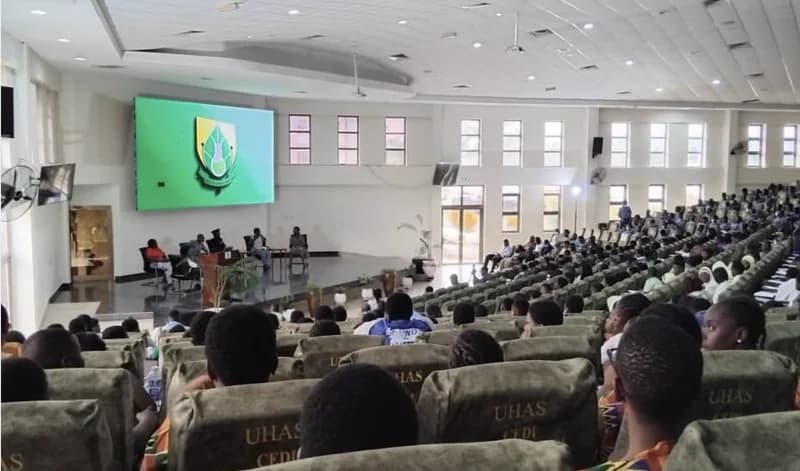
Beyond surveillance and enforcement, stakeholders are advocating for a holistic approach that includes youth empowerment and socioeconomic support. During the third World Drug Day celebration at UHAS Basic School in Ho, NACOC’s Volta Regional Commander, Worlanyo Fianu, and UHAS Pro Vice-Chancellor, Prof. Frank Edwin, stressed that law enforcement alone cannot solve the problem. They argued that drug education must be a continuous effort rather than a periodic campaign, focusing on building resilience among the youth and addressing underlying causes such as poverty. Moving forward, the government is calling for a unified front involving parents, health professionals, and community leaders to create a drug-free environment for the nation's future leaders.
This story touches markets covered on Anansi Intelligence ↗.
Related topic
Ghana Education Service (GES): Latest News Today →More from education
Continue exploring similar stories


