Ghana News AI
HomeBriefsAsk GhanaTopicsTools
•
•

Stay Informed

Get AI-curated news briefs from Ghana delivered to your inbox every morning. Free forever, no spam.

Explore

  • Home
  • Briefs
  • About

Categories

  • Politics
  • Business
  • Sports
  • Entertainment
  • Africa

Features

  • Analysis
  • Cedi Rates
  • Dollar to Cedi
  • Ghana Gold Price
  • BoG Policy Rate

Topics

  • Armed Forces Recruitment
  • WAEC Results & News
  • Nana Ama McBrown
  • NDC News
  • All Topics

Legal

  • Privacy Policy
  • Terms of Service
Ghana News AI© 2026. All rights reserved.
Made withfor Ghana
education

NACOC and Ghana Education Service Partner to Strengthen School-Based Drug Prevention in Eastern Region

10th July•2 min read•1 source
NACOC and Ghana Education Service Partner to Strengthen School-Based Drug Prevention in Eastern Region
  1. Home
  2. /Education
  3. /NACOC and Ghana Education Service Partner to Strengthen School-Based Drug Prevention in Eastern Region

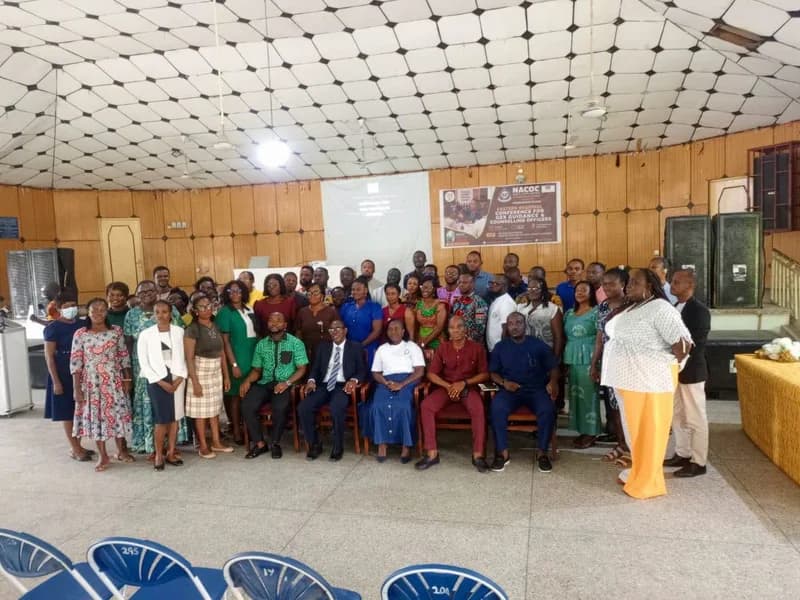
The Narcotics Control Commission (NACOC) and the Ghana Education Service (GES) have joined forces to intensify drug prevention efforts within educational institutions across the Eastern Region. In a strategic collaboration with Promasidor Ghana, the organizations recently held a specialized seminar in Koforidua targeting Guidance and Counselling Coordinators from various Senior High Schools (SHS). The initiative, aligned with the preparations for the 2026 International Day Against Drug Abuse and Illicit Trafficking, seeks to equip educators with the necessary tools and knowledge to combat the evolving threats of substance abuse among students. The seminar, centered on the theme 'The World Drug Problem: Persisting Problems, New Challenges and Innovative Response,' provided a platform for coordinators to delve into emerging drug trends and effective counseling strategies. PNCO Philomina Obenewaa Sackar of NACOC highlighted the critical role that school counselors play in the early detection of drug-related issues. She emphasized that because these educators are on the front lines of student interaction, their ability to recognize warning signs and implement preventive education is paramount to safeguarding the health and future of the youth. The training sessions focused not only on identifying traditional substances but also on understanding the complex psychological factors that lead students toward drug use. Adding to the discussion, Benjamin Narh, the Deputy Eastern Regional Director of the GES, expressed deep appreciation for NACOC’s proactive initiative. He pointed out the growing sophistication of drug concealment methods, noting that traditional detection methods may no longer be sufficient in a modern school environment. Mr. Narh urged school authorities to remain highly vigilant and adapt to these new trends to prevent illicit substances from infiltrating campuses. The partnership underscores a shifting approach toward drug control in Ghana—one that prioritizes education and psychological intervention over purely punitive measures. As the world faces new challenges in the fight against narcotics, this collaborative effort in the Eastern Region serves as a model for proactive school-based intervention. By empowering guidance coordinators with specialized knowledge and resources, the GES and NACOC aim to create a more resilient school system capable of addressing drug abuse before it becomes a crisis. Moving forward, the stakeholders intend to sustain these educational seminars, ensuring that the fight against illicit trafficking and substance abuse remains a top priority in Ghana’s educational agenda.

Our Take

From the Team

Coming Soon

Our team will add key insights, trends, and actionable takeaways to help you stay informed faster.

This story touches markets covered on Anansi Intelligence ↗.

Related topic

Ghana Education Service (GES): Latest News Today →

More from education

Continue exploring similar stories

NCCE equips Ashanti region student leaders with governance, anti-corruption skills
education|Yesterday

NCCE Empowers Ashanti Region Tertiary Leaders with Governance and Anti-Corruption Training

The Ashanti Regional Directorate of the National Commission for Civic Education (NCCE) has organized a comprehensive Youth Leaders’ Empowerment Dialogue Session to equip student leaders with essential skills in governance, anti-corruption, and ethical leadership. Held on August 2, 2026, at the Apostolic Church-Ghana, the event brought together over 70 representatives from various tertiary institutions across the Ashanti Region. This initiative reflects the commission's commitment to nurturing a new generation of leaders who prioritize the rule of law and public accountability in their academic and future professional lives. The dialogue focused heavily on the practical application of civic values, specifically highlighting the importance of the Whistleblower Act and the mechanisms for promoting transparency. Facilitators engaged the students in discussions regarding the rule of law, encouraging them to uphold the highest standards of integrity while identifying and reporting unethical practices. By providing insights into the nuances of ethical leadership, the NCCE aimed to empower these youth leaders to reject conflicts of interest and actively combat corruption within their respective campuses and broader communities. This empowerment program is part of a broader project supported by international partners, including the German Federal Ministry for Economic Cooperation and Development (BMZ) and the European Union. These collaborations underscore the global consensus on the importance of strengthening democratic institutions through grassroots civic education. The partnership highlights a concerted effort to ensure that the youth, who constitute a significant portion of Ghana’s population, are well-versed in the responsibilities that come with citizenship and leadership. In conclusion, the NCCE’s initiative serves as a critical intervention in fostering a culture of responsible citizenship among the youth. Participants were challenged to serve as ambassadors of change, carrying the lessons of accountability and transparency back to their various institutions. By equipping student leaders with the tools to navigate complex ethical landscapes, the commission is laying the groundwork for a more robust democratic future, ensuring that the principles of good governance are sustained by the next generation of Ghanaian decision-makers.

Rent Control Commission and Ghana Tourism Authority Shut Down Koforidua Hostels Over Deplorable Conditions
education|Yesterday

Rent Control Commission and Ghana Tourism Authority Shut Down Koforidua Hostels Over Deplorable Conditions

In a decisive move to protect student welfare, the Rent Control Commission and the Ghana Tourism Authority (GTA) have ordered the immediate closure of two private hostels in Koforidua. The facilities, Serwaa Heights and Adehye3, were shut down following alarming reports regarding poor sanitation and substandard living conditions. The joint enforcement action was triggered by formal complaints lodged by students of the Koforidua Technical University (KTU), who raised concerns about the health risks posed by the environments in which they were residing. These closures highlight the growing friction between private accommodation providers and the student populations they serve in regional academic hubs. During a series of unscheduled inspections, authorities discovered a range of regulatory infractions and health hazards. Specifically, Serwaa Heights was found to be operating illegally without the necessary registration from the appropriate governing bodies. Inspections further revealed that both facilities failed to meet basic health and safety standards required for human habitation. The lack of proper sanitation and maintenance had deteriorated to a level deemed unacceptable by the commission and the tourism authority, prompting the swift shutdown to prevent potential disease outbreaks or accidents among the student population. The authorities emphasized that student safety cannot be compromised for profit. To mitigate the impact on the displaced students, the Rent Control Commission has mandated that the management of both hostels provide full refunds to those affected. This directive aims to facilitate the students' relocation to alternative, safer housing. Furthermore, the authorities have signaled that this enforcement exercise is not an isolated event. Plans are underway to extend these inspections across the country to ensure that all private student accommodations comply with national standards. This serves as a stern warning to hostel operators nationwide that failure to maintain proper sanitary conditions and legal registration will result in severe regulatory penalties and immediate cessation of operations.

Cong Song (seated 3rd from right), the Chinese Ambassador to Ghana, with the media personnel at the forum
education|Yesterday

Chinese Ambassador Cong Song Calls for Deeper Educational and Cultural Cooperation Between Ghana and China

Chinese Ambassador to Ghana, Cong Song, has emphasized that the long-term sustainability of the bilateral relationship between Ghana and China depends significantly on deepening people-to-people cooperation. Speaking at an event in Accra, the Ambassador highlighted that while trade and infrastructure investment remain cornerstones of the partnership, the future of the alliance is anchored in educational, cultural, and professional exchanges. This shift toward diplomatic engagement aims to build a more resilient foundation of mutual understanding that transcends economic transactions, fostering deeper ties between the citizens of both nations. Central to this initiative is the expansion of educational opportunities and the promotion of linguistic proficiency. Ambassador Cong pointed to the growing popularity of Chinese-language education in Ghana as a vital bridge between the two nations. By learning the language, Ghanaian students and professionals gain direct access to Chinese heritage and innovation, reducing the reliance on third-party interpretations. Conversely, the Ambassador called for a concerted effort to promote Ghanaian history, arts, and cultural values within China to ensure a truly reciprocal relationship. He noted that academic exchanges and scholarships continue to play a pivotal role in equipping the next generation of Ghanaian leaders with global perspectives. Beyond the classroom, the Ambassador addressed the critical role of the media in shaping public perception. He urged journalists from both countries to provide balanced, informed, and nuanced reporting that moves away from historical stereotypes. Acknowledging that language barriers often lead to misconceptions, Cong Song advocated for more direct collaboration between Ghanaian and Chinese media houses. By fostering relationships between journalists and cultural institutions, both nations can combat misinformation and present a more authentic narrative of their respective socio-economic developments. As President John Mahama’s administration continues to engage with global partners to support Ghana’s development agenda, these cultural and educational frameworks provide a strategic pathway for sustainable growth. The emphasis on people-to-people cooperation suggests a move toward a more holistic diplomatic strategy that prioritizes human capital development. Moving forward, the success of these initiatives will depend on the ability of both nations to dismantle cultural barriers and foster a genuine sense of community among their citizens, ensuring that the Ghana-China partnership remains robust in an increasingly interconnected world.

Ten Young Professionals Inducted into Inaugural D. A. Twum Jnr Fellowship to Groom Future Advertising Leaders
education|Yesterday

Ten Young Professionals Inducted into Inaugural D. A. Twum Jnr Fellowship to Groom Future Advertising Leaders

The Ghanaian advertising and marketing landscape has reached a significant milestone with the induction of ten young professionals into the inaugural D. A. Twum Jnr Fellowship. Launched on August 4, 2026, the fellowship is a dedicated initiative designed to bridge the gap between academic theory and industry practice. Named in honor of D. A. Twum Jnr, a foundational figure in Ghana’s advertising sector, the program aims to identify and nurture the next generation of creative and strategic leaders through a rigorous curriculum of mentorship and professional development. The fellowship is structured as a three-month intensive program that seamlessly blends academic learning with practical, real-world industry experience. During the induction ceremony, prominent figures in the communications industry underscored the necessity of such initiatives. Joel Edmund Nettey highlighted the value of direct exposure to the complexities of the advertising world, while Professor Robert Ebo Hinson urged the new fellows to maintain a spirit of curiosity and an openness to lifelong learning. By pairing participants with seasoned professionals, the fellowship ensures that the wisdom of the industry’s pioneers is transferred to contemporary practitioners. Looking forward, the D. A. Twum Jnr Fellowship is set to become an annual fixture in Ghana’s educational and professional landscape. By equipping participants with high-level skills and strategic insights, the program seeks to enhance the overall quality and competitiveness of the local advertising and marketing communications sectors. As these ten trailblazers begin their three-month journey, the initiative stands as a testament to the enduring legacy of D. A. Twum Jnr and a commitment to fostering professional excellence in the private sector.

All
africa
business
education
entertainment
health
news
politics
sports
technology