••
African Security Leaders Call for Regional Cooperation Amidst Rising Violence in Nigeria and Somalia
•2 min read•5 sources
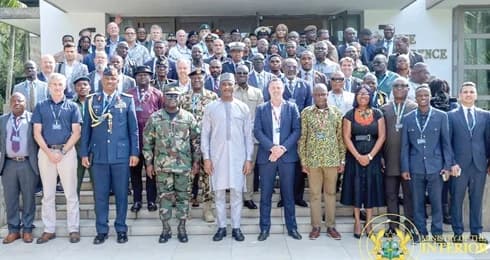
Ghana’s Minister for the Interior, Alhaji Muntaka Mohammed-Mubarak, has issued a powerful call for African nations to strengthen collaborative frameworks to combat a burgeoning security crisis. Speaking at the 13th Africa Security Symposium (ASEC 2026) in Accra, the Minister emphasized that lasting peace on the continent requires collective action and strategic partnerships that move beyond mere dialogue. This call for unity comes as several nations grapple with severe security breaches, ranging from extremist insurgencies to localized communal violence, highlighting the interconnected nature of modern threats.
The urgency of this call is underscored by recent bloodshed in West and East Africa. In Nigeria’s Benue State, a devastating attack in the Otukpo Local Government Area has left the community in mourning. While police officials confirmed eight deaths, including three children, local residents and community leaders report a higher toll of at least 18 fatalities. The violence, occurring in the Otukpo-Nobi community, is suspected to be linked to long-standing clashes between farmers and herders over land resources. Meanwhile, in Somalia, the national army, bolstered by international partners, conducted precision airstrikes in the Middle Shabelle region. The operation successfully neutralized 26 al-Shabaab militants and destroyed key infrastructure, marking a significant blow to the extremist group’s operational capacity.
Beyond regional insurgencies, the complexities of continental security were further highlighted by the arrest of a high-profile fugitive in South Africa. Ndodana Mkhanyisi Tshuma, a 45-year-old British citizen, was apprehended in Johannesburg on suspicion of a triple murder committed in Bedfordshire, UK. Tshuma, who allegedly murdered his wife and two daughters before fleeing, was found in possession of an unlicensed firearm. His arrest demonstrates the necessity of international law enforcement cooperation and the persistent challenge of illegal arms circulation, as South African authorities prepare for legal status verification and potential extradition proceedings.
As the ASEC 2026 symposium continues, experts like Major General Emmanuel Wekem Kotia (retd) noted that the forum has already produced actionable commitments for counter-terrorism and addressing climate-driven insecurity. Furthermore, discussions led by officials like Mohammed Ahmed have highlighted the critical need to include women in security roles to ensure a holistic approach to peacebuilding. The consensus from the Accra summit remains clear: the varied nature of Africa's security threats—from communal land disputes to international crime—can only be effectively managed through a unified, innovative, and cooperative regional framework.
This story touches markets covered on Anansi Intelligence ↗.
More from africa
Continue exploring similar stories


