••
Morocco Evacuates Over 108,000 Residents as Severe Floods Hit Northwestern Region
•2 min read•1 source
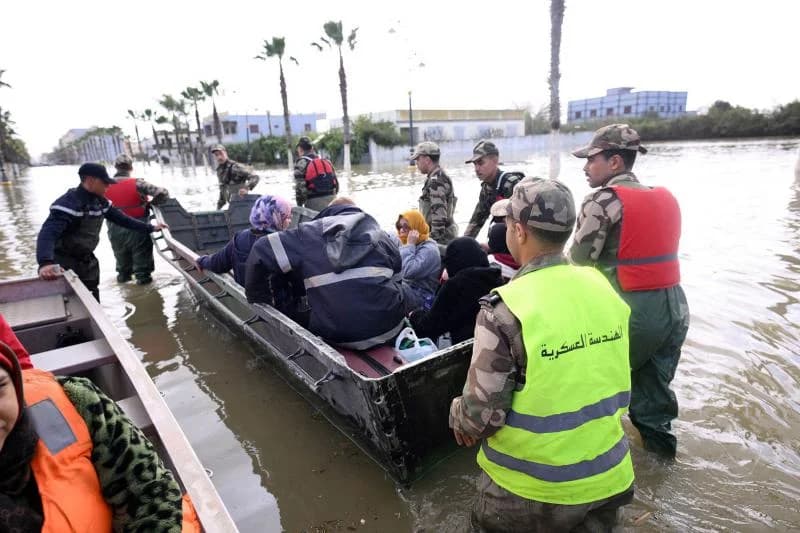
Morocco has launched a massive emergency operation, evacuating more than 108,000 people from flood-prone areas in the northwestern Gharb region. The crisis stems from torrential rainfall that has caused rivers to swell and dams to reach critical levels, prompting authorities to issue urgent calls for residents to vacate high-risk zones. In the town of Ksar El Kebir, the situation is particularly dire, with approximately 85% of the population already moved to safety as rescue teams utilize helicopters and ground units to reach those stranded by the rising waters.
The intensity of the rainfall this season has far exceeded last year’s levels, creating a logistical challenge for drainage systems struggling to manage the volume of water. Rights groups and local advocates are currently pressing the Moroccan government to officially designate the affected provinces as disaster-stricken areas. Such a classification is seen as a vital step toward unlocking insurance payouts and mobilizing further state resources for rehabilitation. While the government focuses on immediate rescue efforts, the scale of the displacement highlights the vulnerability of the region's infrastructure to extreme weather events.
Despite the immediate humanitarian crisis and the threat to property, the heavy rains have provided a bittersweet reprieve for Morocco’s agricultural sector. The country has been grappling with a devastating seven-year drought, and this influx of water has significantly boosted dam-filling rates across the nation. However, the transition from extreme drought to catastrophic flooding underscores the growing challenges of climate variability in North Africa. As recovery efforts begin, the focus remains on ensuring the safety of the 108,000 displaced citizens and monitoring the structural integrity of dams in the Gharb region to prevent further escalation.
This story touches markets covered on Anansi Intelligence ↗.
More from africa
Continue exploring similar stories


