••
Ghana’s Mining Sector Resilience: MIIF Posts GH₵1.1bn Profit as World Gold Council Boosts Artisanal Mining Reforms
•3 min read•11 sources
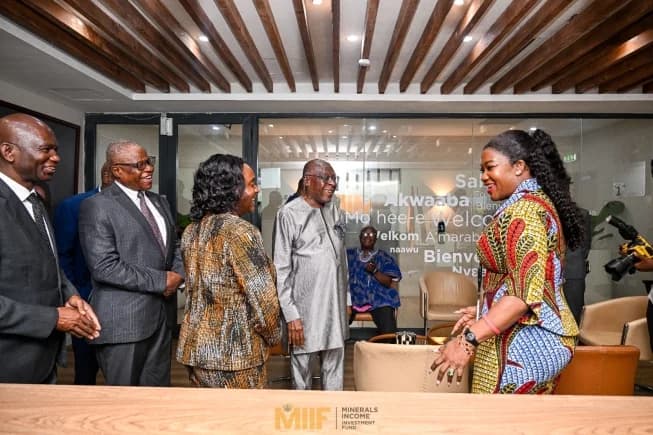
Ghana’s mining sector is undergoing a significant transformation, anchored by the strong financial performance of the Minerals Income Investment Fund (MIIF) and new international partnerships aimed at formalizing small-scale operations. For the 2025 financial year, MIIF reported an audited profit of GH₵1.1 billion, a remarkable feat achieved despite legislative amendments that reduced the fund’s mineral royalty allocations from over 77% to just 2%. The fund’s resilience was bolstered by a 10% increase in total royalty collections, which reached GH₵5.4 billion, and an impressive 186.1% target achievement in the first half of 2026, driven largely by high global gold prices and improved compliance within the medium-scale mining sector.
Beyond internal growth, MIIF is expanding its strategic influence through local and international collaborations. The fund is currently in talks with the Ghana International Bank (GHIB) to unlock investment opportunities in the burgeoning lithium industry and enhance structured finance across the mining value chain. Furthermore, Ghana’s model of mineral wealth management has gained continental recognition, recently hosting a 12-member Zambian delegation led by Permanent Secretary Mwaka Mukubesa. The visit focused on MIIF’s governance and investment strategies, as Zambia seeks to adapt Ghana’s sovereign investment blueprint to reform its own mineral sector for the benefit of its citizens.
Simultaneously, a landmark partnership between the Ministry of Lands and Natural Resources and the World Gold Council (WGC) is set to reshape the artisanal and small-scale gold mining (ASGM) landscape. Under a new Memorandum of Understanding, the WGC has committed an initial US$250,000—part of a broader US$1 million package—to support the Responsible Cooperative Mining Scheme Development Programme (rCOMSDEP). This initiative aims to formalize the sector by registering mining cooperatives and establishing a nationwide network of trusted gold processing plants. Minister Emmanuel Armah-Kofi Buah and WGC CEO David Tait emphasized that these measures will enhance supply chain integrity, combat illegal gold trading, and provide a transparent value chain that benefits local communities.
While the sector sees growth and reform, the Bank of Ghana is implementing tighter regulatory controls to manage economic liquidity. Governor Dr. Johnson Pandit Asiama announced the termination of the pre-financing arrangement for the Ghana Gold Board’s domestic gold purchases, effective July 1. This policy shift, intended to remove a significant source of liquidity injection into the banking system, will be closely monitored by the Monetary Policy Committee for its impact on inflation and private sector credit. Together, these developments signal a maturing mining industry that is balancing robust profit generation with rigorous formalization and cautious monetary oversight.
This story touches markets covered on Anansi Intelligence ↗.
Live rates
Bank of Ghana policy rate →More from business
Continue exploring similar stories


