Ghana News AI
HomeBriefsAsk GhanaTopicsTools
•
•

Stay Informed

Get AI-curated news briefs from Ghana delivered to your inbox every morning. Free forever, no spam.

Explore

  • Home
  • Briefs
  • About

Categories

  • Politics
  • Business
  • Sports
  • Entertainment
  • Africa

Features

  • Analysis
  • Cedi Rates
  • Dollar to Cedi
  • Ghana Gold Price
  • BoG Policy Rate

Topics

  • Armed Forces Recruitment
  • WAEC Results & News
  • Nana Ama McBrown
  • NDC News
  • All Topics

Legal

  • Privacy Policy
  • Terms of Service
Ghana News AI© 2026. All rights reserved.
Made withfor Ghana
politics

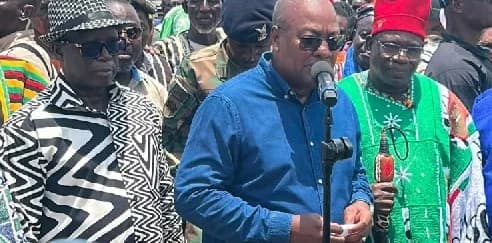
President John Mahama Outlines Major Infrastructure Drive During Two-Day Upper East Working Tour

13th August•3 min read•13 sources
President John Dramani Mahama
  1. Home
  2. /Politics
  3. /President John Mahama Outlines Major Infrastructure Drive During Two-Day Upper East Working Tour

President John Dramani Mahama has embarked on a pivotal two-day working tour of the Upper East Region, marking the seventh stop of his "Resetting Ghana Tour." During his visit, the President inspected several high-priority infrastructure projects, most notably the proposed Upper East Regional Airport at Sumbrungu-Kulbia. This tour underscores the administration's commitment to regional development, with President Mahama emphasizing that his agenda aims to bridge the infrastructure gap and enhance economic connectivity between the northern and southern sectors of the country. This visit follows a series of regional engagements, including past commendations for the "Big Push" electrification and infrastructure initiatives in the Central and Volta regions.

A central focus of the tour is the Bolgatanga Airport, which the President announced is currently in the procurement stage, with construction slated to begin before the end of 2026. The facility, which will occupy 4,000 acres and feature a 2.2-kilometre runway, is designed to handle 100,000 passengers annually and provide direct air connectivity to Accra. President Mahama described the airport as a "game-changer" that will eliminate the need for lengthy road travel to Tamale, thereby boosting local businesses and mining operations. Contractors have expressed optimism that the project, originally planned for a 24-month duration, could be completed ahead of schedule.

In a significant move toward governance continuity, President Mahama pledged that his administration will not abandon the "Agenda 111" hospital projects initiated by the previous NPP government. He announced that 35 of these hospitals, which are currently approximately 70% complete, have been allocated specific funding to ensure completion by the end of 2025. An additional 20 hospitals are prioritized for 2027, with the President emphasizing a focus on districts that currently lack any modern healthcare facilities. While in the region, the President also commissioned a new E-Block school project in Paga and addressed local concerns regarding the Navio Bridge and potable water access.

Furthermore, the President reviewed progress on the 34.23-kilometre Navrongo-Chuchuliga-Tumu road corridor, a critical link between the Upper East and Upper West regions. He announced that the second and third phases of the Big Push infrastructure programme are being prepared to include additional roads, aiming for total regional connectivity by 2028. By prioritizing the completion of inherited projects alongside new infrastructure, the Mahama administration seeks to ensure that no community is left behind in the national development agenda. This strategic focus on transport, health, and education infrastructure is expected to form the cornerstone of the government's economic revitalisation efforts over the next three years.

Our Take

From the Team

Coming Soon

Our team will add key insights, trends, and actionable takeaways to help you stay informed faster.

This story touches markets covered on Anansi Intelligence ↗.

Related topic

NPP (New Patriotic Party): Latest News →

More from politics

Continue exploring similar stories

Dr Alhaji Yusif Sulemana, (front row 2nd from right), Deputy Minister of Lands and Natural Resources, with members of the local implementation committee of the Appiatse Redevelopment Project
politics|13th August

Mahama’s 2028 Intentions Gain Majority Support Amid Contentious Parliamentary Recall and National Cathedral Audit

Recent polling data from Global InfoAnalytics reveals that a significant majority of Ghanaians—65%—support President John Dramani Mahama’s decision not to seek a third term in the 2028 general elections. The survey, conducted in late July 2026, shows broad agreement across party lines, including 76% of New Patriotic Party (NPP) supporters and 59% of National Democratic Congress (NDC) supporters. While the President’s public stance has quelled much of the debate, groups such as Ghanaians for Progress (GHAPRO) continue to advocate for a third term, citing "unfinished business" and the need for exceptional leadership. This public discourse comes as the administration navigates a busy legislative and accountability agenda early in the President's current term. Simultaneously, a political row has erupted over Speaker Alban Bagbin’s decision to recall Parliament from its recess for an extraordinary sitting from August 24 to August 28, 2026. While the Speaker cited "urgent parliamentary business" under Order 58(4) of the Standing Orders, the move has drawn sharp criticism from Deputy Minority Whip Habib Iddrisu. The MP for Tolon labeled the recall a "waste of taxpayers' money," arguing that the primary agenda—the approval of two ministerial nominees—is not an emergency. Iddrisu noted that the ministries in question have functioned without substantive heads for nearly a year, suggesting the matters could have waited until the scheduled resumption in October. Accountability remains a central theme as Minister of State Felix Kwakye Ofosu confirmed that the forensic audit report on the National Cathedral project was submitted to the Attorney General on August 7, 2026. The report is currently under review to determine subsequent legal actions. This development follows a scathing critique by Attorney General Dr. Dominic Ayine, who argued that funds allocated for the Cathedral should have been used to complete hospitals under the Agenda 111 initiative. Dr. Ayine emphasized that the construction of a religious facility should have been handled with more care, referencing a PwC report that suggested the diverted funds could have significantly benefited national healthcare infrastructure. On the development front, the government is moving forward with significant infrastructure and social commitments. The Ministry of Lands and Natural Resources announced the final phase of the Appiatse Redevelopment Project, set to begin in mid-September 2026, which will provide new homes for 69 households displaced by the 2022 explosion. Concurrently, the Ministry of Transport has commissioned a six-month feasibility study for a coastal water transport route between Keta and Axim. However, local challenges persist; farmers in Bolgatanga have expressed disappointment over failed World Bank-funded irrigation projects, and traders at the Konkomba Yam Market are urging the Accra Metropolitan Assembly to reconsider demolition plans for a new "24-hour economy" market project to avoid disrupting food supply chains.

NCCE urges youth leaders to champion ethical leadership against corruption
politics|13th August

Chief Justice Baffoe-Bonnie and National Peace Council Lead Renewed Push for Institutional Integrity and Public Trust

In a series of coordinated efforts to bolster Ghana’s democratic resilience, Chief Justice Paul Baffoe-Bonnie and the National Peace Council (NPC) have issued strong calls for institutional reform and ethical leadership. Speaking at the Senior Staff Association of the Judicial Service of Ghana’s congress in Fiapre, Chief Justice Baffoe-Bonnie warned that poor court administration, delays, and staff misconduct are directly eroding public confidence in the judiciary. He emphasized that the public evaluates the entire justice system based on their interactions with administrative staff, urging for a more professional approach to facilitate justice delivery. Simultaneously, the NPC convened an inter-party dialogue in Accra to foster trust among political parties and promote responsible communication, reinforcing that Ghana’s peace depends on the collective commitment of political actors to manage differences constructively. While leadership focuses on institutional trust, the Minority in Parliament has raised sharp concerns regarding the government’s management of athlete welfare. Vincent Ekow Assafuah, Ranking Member of the Committee on Youth and Sports, demanded an independent investigation into reports of systemic neglect during the 2026 Commonwealth Games in Glasgow. The MP highlighted disturbing claims, including late airline ticket deliveries without luggage allowances, delayed provision of competition kits, and unclear per diem payments for athletes and the Black Queens. This call for transparency is echoed in the social sector by the Mental Health Society of Ghana (MEHSOG), which is demanding that government agencies and district assemblies publish the names of disability fund beneficiaries to prevent the misappropriation of funds and ensure that support reaches those truly in need. Addressing the foundational role of ethical leadership, the National Commission for Civic Education (NCCE) has intensified its engagement with youth leaders in the Northern Region. Alhaji Aliyu Mohammed, the NCCE Northern Regional Director, urged young people to reject corruption and embrace accountability, noting that the country’s future depends on a departure from the unfulfilled promises of the past. These efforts are being complemented by the launch of the Civil Society Coalition Against Transnational Crime, which aims to combat human trafficking and cybercrime through community-led prevention. Additionally, the Northern Regional Minister, Ali Adolf John, has called for a shift toward more professional and sustainable water-service delivery to ensure that vulnerable rural populations have reliable access to safe drinking water. Together, these developments highlight a broader national movement toward strengthening accountability and governance under the administration of President John Mahama. From the judiciary to sports administration and rural infrastructure, the recurring theme remains the urgent need for transparency and ethical conduct to restore public trust in state institutions. As civil society and government agencies implement these recommendations, the focus shifts to whether these structural reforms will result in tangible improvements in service delivery and social cohesion, or if they will face further challenges from systemic inefficiencies and economic pressures.

 Big Talk, Small Receipts: The Politics of Promises and Policy
politics|13th August

Mahama Administration Defends Economic Record Amidst IFS Critiques on 2026 Budget Execution and Revenue Shortfalls

Joyce Bawah Mogtari, Senior Presidential Advisor, has robustly defended President John Mahama’s administration, asserting that the New Patriotic Party (NPP) lacks the credibility to lecture the current government on economic management. Speaking in August 2026, Mogtari highlighted the significant progress achieved under the leadership of Finance Minister Cassiel Ato Forson. She dismissed recent criticisms from the Minority Caucus regarding the operations of the Ghana Gold Board and urged citizens to remain supportive of the administration's trajectory, claiming the country is making steady economic strides despite the political rhetoric from the opposition. However, this optimistic political stance faces scrutiny from the Institute for Fiscal Studies (IFS). In its comprehensive assessment of the 2026 Mid-Year Budget Review, the IFS expressed disappointment over a GH35.6 billion shortfall in government spending during the first half of the year. Dr. Said Boakye, the Executive Director of the IFS, pointed out that the government failed to reach its projected expenditure of GH172.54 billion, largely due to low revenue inflows. A specific point of contention was the administration’s failure to adequately capture revenue from the small-scale mining sector, a missed opportunity that the IFS argues could have funded critical infrastructure projects necessary for national development. The economic challenges identified by the IFS appear to mirror frustrations in the tourism and creative sectors. While international arrivals have increased nineteen months into President Mahama’s term, actual tourism receipts have reportedly declined. Ambitious initiatives like the "Black Star Experience" have yet to translate into the economic renaissance promised to local creators, who remain disillusioned by stagnant copyright administration and delayed funding. Conversely, the Social Security and National Insurance Trust (SSNIT) provided a more stable outlook, announcing plans to grow its active membership to 2.8 million by 2028, with assets under management currently reaching GH35.4 billion. Amidst these fiscal debates, NPP flagbearer Dr. Mahamudu Bawumia has focused his message on youth empowerment, emphasizing that young Ghanaians deserve enhanced opportunities to secure jobs and start businesses. While the Ministry of Transport is currently reviewing reports to address urban congestion and modernize rail and bus systems, the political landscape remains dominated by the government's budget execution. With approximately 29 months remaining in his term, the Mahama administration faces the dual challenge of fulfilling its cultural and infrastructure promises while addressing the fiscal gaps highlighted by economic watchdogs.

Ghana didn’t seek financial help from South Africa during evacuation – Foreign Affairs
politics|13th August

Ghana Rejects South African Evacuation Bill Amid Regional Shifts and US Political Transition

Ghana's Ministry of Foreign Affairs has firmly rejected requests for reimbursement from South Africa concerning the evacuation of over 1,600 Ghanaian nationals following xenophobic attacks in 2026. Official statements clarify that the Ghanaian government, under the leadership of President John Mahama, fully funded the GH₵10.6 million operation without seeking financial or material assistance from South African authorities. The Ministry emphasized that Ghana would not be included among the African nations asked by South Africa to repay a portion of the $18 million spent on repatriating foreign nationals. This proactive stance on citizen safety includes ongoing reintegration support and relief for returnees, reflecting a commitment to national sovereignty and the welfare of Ghanaians abroad. On the regional front, several African nations are undergoing significant legislative and political shifts. Togo's National Assembly has opened an extraordinary session to consider critical bills on environmental protection and commercial justice reforms, while Zambia recently held general elections with incumbent President Hakainde Hichilema expected to secure a second term following his economic recovery efforts. In Mali, President Assimi Goïta has granted a presidential pardon to Yann Vezilier, a French national previously sentenced for a coup plot, a move intended to ease diplomatic tensions despite the gravity of the original charges. Meanwhile, France has initiated disciplinary proceedings against its ambassador to the Central African Republic following allegations of serious personal misconduct and security breaches. These internal developments coincide with a broader recalculation of Africa’s international relations as the United States reduces its aid and diplomatic footprint on the continent. In the wake of USAID office closures, African governments are increasingly turning to partners in the Gulf, Turkey, and South Korea for investment. This geopolitical realignment occurs alongside heightened territorial disputes, such as Spain’s firm rejection of Moroccan sovereignty claims over the enclaves of Ceuta and Melilla, and increasing instability in the West Bank where Palestinian households face displacement. Security concerns also remain acute in Crimea, following the remote-detonation assassination of a former Ukrainian submarine commander who had defected to Russia. In the United States, the political landscape is marked by administrative changes and security maneuvers within the Trump presidency. White House Press Secretary Karoline Leavitt has announced her resignation to prioritize family life, while legal challenges mount against the administration’s Truth Social service over its $100,000 early-access fees. Security protocols have also come under scrutiny following revelations that President Trump utilized decoy aircraft during a high-stakes trip to Turkey to evade potential threats. Furthermore, the administration faces internal pressure regarding deteriorating living conditions aboard the USS Abraham Lincoln and a reported decline in federal sex trafficking prosecutions, highlighting the complex challenges facing US domestic and defense policy.

All
africa
business
education
entertainment
health
news
politics
sports
technology