••
President Mahama Outlines Three Pillars for Global Reparatory Justice at 81st UN General Assembly
•3 min read•26 sources
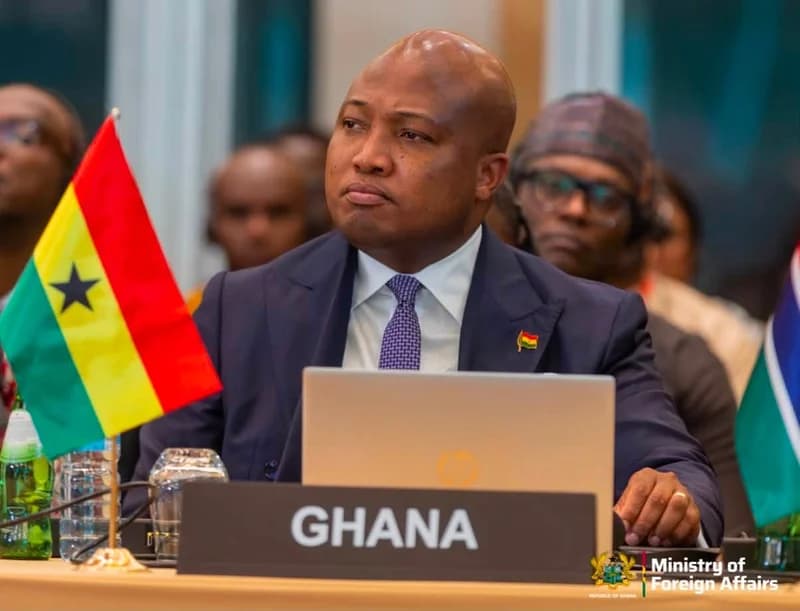
President John Dramani Mahama has called for the establishment of a permanent global system for the restitution of Africa’s cultural heritage, outlining a comprehensive three-pillar strategy for reparatory justice during the 81st United Nations General Assembly in New York. Speaking at a high-level side event, President Mahama urged the international community to move beyond mere acknowledgment of historical injustices and toward actionable restitution. He emphasized that the return of looted artefacts and human remains is not a matter of legal ownership but one of dignity, identity, and historical justice, citing the 1874 colonial looting of Kumasi as a poignant example of the cultural erasure suffered by African nations.
The President’s proposed framework is built upon three foundational pillars: the creation of a permanent global restitution system to simplify legal processes; the unconditional return of human remains and cultural properties; and the integration of cultural heritage into broader socioeconomic development. President Mahama explicitly rejected arguments that African nations must first build modern conservation facilities before artefacts are returned, asserting that capacity constraints should never serve as a barrier to justice. Instead, he called for international partnerships to invest in Africa’s cultural infrastructure, framing these institutions as vital engines for education, tourism, and national identity.
Supporting this vision, Foreign Affairs Minister Samuel Okudzeto Ablakwa announced that the Ghanaian government has included provisions in the 2027 budget for the construction of a modern national museum. This facility will house thousands of returned artefacts and is expected to significantly boost the country’s tourism sector. Plans also include a specialized museum dedicated to the head of King Badu Bonsu II, a move designed to reshape the narrative of African resistance against colonial rule. These initiatives follow recent progress in restitution, including the 2024 return of Asante heritage items like the sacred Mpomponsuo sword.
On the diplomatic front, the United States has expressed a willingness to collaborate with Ghana on its reparatory justice agenda, despite its official opposition to a related UN resolution. Minister Ablakwa noted that U.S. engagement reflects a commitment to global healing and reconciliation rather than division. Furthermore, Brazilian President Luiz Inácio Lula da Silva commended President Mahama for his leadership in this movement, highlighting the adoption of Resolution A/RES/80/250, which recognizes the trafficking of enslaved Africans as a crime against humanity. Other nations, including the Netherlands, Germany, and France, were also acknowledged for their initial steps in cataloguing and returning Ghanaian heritage.
As the campaign for reparatory justice gains momentum, President Mahama remains focused on fostering international cooperation to ensure a just future. He stressed that the goal of restitution is to restore historical memory and reconnect communities with their traditions, rather than to attribute blame. By establishing standardized procedures for provenance research and restitution claims under the UN, Ghana aims to transform the current fragmented approach into a predictable, structured international framework that facilitates the dignified return of Africa’s stolen legacy.
Related topic
John Mahama: Latest News & Updates →

