••
President Mahama Champions Reparatory Justice and Economic Autonomy at 81st UN General Assembly
•3 min read•39 sources
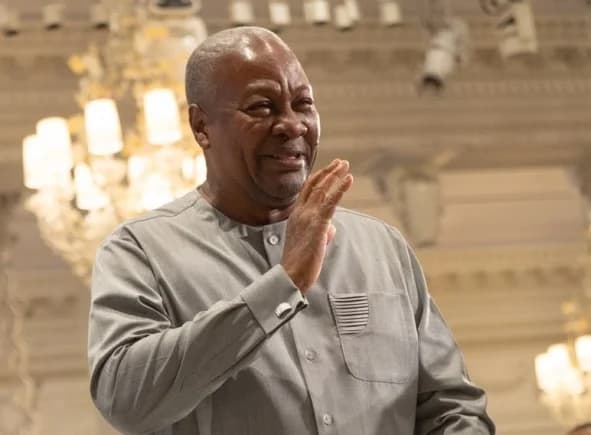
Addressing the 81st Session of the United Nations General Assembly in New York, President John Dramani Mahama delivered a wide-ranging address centered on reparatory justice, the reform of global governance, and the 'Accra Reset' doctrine. Speaking under the theme 'Restoring Trust, Managing Transformation: A United Nations that Delivers for All,' the President called for the formal recognition of the transatlantic slave trade as a crime against humanity. He urged colonial powers to move beyond symbolic gestures toward a framework of inclusivity and reparatory justice, highlighting progress such as the repeal of the 'Code Noir' in France and apologies from major religious institutions as foundations for a new era of historical accountability.
Central to President Mahama’s international agenda was the 'Accra Reset' initiative, a policy framework that advocates for a fundamental shift in how the Global South engages with the international community. The President criticized traditional, donor-driven charity models, calling instead for equal partnerships rooted in economic autonomy and localized control over health systems. This vision received significant international backing, with former British Prime Minister Gordon Brown praising the initiative for its focus on country-led health governance. Mahama further advocated for the reform of the UN Security Council to include permanent representation for Africa, asserting that the continent’s considerable resources and youthful population make it an indispensable partner in solving global challenges like climate change and food insecurity.
On the domestic front, President Mahama highlighted what he described as a 'dramatic turnaround' in the Ghanaian economy, attributed to disciplined governance and aggressive anti-corruption measures. He presented his administration’s 'Big Push' infrastructure program as a vital tool for bridging the rural-urban divide, alongside the '24-Hour Economy' initiative designed to transform Ghana into a high-productivity industrial hub. The President emphasized that macroeconomic indicators must translate into tangible improvements in living standards, arguing that the true value of democracy lies in its ability to provide access to food, quality healthcare, and sustainable jobs rather than just the conduct of periodic elections.
Drawing from Ghana’s history of peaceful political transitions, the President positioned the nation as Africa’s most stable democracy and a testament to the effectiveness of constitutional governance. However, he issued a stern warning against the 'weaponization of identity' for political gain, cautioning that the manipulation of national or ethnic backgrounds leads to exclusion, xenophobia, and conflict. He reaffirmed the principle that no nation or race is superior, urging the international community to protect the dignity of marginalized populations and small island states as part of a single, interconnected human family.
As President Mahama concluded his engagements at the Assembly, he unveiled a 'new deal' for global philanthropy, intended to align international funding with Ghana’s specific development priorities through institutions like the Millennium Development Authority (MiDA). By advocating for localized pharmaceutical manufacturing and robust debt relief mechanisms, the President sought to cement Ghana’s role as a leader for African agency. His address serves as a call for a redefined global order where sovereign accountability and shared value replace dependency, ensuring that the Global South moves from the periphery to the center of global decision-making.
Related topic
John Mahama: Latest News & Updates →

